Overview
Few animals in North America are as instantly recognizable — or as universally respected — as the striped skunk (Mephitis mephitis). With its bold black-and-white coloration and legendary chemical defense mechanism, the striped skunk occupies a unique place in both the natural world and in popular culture. From dense forests to suburban backyards, this resourceful mammal has adapted to an impressive range of environments, making it one of the most widespread and successful mustelid relatives on the continent. For wildlife enthusiasts, hunters, and naturalists in Washington State and beyond, understanding the striped skunk offers a fascinating glimpse into the resilience and ingenuity of North American wildlife.
The striped skunk belongs to the family Mephitidae, a group of mammals commonly known as skunks. The genus name Mephitis is derived from the Latin word for "noxious vapor" or "bad smell" — an unmistakable nod to this animal's most famous trait. Despite its reputation, the striped skunk is a gentle and largely non-aggressive creature that plays a meaningful ecological role in the environments it inhabits. Learning more about this often-misunderstood animal reveals a species worthy of admiration and respect.
Biological Traits
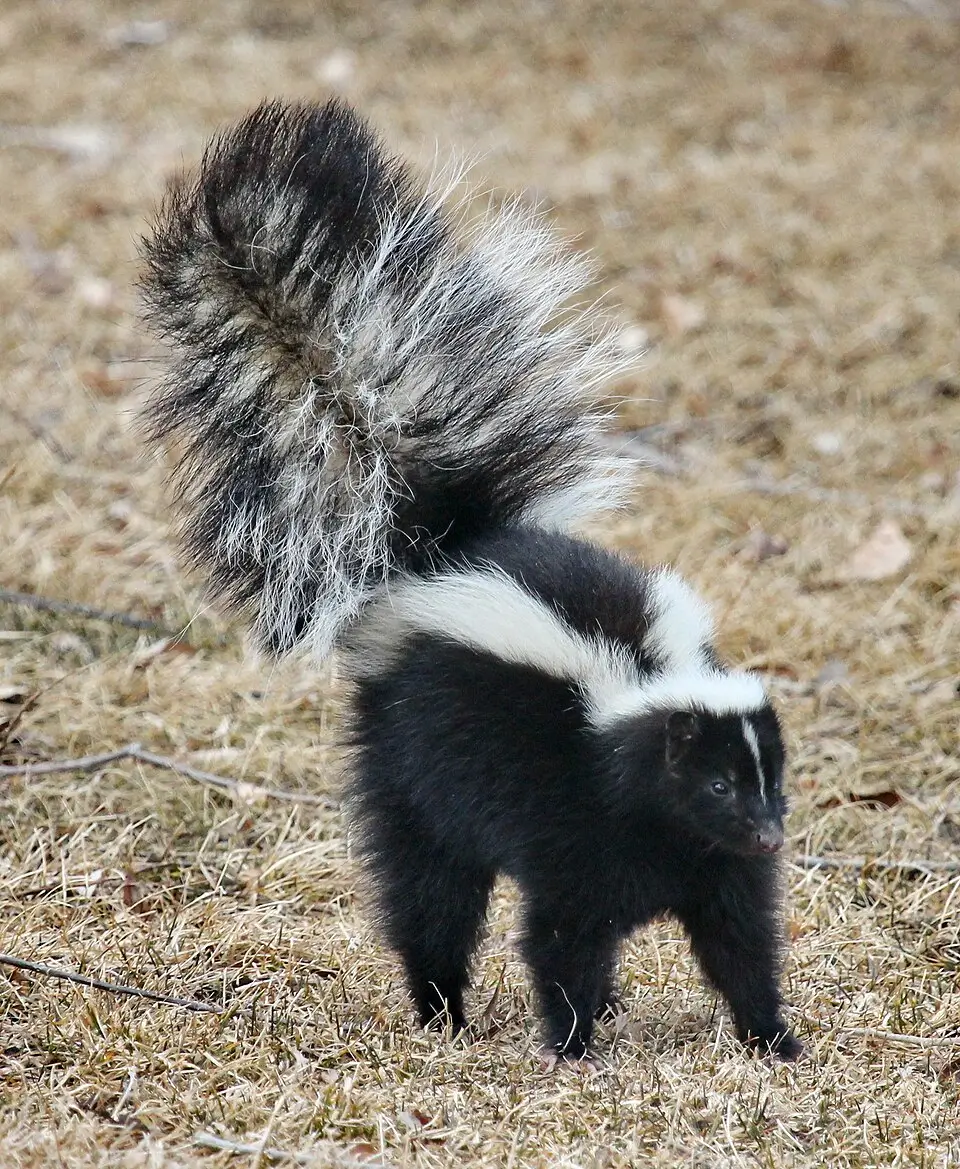
The striped skunk is a medium-sized mammal with a stocky, muscular build. Its most iconic feature is its striking black fur adorned with two prominent white stripes that run from the top of its head, down its neck, and along its back, typically meeting at the base of its bushy, plume-like tail. The exact pattern can vary between individuals — some skunks display broader stripes, others narrower ones, and some may show additional white markings on the face or forehead. This high-contrast coloration serves a critical purpose: it is a form of aposematic coloring, a biological signal that warns potential predators of the animal's formidable defense system.
That defense, of course, is the skunk's ability to spray a sulfur-containing chemical called n-butyl mercaptan (also known as thiol), produced by a pair of anal scent glands located beneath the base of the tail. When threatened, the striped skunk is capable of directing this spray with remarkable accuracy at distances of up to ten feet or more. The chemical causes intense irritation to the eyes and mucous membranes and produces a powerful odor that can linger for days. Notably, skunks do not spray without warning — they typically perform a series of threat displays first, including stomping their front feet, arching their backs, raising their tails, and turning their bodies to face the threat. Only when these warnings are ignored do they resort to spraying.
Despite this powerful defense, striped skunks are generally docile animals. They are omnivores with a broad and opportunistic diet that includes insects (particularly grubs and beetles), small rodents, birds and their eggs, amphibians, berries, fruits, nuts, leaves, and carrion. This dietary flexibility is one of the key reasons the species is so successful across such a wide range of habitats.
Striped skunks are primarily nocturnal, spending daylight hours in dens. They are not true hibernators but do enter a state of torpor during cold winter months, during which they may sleep for extended periods while living off stored body fat. They often den communally during winter, with several individuals sharing a burrow to conserve heat. Dens may be dug by the skunk itself or appropriated from other animals such as foxes or groundhogs.
Breeding typically occurs in late winter to early spring, and females give birth to litters of four to seven young (called "kits") after a gestation period of approximately 60 to 75 days. The young are born blind and helpless but develop quickly, gaining their characteristic coloration and the ability to spray within just a few weeks. By late summer, juvenile skunks are generally capable of surviving independently.
The striped skunk has a relatively short natural lifespan in the wild — typically two to three years — though individuals in captivity have been known to live significantly longer. Natural predators include great horned owls, which appear to have a reduced sensitivity to the skunk's spray and are among the most effective hunters of this species. Coyotes, bobcats, and foxes may also occasionally prey on skunks, particularly young or weakened individuals.
Habitat & Range
The striped skunk is one of the most adaptable mammals in North America, occupying a range that spans from southern Canada through the continental United States and into northern Mexico. It is found in virtually every U.S. state, including Washington, where it thrives in a variety of landscapes.
Preferred habitats include open woodlands, grasslands, agricultural edges, brushy fields, and riparian areas. The striped skunk tends to favor mixed environments — areas where open foraging ground meets wooded cover — as these landscapes offer both abundant food sources and suitable denning sites. Rocky outcrops, dense brush piles, and the spaces beneath buildings or decks are commonly used as den sites.
In Washington State, the striped skunk can be found across much of the state, from the lowland valleys and agricultural lands of the Puget Sound region to the drier shrub-steppe environments east of the Cascades. The state's diverse geography — encompassing coastal rainforests, mountain ranges, river valleys, and high desert — provides a wide range of suitable habitats. Suburban and semi-rural areas have proven particularly accommodating, as human development often creates the kind of edge habitat that skunks favor, along with reliable food sources in the form of garbage, compost, garden insects, and pet food.
Hunting Information
Hunting and trapping of striped skunks is regulated at the state level, and the rules can vary significantly from one jurisdiction to another. In Washington State, specific season dates, licensing requirements, and harvest regulations for striped skunk are not provided in our current source data. Prospective hunters and trappers interested in pursuing striped skunks in Washington should consult directly with the Washington Department of Fish and Wildlife (WDFW) for the most current and accurate regulatory information. The WDFW is the authoritative body for all hunting and trapping regulations in the state, and regulations can change from season to season.
Historically, striped skunks have been of interest to trappers for their fur, which was once a commercially significant commodity in the North American fur trade. Skunk fur, sometimes marketed under the more appealing name "Alaska sable," was used in garment production for much of the nineteenth and early twentieth centuries. While the commercial fur market has evolved considerably over the decades, trapping for personal use and population management continues in various regions.
For those interested in pursuing striped skunks, patience and knowledge of the animal's habits are essential. Being primarily nocturnal and most active around dawn and dusk, skunks are best targeted during these low-light periods. Understanding their denning behavior, seasonal movements, and preferred food sources can significantly improve success. Standard trapping equipment used for mid-sized furbearers is typically appropriate, though specifics should be confirmed with local wildlife authorities.
It bears repeating: anyone pursuing striped skunks should be well-prepared for the possibility of encountering the animal's spray. Proper protective equipment and a thorough knowledge of the skunk's warning signals are strongly advisable.
Conservation
The striped skunk is currently classified as a species of Least Concern by the International Union for Conservation of Nature (IUCN), reflecting its broad distribution, adaptability, and stable population across its range. It is not considered threatened or endangered at the national level in the United States or Canada.
One of the primary conservation considerations for striped skunks is their role as a significant wildlife vector for rabies. Skunks are among the most commonly reported rabid wild animals in the United States, a fact that underscores the importance of responsible wildlife management and public education. Healthy skunk populations, however, are a natural and important component of ecosystems, providing predator control of insects and small rodents, seed dispersal through their consumption of fruits and berries, and nutrient cycling through their foraging and denning activities.
In Washington, as elsewhere, the striped skunk benefits from thoughtful coexistence with human communities. Reducing attractants such as unsecured garbage, accessible pet food, and low-clearance spaces beneath decks and outbuildings can minimize human-skunk conflicts while preserving habitat for these ecologically valuable mammals.
As urban and agricultural development continues to expand in Washington and across North America, the striped skunk's remarkable adaptability positions it well to persist alongside human communities. Continued monitoring by state and federal wildlife agencies helps ensure that any changes in population health or distribution are identified and addressed in a timely manner.