Overview
Few birds capture the imagination of upland hunters and wildlife enthusiasts quite like the ruffed grouse (Bonasa umbellus). Known for its explosive, heart-stopping flush from dense forest cover, this remarkable bird has earned a devoted following among hunters and birders alike. In Washington state, where the Pacific Northwest's lush forests and varied terrain create a mosaic of ideal habitat, the ruffed grouse occupies a special place in the outdoor tradition. Whether you are a seasoned upland hunter walking a pointer through alder thickets or a naturalist hoping to spot one along a woodland trail, the ruffed grouse is one of North America's most iconic and fascinating forest birds.
From the drumming log where a male announces his presence each spring to the dense conifer stands where family groups shelter through winter, the ruffed grouse is intimately connected to the forest ecosystem. Understanding this bird — its biology, its habits, its habitat needs, and its role in the broader landscape — enriches every encounter, whether behind a shotgun or behind a pair of binoculars.
Biological Traits
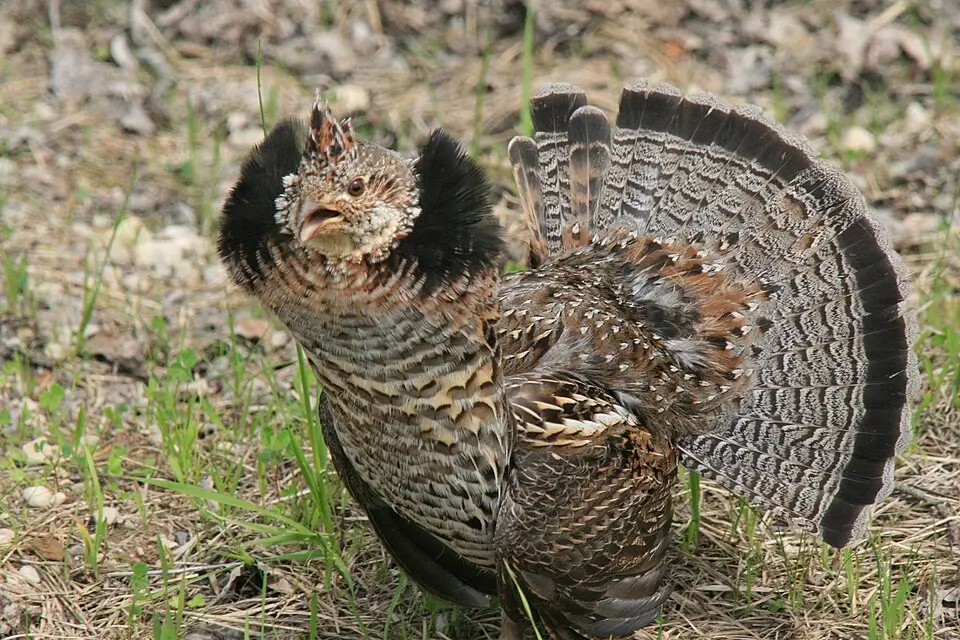
The ruffed grouse (Bonasa umbellus) is a medium-sized upland game bird belonging to the family Phasianidae, which includes pheasants, turkeys, and other grouse species. The scientific name is itself evocative: Bonasa refers to a bison, likely alluding to the thunderous drumming sound the male produces, while umbellus comes from the Latin word for "parasol" or "umbrella," a reference to the distinctive ruff of dark feathers around the bird's neck that can be fanned out during courtship displays.
One of the most immediately striking features of the ruffed grouse is its cryptic plumage. The bird comes in two primary color morphs — gray and brown — allowing it to blend almost seamlessly into the forest floor. This camouflage is so effective that hunters and hikers often walk within feet of a roosting bird without ever noticing it. The tail is broadly banded and fan-shaped, featuring a distinctive dark subterminal band near the tip. Both the gray and brown morphs can occur within the same population, and the prevalence of each morph tends to vary geographically.
Males are best known for their extraordinary drumming behavior, performed from a favored log or elevated surface. Rather than vocalizing in the traditional sense, the male beats his wings rapidly against the air, creating a deep, resonant thumping that begins slowly and accelerates into a rapid blur of sound. This sound carries remarkably well through dense forest and serves to attract females and warn rival males. The drumming display is a quintessential sound of eastern and northwestern forests in spring, but males may drum at almost any time of year.
During courtship, the male fans his tail, erects his crest, and spreads the glossy black ruff around his neck — the feature that gives the species its common name. This display, combined with the drumming, forms one of the most elaborate courtship performances of any North American upland bird.
Ruffed grouse are generally solitary outside of the breeding season. Females are entirely responsible for incubation and chick-rearing, nesting on the ground in a shallow depression often at the base of a tree or stump. Clutch sizes are typically large, as is common among ground-nesting birds that face significant predation pressure. Chicks are precocial, meaning they are mobile and capable of feeding themselves very shortly after hatching — an important adaptation for survival in a predator-rich environment.
The species is also well known for dramatic population cycles, particularly in the eastern part of its range, where populations tend to rise and fall on roughly ten-year intervals. These cycles are complex and influenced by a variety of ecological factors, including habitat succession, predator-prey dynamics, and weather conditions.
Habitat & Range
The ruffed grouse boasts one of the widest distributions of any upland game bird in North America. Its range extends from the forests of Alaska and Canada southward through the Appalachian Mountains, across the Great Lakes region, and into the forests of the Pacific Northwest, including Washington state. This broad range reflects the bird's adaptability, but in all parts of its territory, the ruffed grouse is fundamentally a bird of deciduous and mixed forest.
In Washington state, ruffed grouse are found primarily in the eastern portions of the state, where mixed forests of aspen, alder, birch, and various conifers provide the structural complexity this species requires. The bird thrives in early successional forest habitats — the kind of young, dense, brushy growth that follows timber harvest, fire, or other disturbance. These areas offer abundant food in the form of catkins, buds, berries, and insects, as well as dense cover for protection from predators.
Key habitat features that ruffed grouse seek out include an interspersed mix of young forest for feeding and escape cover, mature trees for drumming logs and roosting, and proximity to water in the form of seeps, streams, or wetland edges. Aspen stands, in particular, are considered prime ruffed grouse habitat across much of the bird's range because aspen buds and catkins serve as a critical winter food source when other foods are scarce.
In winter, ruffed grouse employ a fascinating survival strategy — snow roosting. The birds will dive headfirst into soft, deep snow, creating a burrow that provides excellent insulation against extreme cold. This behavior can reduce the bird's energy expenditure significantly during the harshest periods of winter. Hunters who pursue grouse in snowy conditions quickly learn to watch for the telltale signs of snow roosts and the characteristic tracks and wing marks left behind.
The species' presence in Washington is closely tied to the health and management of forested landscapes. Changes in land use, forest succession, and the ongoing management of public and private forestlands all have direct implications for ruffed grouse populations in the Pacific Northwest.
Hunting Information
The ruffed grouse holds a cherished place in the upland hunting tradition, often considered one of the most challenging and rewarding birds to pursue. Hunting ruffed grouse is an immersive, physical experience that demands woodsmanship, patience, and shooting skill in equal measure. The bird's preference for dense, brushy cover means that shooting opportunities are often brief, with thick vegetation obscuring the bird until it explodes into flight just yards from the hunter.
In Washington state, ruffed grouse are a legal upland game bird. However, hunters are strongly encouraged to consult the Washington Department of Fish and Wildlife (WDFW) for the most current and specific season dates, bag limits, license requirements, and any area-specific regulations before heading afield. Regulations can and do change from year to year, and compliance with current rules is both a legal obligation and an ethical responsibility. The WDFW website is the authoritative and most up-to-date source for this information.
Traditional ruffed grouse hunting involves walking slowly through likely cover — alder draws, aspen stands, brushy creek bottoms, and forest edges — while a pointing or flushing dog works the cover ahead. Well-trained bird dogs such as English setters, Brittanies, and German shorthaired pointers are prized companions for this style of hunting, as they can locate and hold birds in dense cover where a hunter alone might walk right past them. Flushing breeds like English springer spaniels are also popular choices.
Shooting a ruffed grouse on the wing in heavy timber requires quick reflexes and the ability to identify a clear shooting lane in a fraction of a second. Many hunters consider the ruffed grouse the ultimate test of upland shooting skill, and the bird's elusive nature has inspired a devoted subculture of enthusiasts who pursue it with an almost philosophical dedication.
Early season hunting, when leaves are still on the trees and birds are focused on berry and fruit crops, offers one style of hunting. Late season hunting, after leaf fall and in snowy conditions, presents different challenges and rewards, with birds often concentrated near food sources like alder catkins and rosehips.
Conservation
The ruffed grouse is currently considered a species of relatively stable conservation status across much of its range, though populations in some areas have experienced declines linked to habitat changes. The single greatest factor influencing ruffed grouse populations is habitat — specifically, the availability of young, structurally diverse forest in various stages of succession.
Conservation efforts for ruffed grouse center largely on habitat management. Organizations such as the Ruffed Grouse Society have long advocated for forest management practices that maintain and create early successional habitat, recognizing that this benefits not just grouse but a wide array of other wildlife species that depend on similar conditions.
In Washington state, the conservation of ruffed grouse is intertwined with broader efforts to manage and protect the forested landscapes of the Pacific Northwest. Responsible hunting, guided by science-based regulations set by the WDFW, plays a role in the sustainable management of the species. Hunters themselves are often among the most committed advocates for habitat conservation, contributing financially and physically to efforts that benefit grouse and the ecosystems they inhabit.
The species' dependence on healthy, dynamic forest ecosystems makes it something of an indicator species — when ruffed grouse are thriving, it is generally a sign that the surrounding forest habitat is in good condition. Protecting and managing these forests for the long term is the foundation of ruffed grouse conservation.