Overview
Few wild animals in North America have captured the human imagination quite like the raccoon. With its distinctive masked face, ringed tail, and surprisingly dexterous forepaws, the raccoon (Procyon lotor) is one of the most recognizable mammals on the continent. Found from the forests of the Pacific Northwest to the swamps of the Deep South, and from the open prairies of the Midwest to the urban neighborhoods of major cities, raccoons are a testament to the power of adaptability. In Washington State, a region defined by its stunning diversity of landscapes — from the rugged Cascade Mountains to the lush temperate rainforests of the Olympic Peninsula and the arid expanses of the Columbia Plateau — the raccoon has made itself thoroughly at home.
For hunters, naturalists, and wildlife enthusiasts alike, the raccoon offers a compelling subject. Whether you are drawn to the challenge of a nighttime hunt, the study of animal behavior, or simply the joy of spotting wildlife during an early morning hike near a creek bed, the raccoon rewards attention and curiosity. This article explores the biology, habitat, behavioral traits, hunting traditions, and conservation status of this remarkable animal, with a particular focus on Washington State's unique ecological context.
Biological Traits
The raccoon belongs to the family Procyonidae, a group of medium-sized mammals native primarily to the Americas. Its scientific name, Procyon lotor, translates roughly to "washer dog" — a nod to the well-known behavior of raccoons manipulating food near water, which superficially resembles washing. This behavior is believed to be connected to the animal's highly sensitive forepaws, which contain a dense concentration of mechanoreceptors. In fact, raccoons gather a significant portion of their environmental information through touch, making their front paws among the most tactilely sensitive appendages of any North American mammal.
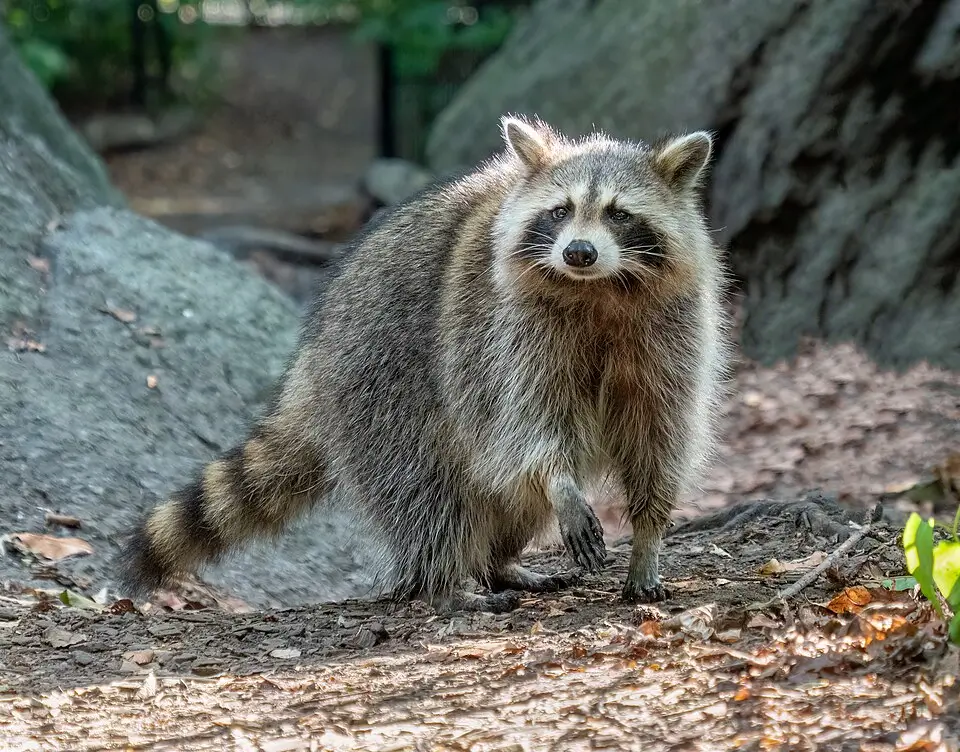
The raccoon's most iconic physical features are its black facial mask — a band of dark fur that runs across the eyes — and its bushy, ringed tail. These markings are thought to serve multiple purposes, potentially aiding in recognition among individuals and playing a role in social signaling. The raccoon's coat is predominantly gray to brown, providing excellent camouflage in wooded and brushy environments.
Adult raccoons are medium-sized mammals, with body weight varying considerably depending on geography, season, and food availability. They are known to put on significant fat reserves in preparation for winter months. In colder climates, raccoons do not fully hibernate, but they do enter periods of torpor — extended sleep during the coldest stretches of winter — during which they can lose a substantial portion of their body weight. This is an important survival strategy in northern regions like Washington State, where winters can be cold and food sources become scarce.
Raccoons are omnivores with an extraordinarily broad diet. They consume fruits, nuts, berries, insects, small mammals, birds and bird eggs, fish, crayfish, frogs, and a wide range of human-produced food waste. This dietary flexibility is one of the key reasons raccoons have thrived across such diverse environments. Their opportunistic feeding habits make them highly effective at exploiting whatever food resources are seasonally available, whether that means feeding on ripe blackberries in a Pacific Northwest thicket or raiding a suburban compost bin.
Socially, raccoons are generally solitary animals outside of the mating season, though related females sometimes share overlapping home ranges. They are primarily nocturnal, with peak activity occurring in the hours after sunset and before sunrise. However, raccoons in areas with significant human activity may occasionally forage during daylight hours. Their vocalizations include a range of churrs, growls, hisses, and the well-known chattering that can be heard during social interactions.
Reproduction typically occurs in late winter, and females give birth to litters of young — commonly called kits — in spring. Kits remain with their mother for an extended period, learning foraging skills and survival behaviors through observation and play. This prolonged maternal bond is essential, as young raccoons must acquire a wide-ranging skill set before facing their first winter.
Habitat & Range
The raccoon is native to North America and has one of the broadest natural ranges of any mammal on the continent. Originally associated with forested areas near water — streams, rivers, lakes, and wetlands — raccoons have expanded their range dramatically alongside human development. Today, they are found in every contiguous U.S. state, much of Canada, and parts of Central America. The species has also been introduced to parts of Europe and Japan, where populations have become well established.
In Washington State, raccoons occupy a wide variety of habitats. The state's western side, dominated by temperate rainforests, river valleys, coastal wetlands, and Puget Sound shorelines, provides ideal raccoon habitat. The abundant rainfall, dense vegetation, and proximity to freshwater sources create a rich and productive environment where raccoons can thrive year-round. Riparian corridors — the strips of habitat running alongside rivers and streams — are especially important, offering both food and shelter.
On the eastern side of the Cascades, raccoon populations are generally concentrated near water sources such as the Columbia River and its tributaries, irrigated agricultural areas, and wooded riparian zones. The drier shrub-steppe environment of the Columbia Basin supports fewer raccoons than the wet western lowlands, but the species is certainly present and adaptable enough to persist where water is available.
Washington's diverse topography, ranging from sea level along the coast to over 14,000 feet at the summit of Mount Rainier, means that raccoon distribution within the state is largely determined by elevation and moisture. While raccoons are rarely found in high alpine zones, they are common at low to mid elevations wherever suitable food and denning sites are available. Den sites can include hollow trees, rock crevices, brush piles, and — increasingly — human structures such as attics and outbuildings.
Hunting Information
Raccoon hunting has a long and storied tradition in North American culture, dating back centuries to Indigenous hunting practices and the early days of European settlement. The raccoon's pelt was historically valuable for trade, and raccoon hunting became deeply embedded in the outdoor heritage of many states, including those of the Pacific Northwest.
In Washington State, raccoons may be hunted and trapped in accordance with state regulations established by the Washington Department of Fish and Wildlife (WDFW). However, as the source data available for this article does not include specific current season dates, license requirements, or bag limits, hunters are strongly encouraged to consult the official WDFW website and the current year's hunting regulations pamphlet before planning any raccoon hunting activity. Regulations can change from year to year, and compliance with all applicable rules is both a legal requirement and an important part of ethical hunting.
Raccoon hunting is traditionally a nighttime pursuit, conducted with the aid of trained hounds. Hunters use dogs — often breeds such as the American coonhound or bluetick coonhound — to track, chase, and tree raccoons in the dark. The dogs follow scent trails through the woods, and the distinctive sound of a hound on the trail and the triumphant "treed" bark when a raccoon takes refuge in a tree are iconic sounds of the coon hunting tradition. Many hunters prize the experience of the hunt itself — the camaraderie, the cool night air, and the music of the hounds — as much as or more than the harvest.
Beyond hound hunting, raccoons can also be harvested through trapping, which is a regulated activity in Washington. Trapping methods must comply with state regulations, and trappers should be aware of requirements regarding trap types, check intervals, and proper handling of non-target species.
The meat of the raccoon is edible and has a long history in traditional American cuisine, particularly in the South and Midwest. Raccoon fur, while less commercially valuable today than in previous eras, still holds interest for those engaged in traditional crafts and the fur trade.
Conservation
The raccoon is currently classified as a species of Least Concern by the International Union for Conservation of Nature (IUCN), reflecting its wide distribution, large population size, and remarkable adaptability. Unlike many North American wildlife species that have experienced population declines in the face of habitat loss and human development, the raccoon has largely benefited from landscape changes, expanding its range into urban and suburban areas where food and shelter are plentiful.
In Washington State, raccoon populations are considered healthy and widespread. The state's commitment to wildlife management through the WDFW helps ensure that raccoon populations remain in balance with their ecosystems. Regulated hunting and trapping play a role in this management, providing both a traditional outdoor activity and a tool for population management in areas where raccoon numbers may come into conflict with agricultural operations, poultry farms, or other land uses.
From an ecological standpoint, raccoons play several important roles in the ecosystems they inhabit. As omnivores, they help disperse seeds from the fruits they consume, contributing to plant regeneration. They are also prey for larger predators including coyotes, bobcats, great horned owls, and — in the wilder corners of Washington State — cougars and black bears. The raccoon thus occupies an important middle position in the food web, connecting plant and invertebrate communities to apex predators.
The species' ability to thrive alongside human beings, while occasionally creating conflicts, also serves as an important reminder of the resilience of wildlife and the value of coexistence. Washington State's natural beauty and commitment to conservation create a fitting backdrop for appreciating a species as versatile and enduring as the raccoon.