Overview
Few sounds in the American outdoors are as instantly recognizable and warmly welcomed as the clear, whistled "bob-WHITE!" call that echoes across fields and brushy landscapes each spring and summer. This iconic call belongs to the Northern bobwhite (Colinus virginianus), one of North America's most celebrated and deeply cherished upland game birds. Whether you are a seasoned hunter walking behind a well-trained pointing dog, a birdwatcher scanning hedgerows with binoculars, or simply someone who grew up near the rural countryside, the Northern bobwhite holds a special place in the hearts of outdoor enthusiasts across the continent.
The Northern bobwhite is a member of the New World quail family, Odontophoridae, and stands as one of the most studied, hunted, and beloved birds in North American wildlife history. Its modest size, cryptic plumage, explosive flush, and challenging nature as a game bird have made it the centerpiece of a rich hunting tradition that stretches back centuries. At the same time, the bobwhite serves as an important indicator species for grassland and agricultural ecosystem health, making it significant not only to hunters but to wildlife biologists, conservationists, and land managers across its range.
This comprehensive guide explores the biology, habitat, behavior, hunting traditions, and conservation outlook of the Northern bobwhite, providing a well-rounded look at one of America's most iconic wild birds.
Biological Traits
The Northern bobwhite is a compact, rotund bird with the characteristic build of a ground-dwelling quail. Its scientific name, Colinus virginianus, reflects its early documentation from the Virginia region of North America, where colonial naturalists first formally described the species. The genus name Colinus is derived from a Mexican Spanish word for the bird, and together with virginianus — meaning "of Virginia" — the name tells a small story of the bird's deep roots in American natural history.
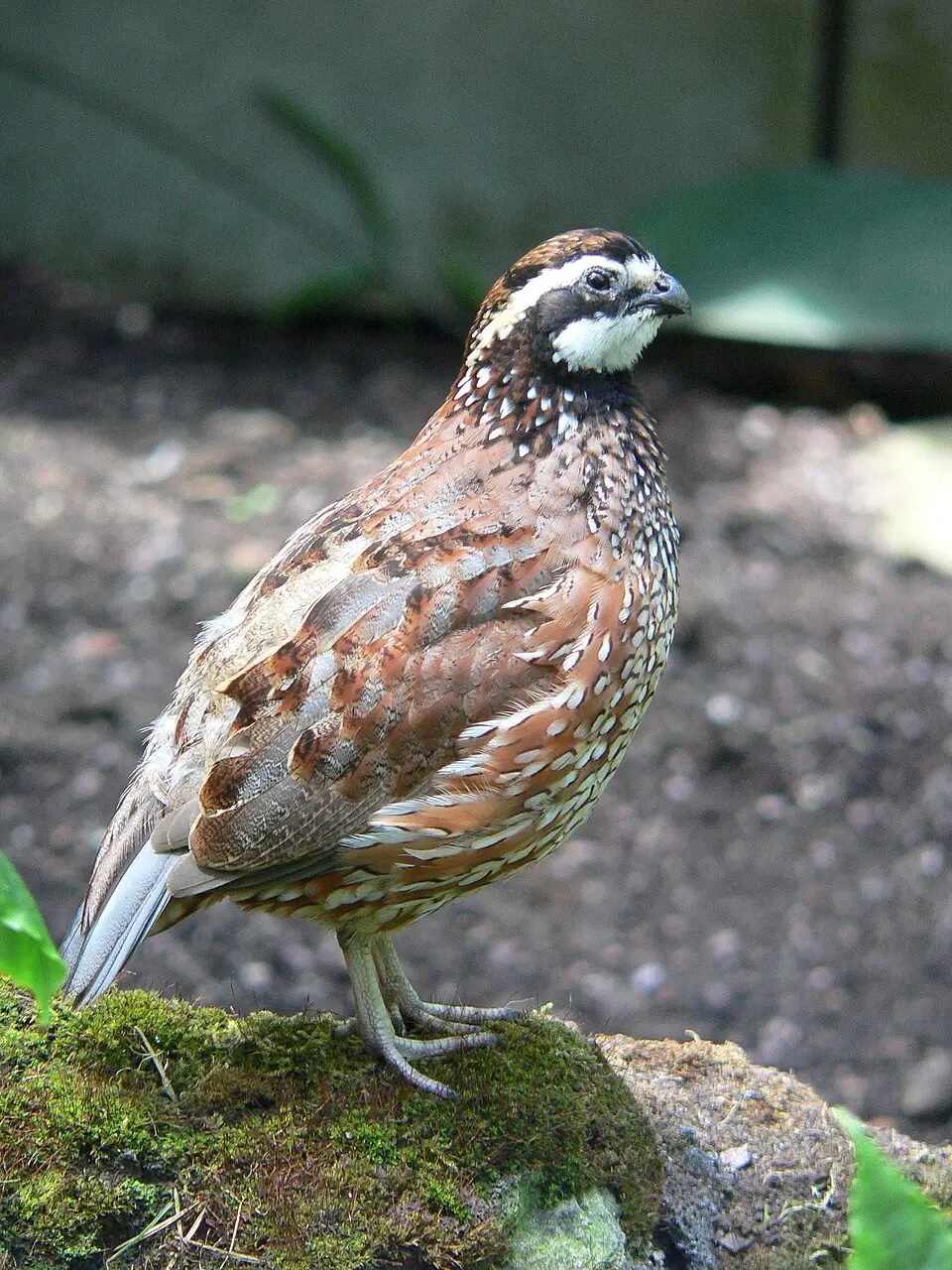
Bobwhites display a degree of sexual dimorphism in their plumage. Males are recognized by a bold white throat patch and white supercilium (eyebrow stripe), which contrast sharply against their otherwise rich rufous, black, and brown streaked body plumage. Females share the same intricate streaking and mottled brown patterning on their body but display a buff or buffy-yellow throat and eyebrow stripe instead of the stark white seen in males. This difference makes sexing birds in the field relatively straightforward for experienced observers.
The species is small and stocky, with short rounded wings that are perfectly designed for explosive, short-distance escape flights rather than long sustained travel. When startled, a covey of bobwhites erupts from cover in a thunderous, heart-pounding flush that has caused more than one hunter to momentarily forget to raise their shotgun. Their legs are sturdy and well-adapted to life on the ground, where they spend the vast majority of their time foraging, roosting, and moving through habitat.
Like other quail species, Northern bobwhites are highly social birds for much of the year. Outside of the breeding season, they gather into coveys — tight-knit family groups that typically range from several individuals to a dozen or more birds. Covey living provides significant advantages, including improved predator detection, more efficient foraging, and shared warmth during cold nights. Bobwhites are well known for their communal roosting behavior, in which covey members form a tight outward-facing circle on the ground, tails together and heads pointing outward, allowing them to conserve body heat while maintaining a full 360-degree watch for predators.
Breeding season brings significant behavioral changes. Males become highly vocal, producing the famous ascending two-note "bob-WHITE!" call to establish territory and attract mates. Northern bobwhites have a fascinating and somewhat unusual nesting biology in that both males and females may participate in incubation and chick-rearing duties. Clutch sizes are typically large, often numbering in the range of ten to fifteen eggs or more, which helps offset the high natural mortality that this species faces from predation and weather.
The diet of the Northern bobwhite is varied and shifts with the seasons. Seeds from grasses, legumes, and agricultural crops form the backbone of their diet, supplemented by insects — particularly during the warmer months and critically important during the chick-rearing period when young birds require high-protein food to fuel rapid growth. This dietary flexibility makes bobwhites well-suited to a range of agricultural and semi-natural landscapes.
Habitat & Range
The Northern bobwhite is native to the eastern and central United States, extending southward through Mexico and parts of Central America, and is also found in portions of Cuba. Within the United States, the species is most commonly associated with the southeastern states, where a combination of warm climate, diverse agricultural land, and historically managed longleaf pine ecosystems once supported enormous populations.
Bobwhites thrive in what wildlife biologists often call "edge habitat" — the transitional zones between different vegetation types. Ideal bobwhite country features a mosaic of open fields, agricultural land, brushy fence lines, weedy field borders, woodland edges, and patches of native bunchgrasses and shrubby vegetation. This structural diversity provides the birds with everything they need: open ground for foraging, dense woody cover for escape and loafing, and nesting habitat with enough ground vegetation to conceal nests from predators while still allowing easy movement.
Fire has historically played a critical role in maintaining the open, park-like pine savannas and grassland systems that bobwhites favor. Regular burning reduces woody encroachment and promotes the growth of the native grasses, forbs, and legumes that support robust quail populations. Much of the decline in bobwhite numbers across their range has been linked to fire suppression, as landscapes have become increasingly dense and structurally unsuitable for quail over the past several decades.
It is important to note for readers in the Pacific Northwest, including Washington state, that the Northern bobwhite is not native to this region. Washington state lies well outside the natural range of Colinus virginianus, which is primarily an eastern and south-central North American species. While there have been historical introductions of bobwhites in various parts of the western United States, wild self-sustaining populations have not been established in Washington in the way that other quail species — such as the California quail (Callipepla californica), which is the state bird of California and occurs in parts of Washington — have become established in the region.
Hunting Information
The Northern bobwhite holds an almost mythological status in American hunting culture. Quail hunting over pointing dogs — particularly traditional breeds like the English pointer and English setter — is deeply embedded in the sporting traditions of the South and Midwest. The ritual of working dogs through piney woods, broom-sedge fields, and brushy creek bottoms in pursuit of bobwhites has been celebrated in American outdoor literature, art, and culture for generations.
Bobwhite hunting typically centers on the fall and winter months, after breeding season has concluded and coveys have formed. Hunters generally work with trained bird dogs to locate and point coveys, then flush and shoot birds as they scatter. The explosive flush of a full covey, combined with the birds' twisting, fast flight through cover, makes bobwhite hunting a genuine shotgunning challenge that rewards skill and practice.
For hunters and outdoor enthusiasts in Washington state, it is important to understand that Northern bobwhite are not a target species in this region. Washington's upland bird hunting opportunities are primarily centered around other species, including the California quail, mountain quail (Oreortyx pictus), ring-necked pheasant, ruffed grouse, blue grouse, and chukar partridge. Prospective hunters in Washington should always consult the Washington Department of Fish and Wildlife (WDFW) for the most current and accurate regulations, season dates, and licensing requirements before heading afield, as regulations are subject to change from year to year.
If you are a bobwhite enthusiast visiting or relocating to Washington from a region where bobwhites are common, your best opportunity to pursue this iconic bird will likely involve traveling to the traditional quail states of the American South and Midwest, where bobwhite hunting traditions remain strong and public land opportunities exist alongside private plantation-style hunting.
Conservation
The Northern bobwhite has experienced significant population declines across much of its range over the past several decades, making it a species of ongoing conservation concern for wildlife agencies, private organizations, and land managers throughout its native territory. The primary drivers of this decline are widely understood to include habitat loss and fragmentation, changes in agricultural practices, fire suppression, and increased predator pressure.
Numerous conservation organizations, including Quail Forever and the National Bobwhite Conservation Initiative, have worked tirelessly to promote habitat restoration, incentivize landowner participation in quail-friendly land management, and support scientific research to better understand bobwhite population dynamics. These efforts have produced meaningful results in some areas, demonstrating that bobwhite populations can respond positively when habitat conditions are improved and maintained.
From a broader ecological perspective, the Northern bobwhite serves as what biologists call an "umbrella species" — a species whose habitat requirements are broad enough that protecting and restoring landscapes for bobwhites simultaneously benefits a wide array of other grassland and shrubland wildlife. Efforts to recover bobwhite populations are therefore efforts to restore functioning, biodiverse ecosystems.
Hunters themselves have historically been among the most passionate advocates for bobwhite conservation, contributing financially through license fees, excise taxes on equipment under the Federal Aid in Wildlife Restoration Act (Pittman-Robertson Act), and donations to conservation organizations. This hunter-driven conservation model has been a cornerstone of wildlife management in North America and continues to support bobwhite research and habitat work across the bird's range.