Overview
Few creatures embody the spirit of North America's wetland ecosystems quite like the muskrat (Ondatra zibethicus). Recognized across the continent for its industrious nature, impressive swimming ability, and ecological importance, the muskrat has long captured the attention of naturalists, trappers, and wildlife enthusiasts alike. In Washington State — a region blessed with an extraordinary diversity of wetland habitats, river systems, and coastal marshes — the muskrat occupies a vital niche in the natural landscape. From the marshy shores of Puget Sound lowlands to the river deltas of eastern Washington's Columbia Basin, this semi-aquatic rodent thrives wherever water and vegetation come together.
Washington State's rich natural heritage, shaped by its proximity to the Pacific Ocean, its mountain ranges, and its sprawling river systems, makes it an ideal home for a wide variety of wildlife. Muskrats are among those species that have successfully integrated themselves into nearly every corner of the state's wetland corridors. Understanding this remarkable animal — its biology, behavior, habitat preferences, and its relationship to human activity, including hunting and trapping traditions — helps build a deeper appreciation for the interconnected web of life that defines the Pacific Northwest.
Biological Traits
The muskrat (Ondatra zibethicus) is a medium-sized, semi-aquatic rodent and the sole member of the genus Ondatra. It belongs to the family Cricetidae, which also includes voles, lemmings, and hamsters, though the muskrat is by far the largest member of this group found in North America.
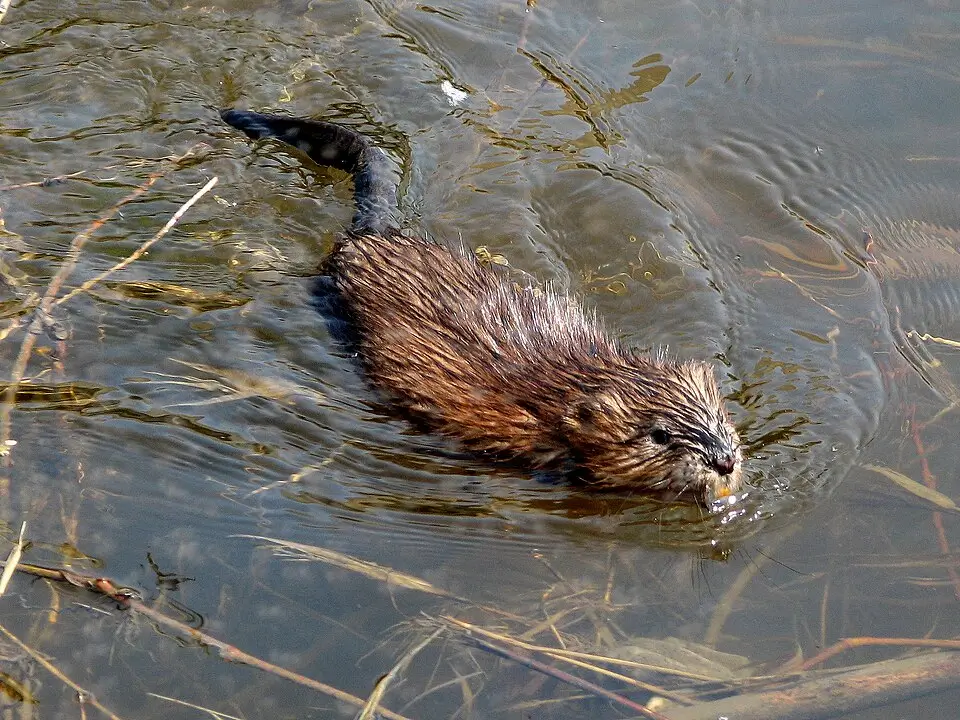
Physically, muskrats are well-adapted to life in and around water. Their bodies are stocky and streamlined, typically measuring between 16 and 25 inches in total length, including the tail. The tail itself is a distinctive feature — laterally flattened and scaly, it functions as a rudder during swimming, allowing the animal to navigate currents and turn with agility. The hind feet are partially webbed, further enhancing the muskrat's swimming prowess. Their dense, waterproof fur consists of two layers: a coarse outer coat and a soft, thick underfur that traps air and insulates the animal against cold water temperatures — a critical adaptation in a state like Washington, where water temperatures can be frigid for much of the year.
The species name zibethicus refers to the animal's musk glands, which are located near the base of the tail. These glands produce a strong-smelling secretion that muskrats use for communication and territorial marking — a behavior that gave the species its common name. During the breeding season, this musky odor becomes particularly pronounced as individuals signal their presence and reproductive status to others in the area.
Muskrats are primarily herbivorous, feeding on a wide variety of aquatic and semi-aquatic plants. Cattails, bulrushes, sedges, water lilies, and pondweed are among their dietary staples. However, they are opportunistic feeders and will supplement their plant-based diet with invertebrates, fish, frogs, and other small animals when the opportunity arises. This dietary flexibility contributes significantly to their adaptability and success across a broad range of environments.
One of the most fascinating aspects of muskrat biology is their capacity for rapid reproduction. Females can produce multiple litters per year, with each litter typically containing four to eight young. Gestation lasts approximately three to four weeks, and young muskrats develop quickly, reaching maturity within a matter of months. This high reproductive rate allows muskrat populations to recover quickly from periods of reduced numbers, whether caused by harsh winters, predation, or trapping pressure.
Like beavers — their larger cousins in the rodent world — muskrats are notable for the structures they build. They construct dome-shaped lodges from cattails, sedges, reeds, and mud, creating sheltered spaces for resting, feeding, and raising young. These lodges, often visible above the surface of ponds and marshes, can reach several feet in height. In areas where bank burrowing is feasible, muskrats will also excavate tunnels into stream banks, with entrance holes located below the waterline for protection from predators.
Habitat & Range
The muskrat is one of the most widely distributed semi-aquatic mammals in North America. Its native range extends from Alaska and Canada south through the contiguous United States, and it has also been introduced to parts of Europe and Asia, where it has established substantial feral populations. In Washington State, muskrats are found throughout the state wherever suitable wetland habitat exists.
Washington's geography provides an exceptional range of wetland environments. In the western part of the state, where the climate is maritime and precipitation is abundant, muskrats inhabit freshwater marshes, slow-moving rivers, beaver ponds, and the edges of lakes. The Puget Sound lowlands, with their network of sloughs, wetlands, and river deltas — including the Skagit, Snohomish, and Nisqually river systems — support healthy muskrat populations. Coastal estuaries and tidal marshes, where fresh and saltwater intermingle, also provide suitable conditions for muskrats.
East of the Cascades, Washington transitions to a drier, more arid climate, but the Columbia River and its many tributaries, along with irrigation canals, reservoirs, and natural potholes in the Columbia Basin, continue to support muskrat populations. The diverse wetland habitats of the Yakima Valley and the Okanogan Highlands further extend the species' footprint across the state.
The ideal muskrat habitat features abundant emergent aquatic vegetation, particularly cattails and bulrushes, water depths of one to two feet in foraging areas, and sufficient water to maintain liquid conditions through winter. Muskrats are highly sensitive to water level fluctuations — droughts or dramatic drawdowns can destroy lodges and disrupt breeding cycles, while flooding can inundate burrows and displace populations.
Hunting Information
Muskrat trapping and hunting have deep historical roots in North America, predating European settlement. Indigenous peoples across the continent harvested muskrats for food and fur long before the commercial fur trade transformed the practice into an economic activity. During the height of the North American fur trade in the 18th and 19th centuries, muskrat pelts were among the most commonly traded furs on the market. Today, muskrat trapping and hunting continue as legal, regulated activities that contribute to wildlife management and rural economies.
In Washington State, anyone interested in hunting or trapping muskrats should consult the Washington Department of Fish and Wildlife (WDFW) for the most current and accurate information regarding seasons, bag limits, licensing requirements, and legal methods of take. Regulations governing furbearer hunting and trapping in Washington can change from year to year, and it is the responsibility of every hunter and trapper to verify current rules before heading afield. Specific season dates, license requirements, and legal equipment specifications were not available in the source data used for this article, so readers are strongly encouraged to visit the WDFW's official website or contact the agency directly for up-to-date regulatory information.
Trapping remains the most common method of harvesting muskrats, with body-gripping traps and foothold traps being traditional tools of the trade. In some jurisdictions, muskrats may also be legally taken by hunting with firearms or archery equipment. Washington's wetland landscapes — particularly the marshes of the Skagit Valley, the Columbia Basin, and the Puget Sound lowlands — provide excellent opportunities for those pursuing muskrats in a traditional trapping context.
Muskrat fur, though less fashionable than it once was in global markets, still holds value for those skilled in pelt preparation. Muskrat meat has also long been considered a delicacy in certain regions of North America, with a flavor profile that reflects the animal's herbivorous diet.
Conservation
From a conservation standpoint, the muskrat is currently classified as a species of least concern by international wildlife assessment bodies. Populations are generally stable across the majority of the species' range, supported by the animal's remarkable reproductive capacity and adaptability. However, like all wetland-dependent species, muskrats are vulnerable to habitat loss and degradation. The draining of wetlands for agricultural and urban development, water pollution, and climate-related changes to precipitation and hydrology all pose potential long-term threats to muskrat populations.
In Washington State, conservation efforts aimed at protecting and restoring wetland habitats benefit muskrats and a host of other species. The state's network of wildlife refuges, conservation easements, and wetland mitigation programs helps preserve the marshy environments upon which muskrats depend. Organizations such as Ducks Unlimited, the Washington Waterfowl Association, and various tribal natural resource departments contribute to wetland conservation in meaningful ways.
Muskrats also play a role in maintaining healthy wetland ecosystems. Their foraging activity can create open water areas within dense vegetation, increasing habitat diversity and benefiting waterfowl and wading birds. Their lodges provide nesting platforms for birds such as Canada geese and various duck species. This ecological role as a "keystone forager" in wetland systems underscores the importance of maintaining healthy muskrat populations.
Regulated trapping, when managed sustainably, also plays a role in conservation by providing population data to wildlife managers and generating funding for conservation programs through license sales and excise taxes on trapping equipment.