Overview
Few birds are as universally recognized across North America as the mourning dove (Zenaida macroura). Its soft, melancholic cooing drifts through suburban backyards, open farmlands, and desert scrublands alike, making it one of the most familiar sounds of the American outdoors. At once a symbol of peace and a prized game bird, the mourning dove occupies a unique cultural and ecological niche that few other species can claim. Whether you encounter one perched on a telephone wire, feeding along a gravel road, or bursting into the sky in a blur of whistling wings, the mourning dove is a creature that commands attention and respect.
In Washington State, nestled in the Pacific Northwest, the mourning dove represents an important part of the local wildlife tapestry. While much of Washington's outdoor identity is defined by its towering Douglas firs, salmon-filled rivers, and rugged coastlines, the state's eastern plains, shrub-steppe habitats, and agricultural valleys also provide meaningful habitat for this beloved dove. Understanding this bird — its biology, behavior, ecology, and place in hunting tradition — is essential for anyone who spends time in the field, whether with binoculars or a shotgun in hand.
Biological Traits
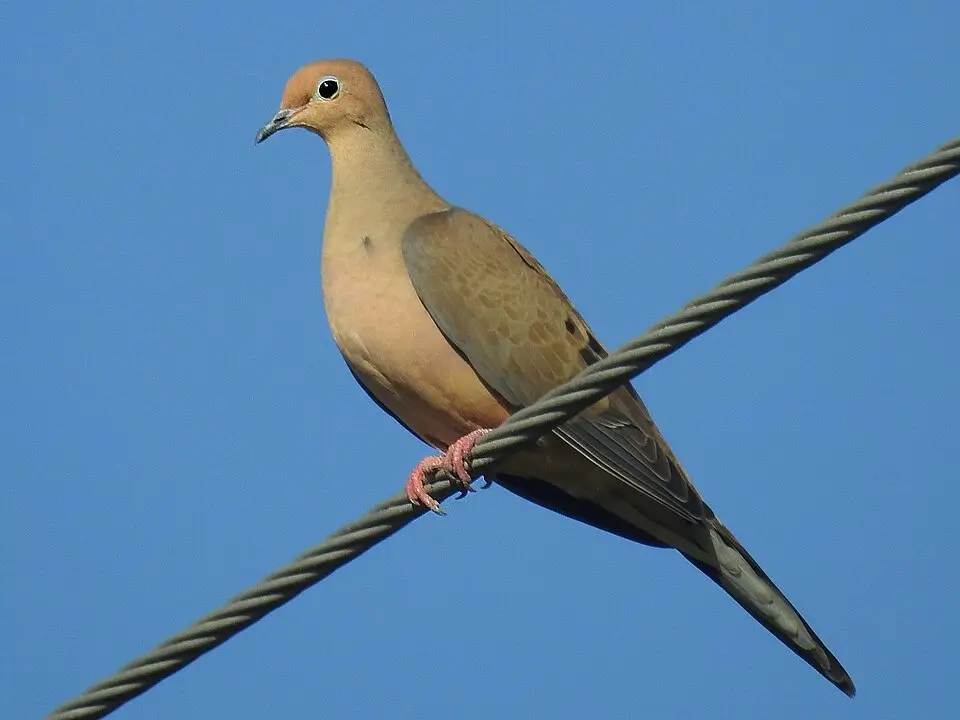
The mourning dove (Zenaida macroura) belongs to the family Columbidae, the family that encompasses all pigeons and doves worldwide. It is a medium-sized bird, slender and graceful in form, with a small rounded head that bobs characteristically as it walks. The body plumage is a warm, buffy-brown to grayish-tan, with a distinctive pinkish wash on the breast. One of the bird's most recognizable features is its long, tapered tail, which fans out in flight to reveal white-tipped outer tail feathers — a flash of white that is often the last thing a hunter sees as the bird rockets away.
The mourning dove takes its common name from its haunting, owl-like call, a soft oo-wah-ooo-oo-oo that carries beautifully across open landscapes and is frequently mistaken by those unfamiliar with the bird as the call of an owl. The sound is produced by the male and is closely associated with courtship and territory establishment during the breeding season.
In terms of size, mourning doves are typically around 9 to 13 inches in length and weigh between 3 and 6 ounces, though hunters will note these birds can vary somewhat in size depending on geography and season. Their wings are long and pointed, built for speed, and the distinctive whistling sound of their wingbeats — caused by air passing over specialized flight feathers — serves as an alarm signal to other doves nearby.
Mourning doves are prolific breeders, often raising multiple broods in a single year. In warmer parts of their range, a single mated pair may successfully produce anywhere from two to five clutches annually, each consisting almost universally of exactly two eggs. Both parents share incubation duties, and the young, called squabs, are fed a remarkable secretion known as "crop milk" — a protein- and fat-rich substance produced in the crops of both the male and female parent. This adaptation is shared with other members of the pigeon family and allows doves to successfully rear young independent of the immediate availability of suitable food sources for nestlings.
As seed eaters, mourning doves are almost exclusively granivorous. They feed on a wide variety of seeds from grasses, weeds, agricultural crops, and native plants. Unlike many birds, doves swallow seeds whole and store large quantities in their crop before retiring to digest the meal in a safe, sheltered location. This feeding strategy means that good dove habitat is closely tied to the availability of open ground with accessible seed sources — a trait that draws them to harvested grain fields, roadsides, and disturbed open lands.
Habitat & Range
The mourning dove is one of the most broadly distributed birds in North America. Its range extends from southern Canada through the continental United States, Mexico, and into Central America, as well as across much of the Caribbean. Within the United States, it is present year-round across most of the southern tier of states, while northern populations, including those in Washington and the broader Pacific Northwest, experience seasonal movements as birds migrate to warmer wintering areas.
Washington State offers a notable mix of habitats for mourning doves, particularly in the eastern part of the state. The Columbia Basin, the Palouse agricultural region, and the broader shrub-steppe and semi-arid landscapes east of the Cascade Mountains provide open, sun-drenched terrain well-suited to dove activity. Grain fields — whether planted in wheat, barley, sunflower, or corn — are particularly attractive foraging areas, especially during the late summer and early fall when seeds are abundant and accessible following harvest.
In western Washington, mourning doves are less commonly encountered but are not absent. The lowland valleys, agricultural clearings, and suburban fringes of the Puget Sound region can support small numbers of doves, particularly during warmer months. The key habitat requirements remain consistent across all of these settings: open ground for feeding, scattered trees or shrubs for perching and nesting, and access to fresh water, which doves require daily due to their dry, seed-based diet.
Mourning doves tend to nest in a remarkably wide range of locations. Their nests are famously flimsy — little more than a loose platform of twigs — placed in trees, shrubs, on the ground, or even on man-made structures such as window ledges and gutters. Despite appearing precarious, these nests serve their purpose effectively, and the doves' high reproductive rate compensates for losses from nest predation and weather events.
Hunting Information
The mourning dove holds the distinction of being the most widely hunted migratory game bird in the United States, with millions of birds harvested by hunters each year across the country. Dove hunting is a cherished tradition, particularly in the South and Midwest, where opening day of dove season is treated as a cultural institution and social gathering. The pursuit of mourning doves offers a uniquely challenging shooting experience — these birds are deceptively fast, capable of sustained flight speeds well above 50 miles per hour, and their erratic, twisting flight path makes them one of the more demanding targets in all of wingshooting.
Because the mourning dove is a migratory species, it is managed at the federal level under the Migratory Bird Treaty Act, with individual states operating within frameworks set by the U.S. Fish and Wildlife Service. Hunters in Washington who are interested in pursuing mourning doves should consult the Washington Department of Fish and Wildlife (WDFW) directly for the most current and accurate information regarding season dates, bag limits, and any applicable licensing requirements. Regulations can change from year to year, and it is the responsibility of every hunter to obtain and review the current migratory bird hunting regulations before heading to the field.
Generally speaking, successful dove hunting in Washington is most likely to occur in the eastern portion of the state, where populations are more robust and habitat conditions are most favorable. Hunters typically set up near grain fields, water sources, or known flight corridors and intercept birds as they move between feeding and roosting areas. Decoys can be effective, and the use of spinning-wing dove decoys is a popular technique in many dove-hunting states. A 12- or 20-gauge shotgun loaded with lightweight shot is the standard choice for most hunters, and shooting distances are generally moderate, making doves an excellent species for newer shotgun hunters to develop their skills.
Washington hunters should also be aware that all mourning dove hunters in the United States who are 16 years of age or older are required to purchase a federal Harvest Information Program (HIP) permit, which allows wildlife managers to gather important data on migratory bird harvest across the country. This relatively simple requirement is an important component of the national effort to manage dove populations sustainably.
Conservation
Despite the enormous number of mourning doves harvested annually across North America, the species remains abundant and is not considered a conservation concern at the population level. The mourning dove is one of the most numerous birds on the continent, with population estimates frequently cited in the hundreds of millions. Its adaptability to human-altered landscapes, high reproductive rate, and broad dietary flexibility have allowed it to thrive even as land use patterns have changed dramatically over the past century.
That said, like all migratory birds, mourning doves benefit from responsible stewardship of the landscapes they depend on. Agricultural practices that maintain open ground, weed diversity, and grain availability contribute positively to dove habitat. Conservation programs that preserve native grasslands, manage water sources in arid regions, and protect riparian corridors also support healthy dove populations indirectly by maintaining the broader ecosystem structure that doves rely upon.
Wildlife managers at both the federal and state levels monitor mourning dove populations through a combination of breeding bird surveys, call-count surveys, and harvest data collected through the HIP program. This ongoing monitoring ensures that hunting regulations remain calibrated to sustainable levels, balancing the interests of hunters with the long-term health of dove populations across their entire range.
In Washington, as in other states, hunters play an active role in conservation through the excise taxes paid on hunting equipment and ammunition under the Federal Aid in Wildlife Restoration Act (commonly known as the Pittman-Robertson Act). These funds flow directly to state wildlife agencies and support habitat management, research, and public access programs that benefit doves and countless other species.
The mourning dove's story is, in many ways, a conservation success — a bird that has adapted gracefully to a changing world while continuing to fill our fields and skies with its gentle presence and thrilling flight.