Overview
Few animals embody the rugged spirit of North America's mountain wilderness quite like the mountain goat. Perched on sheer cliff faces, navigating seemingly impossible terrain with effortless grace, and enduring some of the harshest weather conditions on the continent, the mountain goat (Oreamnos americanus) stands as one of the most iconic and awe-inspiring large mammals found in the wild. Whether you are an avid hunter, a wildlife enthusiast, a conservationist, or simply someone who appreciates the majesty of untamed nature, the mountain goat commands respect and admiration.
In Washington State, situated in the heart of the Pacific Northwest, the mountain goat holds a particularly special place. The state's dramatic landscape — from the jagged peaks of the North Cascades to the volcanic ridgelines of Mount Rainier and the Olympic Peninsula — provides some of the most stunning and challenging habitat that this species calls home. Understanding the biology, behavior, range, and conservation status of the mountain goat is essential for hunters, wildlife managers, and outdoor enthusiasts alike. This article explores the many fascinating dimensions of Oreamnos americanus, shedding light on what makes this animal one of the most remarkable creatures in North American wildlife.
Biological Traits
The mountain goat is classified within the family Bovidae and the subfamily Caprinae, which also includes sheep, chamois, and true goats. Despite its common name and goat-like appearance, the mountain goat is not a true goat. It is more closely related to the chamois of Europe and Asia. Its scientific name, Oreamnos americanus, derives from the Greek words for "mountain" (oros) and "lamb" (amnos), combined with the Latin term for American — a fitting descriptor for this high-altitude dweller.
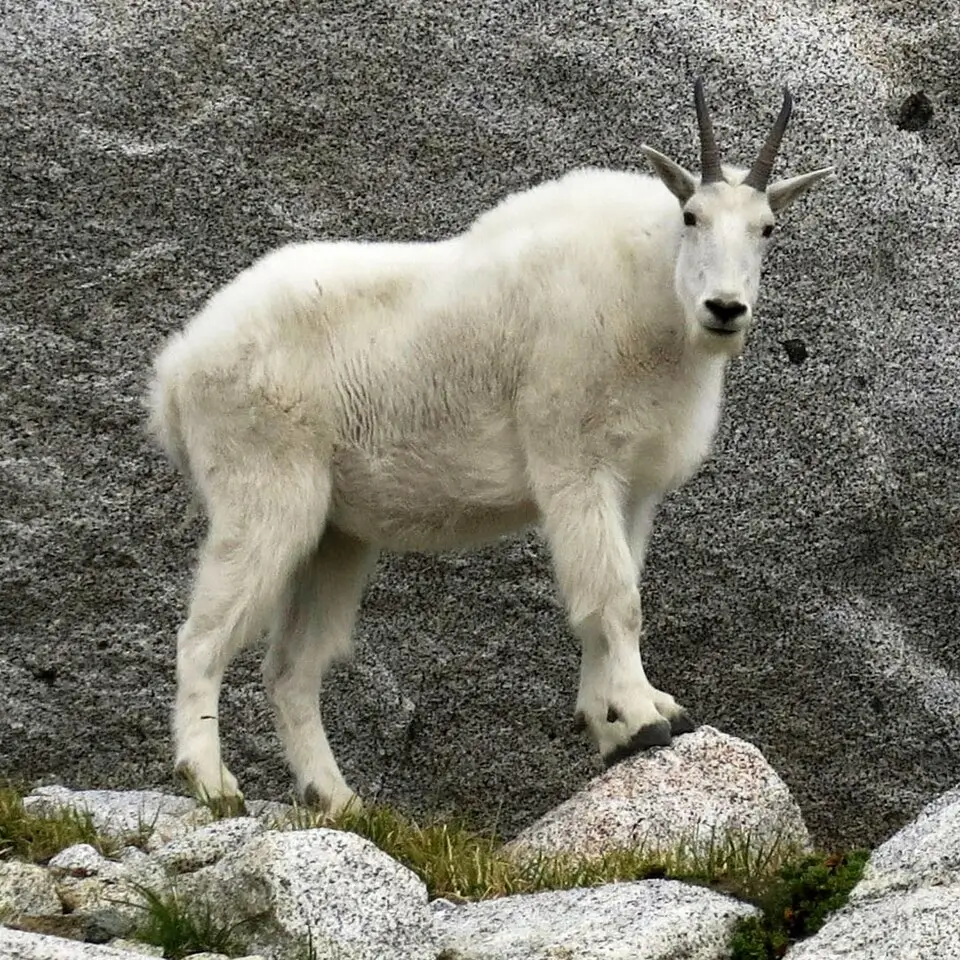
One of the mountain goat's most recognizable features is its thick, double-layered white coat. This striking all-white or creamy-white pelage serves multiple purposes. It provides exceptional insulation during the brutal alpine winters, where temperatures can plummet far below freezing and windchill factors make survival a daily challenge. The outer layer consists of long, stiff guard hairs that help repel moisture, while the inner layer is a dense, woolly undercoat that traps heat close to the body. This remarkable coat is shed in the spring and early summer months as temperatures rise.
Both male and female mountain goats possess short, sharp, jet-black horns that curve slightly backward. These horns are composed of a bony core covered by a keratin sheath and grow continuously throughout the animal's life, making it possible to estimate age by counting the annual growth rings. Males, known as billies, tend to have slightly longer and thicker horns than females, which are called nannies.
Mountain goats are well-adapted to life on steep, rocky terrain. Their hooves are uniquely engineered for climbing — featuring a hard outer edge for gripping rock surfaces and a soft, flexible inner pad that provides traction on uneven ground. Dewclaws positioned further up the leg act as additional stabilizers when descending particularly steep slopes. These anatomical features make the mountain goat one of the most sure-footed large mammals on Earth.
Adult billies typically weigh between 125 and 180 pounds, while nannies are generally smaller, ranging from around 100 to 130 pounds. Mountain goats are not exceptionally fast animals in the traditional sense, but their ability to traverse near-vertical cliff faces and rocky outcroppings at surprising speeds is unmatched among large mammals. Young mountain goats, called kids, are born in late spring or early summer after a gestation period of roughly six months. Kids are precocial — meaning they are born relatively developed and are capable of following their mothers across challenging terrain within hours of birth.
Mountain goats are herbivores, feeding on a wide variety of alpine and subalpine vegetation. Their diet includes grasses, sedges, herbs, mosses, lichens, and even woody shrubs depending on the season. They are known to seek out salt and mineral licks, sometimes traveling considerable distances to access these natural sources of nutrition, particularly during the spring months when their bodies crave minerals after a long winter.
Habitat & Range
The mountain goat is native to North America and occupies a range that stretches from southern Alaska and the Yukon south through British Columbia and Alberta in Canada, continuing into the mountainous regions of the western United States, including Washington, Idaho, Montana, Wyoming, and Colorado, as well as parts of the Black Hills of South Dakota where they have been introduced. The species thrives in rugged alpine and subalpine zones, typically found at elevations above 3,000 feet and commonly ranging well above 8,000 feet in some areas.
In Washington State, mountain goats are found across several distinct mountain ranges. The North Cascades, the central and southern Cascades, and the Olympic Mountains all support populations of this species. Washington's varied topography and climate create a patchwork of alpine habitats — including rocky talus fields, steep cliff systems, meadows, and snowfields — that provide both shelter and forage for mountain goat herds. The proximity of Washington to the Pacific Ocean also influences the climate of its mountain ranges, resulting in heavy winter snowfall and dramatic terrain that is ideally suited to the mountain goat's lifestyle.
Mountain goats are not typically migratory in the traditional sense, but they do make seasonal movements between higher and lower elevations. During summer months, they are often found at or near the highest accessible ridges and rocky outcrops, taking advantage of lush alpine vegetation and cooler temperatures. As winter approaches and snow begins to accumulate, they may descend slightly in elevation to access windswept ridges or south-facing slopes where foraging remains possible even under snowy conditions.
The species is well-adapted to extreme weather and shows a strong preference for terrain that provides natural protection from predators. Wolves, mountain lions, bears, and golden eagles are among the natural predators of mountain goats, though the animals' preference for cliff-edge habitats where four-legged predators struggle to follow offers substantial protection. Rockfalls and avalanches, however, remain significant natural hazards, and harsh winter conditions can result in mortality, particularly among young, old, or weakened individuals.
Hunting Information
Mountain goat hunting is considered one of the most physically demanding and rewarding pursuits in North American big game hunting. The combination of extreme terrain, high altitude, and the sheer difficulty of locating and accessing mountain goats makes this a true trophy experience for any hunter fortunate enough to obtain a permit.
In Washington State, mountain goat hunting is a regulated and limited-entry opportunity. Because mountain goat populations are naturally limited in size and have slower reproductive rates than many other big game species, hunting opportunities are tightly managed by the Washington Department of Fish and Wildlife (WDFW). Tags and permits are typically allocated through a controlled draw or lottery system to ensure sustainable harvest levels and the long-term health of the population.
Hunters interested in pursuing mountain goat in Washington should consult the official WDFW regulations and licensing information directly, as season dates, tag availability, unit boundaries, and application deadlines are subject to change on an annual basis. It is important to note that specific season dates and license details were not available in the source data for this article, and prospective hunters are strongly encouraged to visit the official WDFW website for the most current and accurate information.
Successful mountain goat hunting demands meticulous preparation. Hunters should be in excellent physical condition, as reaching mountain goat habitat often requires multi-day backcountry pack-in trips at high elevation. High-quality optics are essential for spotting animals across vast alpine terrain. A flat-shooting rifle chambered for medium to large cartridges is commonly recommended, as shots may be taken at varying distances in open alpine environments. Pack-out logistics must also be carefully considered — the remote nature of mountain goat country means that retrieving harvested animals can be an expedition in itself, often requiring pack frames, game bags, and significant physical effort.
Guided hunts with experienced outfitters who know the terrain and the habits of mountain goat herds are a popular option for hunters who may be unfamiliar with specific areas. These professionals can provide invaluable assistance in navigating challenging terrain, glassing for animals, and managing the logistics of a successful harvest.
Conservation
The mountain goat is currently listed as a species of least concern by the International Union for Conservation of Nature (IUCN), reflecting the overall stability of the species across its range. However, conservation efforts remain an important priority in many regions, including Washington State, where some local populations have experienced declines in recent decades.
Habitat loss and degradation, climate change, disease, and human disturbance are among the primary challenges facing mountain goat populations. Climate change poses a particular long-term concern, as warming temperatures reduce the extent and quality of alpine and subalpine habitats that mountain goats depend on. Shrinking snowpacks, changing vegetation patterns, and increased competition from other ungulates moving into higher elevations may gradually alter the ecological dynamics of mountain goat habitat.
Hunting regulations in Washington and other states are designed with conservation firmly in mind. Wildlife managers monitor population trends, herd dynamics, and habitat conditions to set sustainable harvest levels. Collaborative efforts between state wildlife agencies, tribal nations, conservation organizations, and the scientific community continue to advance the understanding and protection of this species.
Washington's dedication to wildlife conservation reflects the broader culture of the Pacific Northwest, where wild places and wild creatures are deeply valued. The mountain goat, as both a symbol of alpine wilderness and a prized big game animal, benefits from this culture of stewardship. Organizations such as the Wild Sheep Foundation and various state wildlife foundations contribute to habitat protection and population research efforts that benefit mountain goats alongside other alpine species.
For hunters, the mountain goat represents more than just a trophy. The privilege of pursuing this animal in its wild, high-altitude home carries with it a deep responsibility to support the conservation measures that ensure future generations will have the opportunity to witness — and hunt — this extraordinary animal.