Overview
Few birds are as universally recognized as the Mallard (Anas platyrhynchos). Whether gliding across a quiet pond in a city park, splashing through a wetland marsh, or flying in formation over the misty rivers of Washington State, the Mallard is a bird that connects millions of people to the natural world. It is arguably the most familiar and widespread wild duck in the Northern Hemisphere, and it holds a cherished place in the hearts of birdwatchers, conservationists, and waterfowl hunters alike.
In Washington State, the Mallard is a cornerstone of the waterfowl hunting tradition. The Pacific Northwest, with its abundance of rivers, wetlands, estuaries, and agricultural fields, provides exceptional habitat for this adaptable species. From the Columbia River Basin to the coastal lowlands and the lakes of eastern Washington, Mallards are a defining feature of the region's outdoor identity. Understanding this remarkable bird — its biology, its behavior, its habitat needs, and its role in the hunting tradition — deepens our appreciation for the natural heritage of Washington and the broader continent.
Biological Traits
The Mallard (Anas platyrhynchos) belongs to the family Anatidae, the large and diverse family that includes all ducks, geese, and swans. Within this family, the Mallard is classified as a dabbling duck — a group of waterfowl known for feeding at or near the water's surface, tipping forward to reach submerged vegetation rather than diving deeply like their diving duck counterparts.
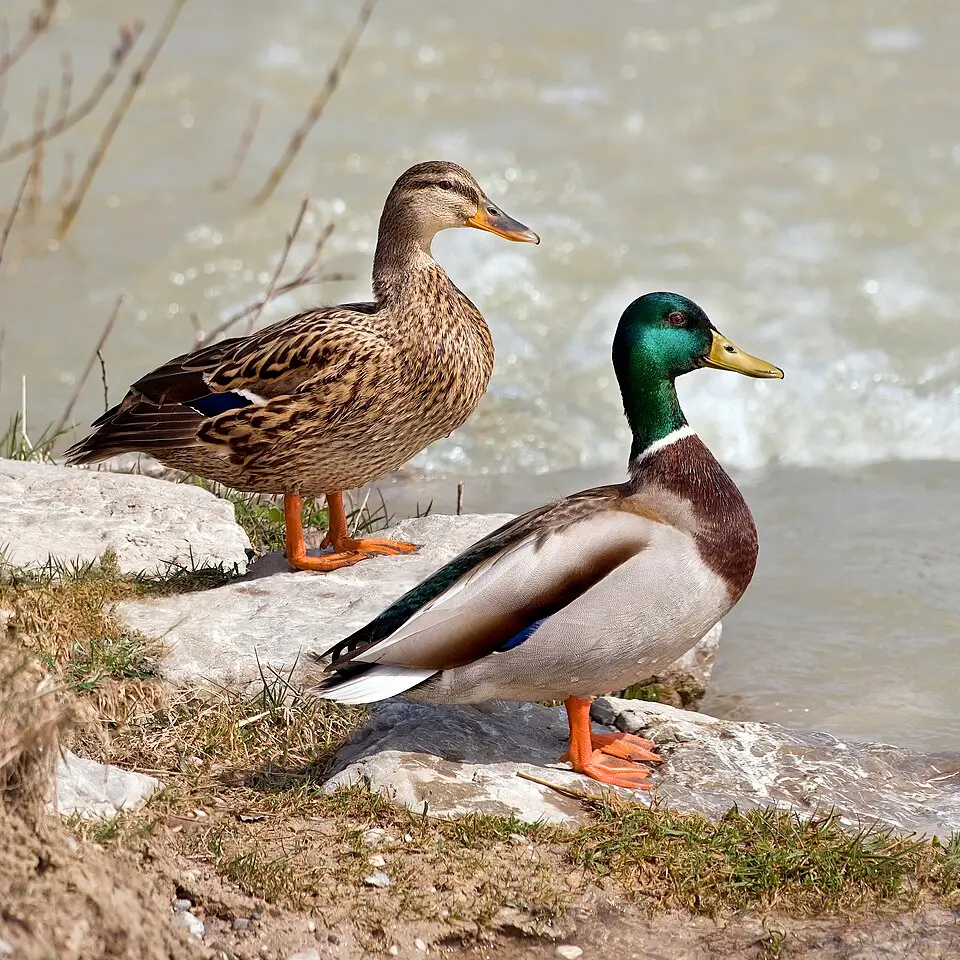
One of the Mallard's most striking features is the dramatic difference in appearance between the sexes, a phenomenon known as sexual dimorphism. The male, or drake, is instantly recognizable by his iridescent green head, which seems to shift color in changing light, catching shades of blue and turquoise alongside vivid emerald. The drake's neck is encircled by a clean white collar, which separates the green head from a rich chestnut-brown breast. The body feathers are largely gray, and the tail features a distinctive curled black feather — a hallmark of the Mallard drake. The bill is a bright yellow-orange, and the legs and feet are orange.
The female Mallard, or hen, is far more subtly colored, dressed in mottled brown plumage that serves as superb camouflage during the nesting season. Her coloring helps her blend seamlessly into the reeds, grasses, and vegetation where she nests and raises her young. Both sexes display a striking iridescent blue-purple wing patch known as a speculum, bordered by white bars, which is visible during flight and even when the wings are folded.
Mallards are medium to large-sized ducks. They are robust, capable fliers, and highly adaptable in their diet, which includes aquatic plants, seeds, insects, small fish, amphibians, and invertebrates. This dietary flexibility is one of the key reasons for the species' extraordinary success across such a wide range of environments.
Like many ducks, Mallards undergo a seasonal molt. After the breeding season, drakes enter a dull, female-like plumage phase known as eclipse plumage, during which they temporarily lose their ability to fly. They regain their iconic breeding plumage in the autumn months, coinciding with the return to social and migratory behavior.
Mallards are also notably vocal. The female produces the classic, loud, descending "quack" that most people associate with ducks in general. The male, by contrast, produces a softer, raspier sound. These vocalizations play important roles in courtship and social communication.
The species is also well known for hybridizing with closely related ducks, including domestic ducks derived from Mallard stock. This hybridization has been a topic of conservation interest, particularly regarding its potential impact on closely related wild species.
Habitat & Range
The Mallard's range is truly global. As a species, Anas platyrhynchos breeds across much of the Northern Hemisphere, including North America, Europe, Asia, and parts of North Africa. In North America, Mallards are found in virtually every state and province, from the prairie pothole regions of the Great Plains — considered the duck factory of North America — to the Pacific Coast, the Great Lakes, the Gulf Coast, and well into Mexico during winter months.
Washington State offers a remarkably diverse array of habitats that Mallards exploit throughout the year. The Pacific Northwest's geography ranges from temperate rainforests and saltwater estuaries on the coast to the dry shrub-steppe and wheat-farming country of eastern Washington, and from high mountain lakes to broad river floodplains. Mallards are generalists that thrive in this variety.
Western Washington, with its network of river deltas, sloughs, coastal marshes, and lowland lakes, provides rich foraging and wintering grounds. The Fraser River delta region, Puget Sound shorelines, and river valleys such as the Skagit, Snoqualmie, and Chehalis all attract large numbers of Mallards, particularly during the fall and winter migration. Eastern Washington, meanwhile, hosts breeding populations in agricultural wetlands, riparian corridors, and reservoir systems. The Columbia Basin, with its extensive irrigation infrastructure and associated wetland complexes, is a particularly productive area for Mallards.
Mallards are year-round residents in many parts of Washington, though their numbers swell considerably in autumn and winter as birds from northern breeding grounds move south along the Pacific Flyway. The Pacific Flyway is one of four major North American migratory corridors, and Washington sits along its western edge, making the state a vital stopover and wintering destination for millions of waterfowl each year.
Mallards prefer shallow freshwater or brackish environments with abundant emergent vegetation, open water for foraging, and nearby upland areas suitable for nesting. Hens typically nest on the ground, concealed in dense grasses or brush near water. Clutch sizes are generally around eight to thirteen eggs, and incubation lasts approximately four weeks. Ducklings are precocial, meaning they are mobile and able to feed themselves shortly after hatching, though the hen remains attentive and protective throughout the brooding period.
Hunting Information
The Mallard is the most sought-after waterfowl species in North America, and Washington State is no exception to this tradition. Waterfowl hunting in Washington is regulated jointly by the U.S. Fish and Wildlife Service (USFWS), which sets federal frameworks, and the Washington Department of Fish and Wildlife (WDFW), which establishes state-specific seasons, bag limits, and licensing requirements within those federal guidelines.
Because hunting regulations for ducks, including Mallards, change on an annual basis in response to population surveys and habitat conditions, hunters must consult the most current Washington State waterfowl season regulations published by the WDFW before heading afield each season. Regulations typically address season dates, daily bag limits, possession limits, legal shooting hours, and zone-specific rules that vary across different regions of the state.
Hunting Mallards in Washington typically involves decoy spreads, calls, and blinds or natural concealment along wetlands, river edges, flooded agricultural fields, and coastal marshes. Mallard calling is both a practical hunting skill and an art form in its own right, with hunters using a variety of calls to replicate the hen's classic quack, feeding calls, and comeback calls to draw birds within range. The species responds well to both motion decoys and traditional floating decoys, and experienced hunters take great care in setting realistic spreads that inspire confidence in approaching birds.
Hunters pursuing Mallards in Washington must use non-toxic shot, a federal requirement for all waterfowl hunting in the United States implemented to prevent lead poisoning in waterfowl and the raptors and scavengers that feed on them. Steel shot is the most common choice, though bismuth, tungsten, and other approved non-toxic alternatives are also used.
As with all hunting in Washington, current licensing requirements must be met. Hunters should verify the applicable license, migratory bird permit, and Federal Duck Stamp requirements with the WDFW prior to each season. The Federal Duck Stamp, purchased annually, is a cornerstone of wetland conservation funding in the United States, directing proceeds toward the purchase and protection of critical waterfowl habitat.
Conservation
The Mallard's conservation status is currently one of the brighter stories in North American wildlife management. The species is classified as Least Concern on the IUCN Red List, reflecting its large and widespread global population. Robust scientific monitoring through programs such as the U.S. Fish and Wildlife Service's annual Waterfowl Population Status report ensures that harvest levels are calibrated to sustainable population levels each year.
Habitat conservation remains the most important long-term factor in Mallard population health. The ongoing protection and restoration of wetlands — through programs like the North American Waterfowl Management Plan, Ducks Unlimited's habitat initiatives, and public land management — directly supports Mallard populations across the continent. In Washington, the preservation of river floodplains, the management of National Wildlife Refuges, and the conservation of working agricultural landscapes all contribute to healthy Mallard numbers.
Hunters themselves have historically been among the most significant contributors to wetland conservation, both financially through the Duck Stamp program and through direct participation in organizations dedicated to waterfowl habitat. This tradition continues today, reinforcing the deep and productive relationship between hunting culture and wildlife conservation.