Overview
Few animals in North America enjoy the cultural celebrity of the groundhog. Known scientifically as Marmota monax, this robust, burrowing rodent has captured the human imagination for centuries — perhaps most famously through the tradition of Groundhog Day, celebrated each February 2nd, when the animal's supposed ability to predict the arrival of spring draws crowds to events across the continent. But beyond the folklore and the fanfare, the groundhog is a genuinely fascinating creature, a master engineer of the underground world, a keystone species in its ecosystem, and — in many parts of North America — a sought-after small game animal that offers hunters exceptional sport and practical wildlife management opportunities.
The groundhog is a member of the squirrel family, Sciuridae, placing it in the same broader taxonomic group as chipmunks, prairie dogs, and tree squirrels. Within that family, it belongs to the genus Marmota, which includes the large, ground-dwelling marmots found across the Northern Hemisphere. The species name monax is derived from a word in the Algonquin language, reflecting the deep history of Indigenous peoples' familiarity with this animal long before European settlement. Common names for Marmota monax include groundhog, woodchuck, and whistle-pig — the last of these earned by the animal's habit of emitting a sharp, high-pitched whistle when alarmed.
Whether you are a naturalist, a hunter, a farmer, or simply a curious observer of the natural world, the groundhog offers a rich subject for study and appreciation. This guide explores the biology, habitat, hunting traditions, and conservation status of one of North America's most recognizable wild mammals.
Biological Traits
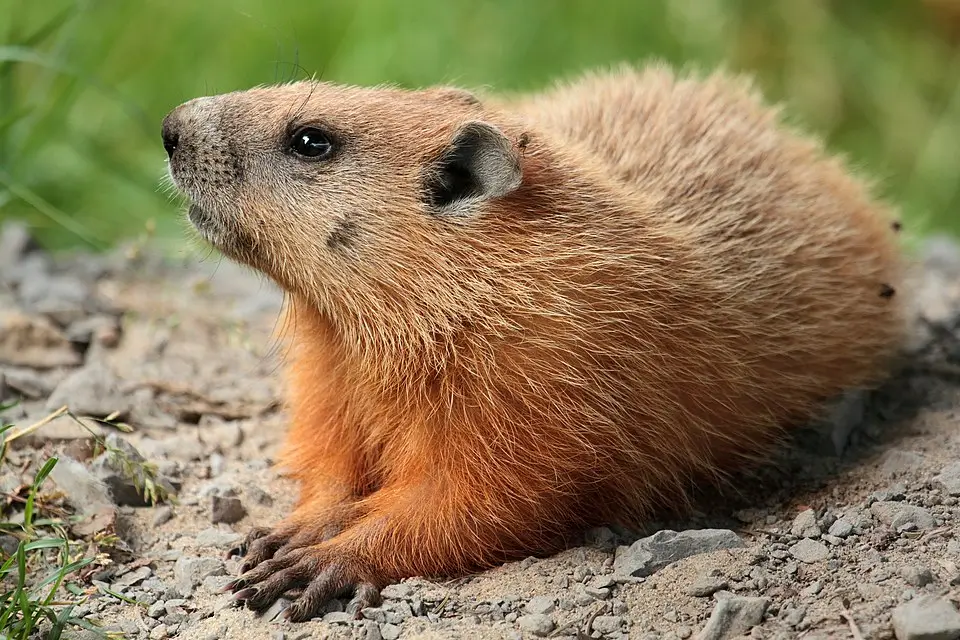
The groundhog is the largest member of the marmot family found in eastern North America, and it is a powerfully built animal designed for a life spent largely underground. Adults are stocky and low-slung, with short, strong legs perfectly adapted for digging. The body is covered in coarse, grizzled fur that typically ranges from brownish-gray to reddish-brown, with a darker face and a bushy, somewhat flattened tail. The feet are equipped with strong, curved claws that function as efficient excavating tools.
One of the groundhog's most remarkable biological traits is its capacity for true hibernation. Unlike many mammals that enter a lighter state of torpor during winter, the groundhog undergoes one of the deepest and most physiologically dramatic hibernations of any North American mammal. During hibernation, the animal's body temperature drops dramatically — from a normal range of around 99°F (37°C) to near the ambient temperature of the burrow, sometimes as low as 35-40°F (2-4°C). Heart rate slows from roughly 80 beats per minute to as few as 4-5 beats per minute, and breathing becomes slow and shallow. The animal relies entirely on fat reserves accumulated during the active months to sustain itself through the winter, which can last from as early as October through as late as March or April depending on geographic location and local climate conditions.
The groundhog is an herbivore with a broad diet that reflects the seasonality of plant life in its environment. During the active months of spring, summer, and early fall, groundhogs consume a wide variety of grasses, clovers, wildflowers, agricultural crops, and garden vegetables. This dietary flexibility allows them to thrive across a wide range of habitats and is one reason they have successfully expanded their range alongside human agricultural development. They are known to consume significant quantities of food during late summer and early fall as they build the fat reserves needed to survive hibernation.
Groundhogs are largely solitary animals outside of the brief mating season, which typically occurs in late winter or early spring shortly after emergence from hibernation. Females give birth to litters of typically two to six young after a gestation period of approximately 31 to 32 days. The young, called kits or pups, are born blind and hairless and depend entirely on their mother for the first weeks of life. By late summer, juvenile groundhogs disperse to establish their own burrow systems, a behavior that helps prevent overpopulation in any given area.
Perhaps the most architecturally impressive aspect of groundhog biology is their burrowing behavior. A single groundhog may excavate a burrow system that extends 25 to 30 feet in length, with multiple chambers serving different functions — including sleeping quarters, a latrine chamber, and a nursery. These burrows typically have multiple entrances, which serve as escape routes from predators. Groundhog burrow systems are ecologically significant well beyond the animals themselves: abandoned burrows are frequently colonized by foxes, rabbits, skunks, opossums, and a variety of reptiles and amphibians, earning the groundhog a well-deserved reputation as a keystone species.
Habitat & Range
Marmota monax is broadly distributed across much of North America. Its native range extends from the southeastern United States north through the Great Plains and across the eastern half of Canada, reaching into Alaska. The species is most abundant in the eastern and central United States and in the agricultural regions of southern Canada, where a combination of open fields, forest edges, and abundant vegetation provides ideal habitat.
The groundhog is fundamentally an animal of edges and openings. It prefers areas where open grassland, meadow, or agricultural field meets the cover of woodland or shrubby vegetation. This edge habitat provides the animal with access to both abundant food resources in open areas and the protective cover of woody vegetation or burrow systems nearby. Pastures, hay fields, roadsides, fence lines, orchards, and the margins of forests are all classic groundhog habitats.
Interestingly, the expansion of agriculture across North America during the 18th, 19th, and 20th centuries significantly benefited groundhog populations by converting large tracts of closed-canopy forest into the open and edge habitats that the species prefers. As a result, groundhog populations are generally considered healthy and stable across most of their range.
For hunters and wildlife enthusiasts in Washington State, it is worth noting that the groundhog's primary range does not naturally extend to the Pacific Northwest. Washington is home to several other Marmota species, most notably the Olympic marmot (Marmota olympus) and the hoary marmot (Marmota caligata), both of which inhabit the state's mountainous terrain. Hunters and wildlife observers in Washington interested in the groundhog should consult the Washington Department of Fish and Wildlife (WDFW) for the most current and accurate information regarding any regulations, seasons, or opportunities that may apply in the state.
Hunting Information
Groundhog hunting — sometimes called "chucking" or woodchuck hunting — is a time-honored tradition across much of the eastern United States and Canada, where the species is most abundant. It is widely regarded as one of the best warm-season hunting opportunities available during the long stretch between spring turkey season and fall deer season. Hunters prize groundhogs as challenging targets that demand fieldcraft, patience, and shooting skill.
Because groundhogs are highly alert and have keen eyesight, successful hunting often requires the ability to spot animals from a distance and make precise, long-range shots before the quarry retreats underground. This has made groundhog hunting a popular discipline among rifle enthusiasts and precision shooters, many of whom use flat-shooting centerfire cartridges and high-magnification optics to engage groundhogs at ranges of 200 yards or more. Hunters who prefer a closer challenge sometimes pursue groundhogs with rimfire rifles or even handguns, approaching carefully through available cover.
Beyond the recreational value, groundhog hunting serves a practical wildlife management function in agricultural areas. Groundhog burrows can pose a hazard to farm equipment and livestock, and significant populations can cause considerable crop damage. Farmers and landowners across the species' range often welcome hunters on their property, making groundhog hunting an accessible and socially welcome activity in rural communities.
Specific regulations, season dates, and licensing requirements for groundhog hunting vary by state and province. Because the source data available for this article does not include specific current season dates or licensing requirements for Washington State, hunters are strongly encouraged to consult the Washington Department of Fish and Wildlife (WDFW) directly at their official website for the most up-to-date and accurate regulatory information before pursuing any hunting activity. Regulations can change from year to year, and compliance with all applicable state and federal laws is essential.
Conservation
The groundhog is currently listed as a species of least concern by conservation authorities, reflecting the fact that its populations are healthy, widespread, and showing no signs of significant decline. The species has demonstrated a remarkable ability to adapt to human-altered landscapes, and in many regions its numbers have increased alongside agricultural development.
The groundhog's role as a keystone species — particularly through the creation of burrow systems that support populations of many other wildlife species — gives it an ecological importance that extends well beyond its own numbers. Healthy groundhog populations contribute to biodiversity in grassland and edge habitats across North America.
Responsible hunting, where it occurs within regulated frameworks, can serve as an important tool in maintaining balanced groundhog populations in areas where they come into conflict with agricultural interests. Wildlife management agencies across the species' range work to ensure that harvest levels remain sustainable and that populations continue to thrive for future generations of hunters and wildlife enthusiasts alike.