Overview
Few animals embody the spirit of North American woodlands quite like the fox squirrel. Known scientifically as Sciurus niger, the fox squirrel holds the distinction of being the largest tree squirrel native to North America, a title that commands respect among wildlife enthusiasts, naturalists, and hunters alike. With its bold coloration, adaptable nature, and wide distribution across much of the eastern and central United States, this charismatic rodent has earned a devoted following among those who spend time outdoors.
Whether you encounter a fox squirrel bounding across an open woodland floor, watching you intently from a high oak limb, or industriously burying acorns in preparation for winter, there is something undeniably captivating about this animal. Its relatively large size, compared to the more familiar gray squirrel, and its striking range of coat colors make it immediately recognizable once you know what to look for. For hunters, wildlife watchers, and conservationists in Washington state and across the broader Pacific Northwest, understanding the fox squirrel — its biology, behavior, habitat preferences, and status — is an enriching pursuit that deepens one's appreciation for the natural world.
This guide draws on established biological knowledge about Sciurus niger to provide a thorough overview of this remarkable species, covering everything from its physical characteristics and ecological role to its relationship with hunters and its conservation status in various parts of its range.
Biological Traits
The fox squirrel (Sciurus niger) is a member of the family Sciuridae, which encompasses all squirrels, chipmunks, marmots, and prairie dogs. Within this large and diverse family, the genus Sciurus includes the tree squirrels — animals that are highly arboreal in habit but also comfortable foraging on the ground.
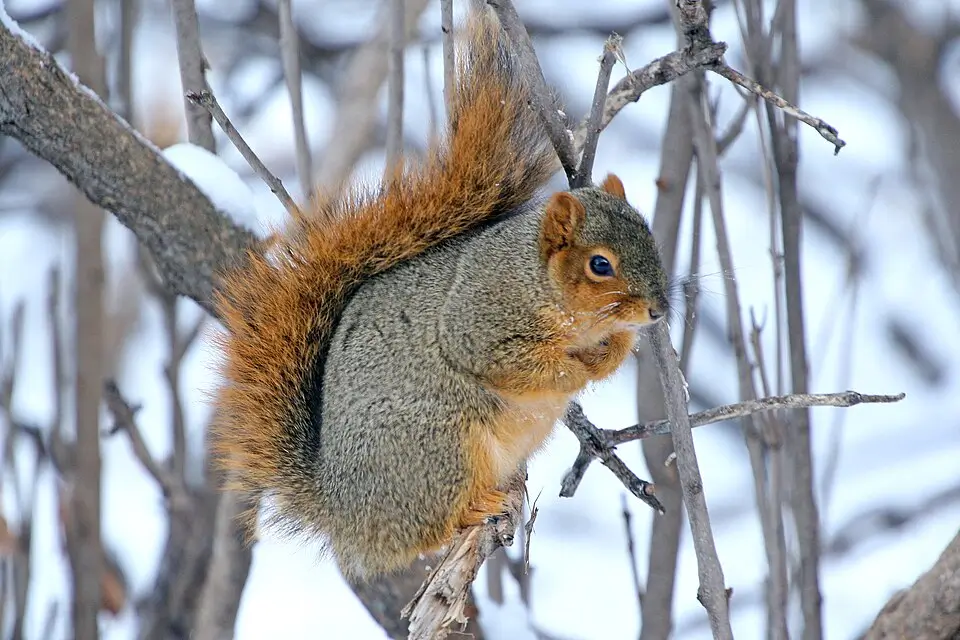
One of the most striking things about the fox squirrel is the remarkable variability in its coat color. Across its range, individuals can display a wide spectrum of pelage, from the classic rusty-orange and tawny coloration that gives the species its common name — evoking the warm hues of a red fox — to gray, brown, and even melanistic (black) forms. In the southeastern United States, it is not uncommon to encounter fox squirrels with black heads and white noses, a dramatic pattern quite distinct from the more uniform coloring seen in Midwestern populations. This color polymorphism is one of the species' most fascinating biological characteristics and speaks to the genetic diversity within the species.
As the largest tree squirrel in North America, fox squirrels are noticeably bigger and more robust than their close relative, the eastern gray squirrel (Sciurus carolinensis). Adult fox squirrels typically have a large, bushy tail that serves multiple purposes: it aids in balance during arboreal movement, acts as a counterweight when leaping between branches, provides warmth in cold weather, and serves as a visual communication signal to other squirrels.
Fox squirrels are diurnal animals, meaning they are active during daylight hours. Their activity tends to peak in the early morning and again in the late afternoon, with a midday rest period — a pattern familiar to hunters who target this species. They are primarily solitary animals outside of the breeding season, though they may congregate at abundant food sources.
Reproduction in fox squirrels typically occurs twice a year, with litters born in late winter or early spring and again in midsummer. Litters generally consist of two to four young, which are born blind and helpless. The young develop quickly, and juveniles are typically weaned and begin foraging independently after a couple of months.
The diet of the fox squirrel is broad and opportunistic. They are well known as mast feeders, consuming acorns, hickory nuts, walnuts, and other hard mast with enthusiasm. They also eat soft mast such as berries and fruits, fungi, insects, bird eggs, and agricultural crops like corn. Like other squirrels, fox squirrels practice scatter hoarding — burying individual food items in many different locations — which plays an important ecological role in seed dispersal and forest regeneration. Seeds that are cached but never retrieved have the opportunity to germinate, making fox squirrels inadvertent forest gardeners.
Their senses are well-adapted to detecting predators and locating food. Fox squirrels rely heavily on their sharp vision — including the ability to detect movement at considerable distances — as well as their acute hearing and keen sense of smell, which they use to relocate buried food caches even under snow.
Habitat & Range
The fox squirrel's native range spans a vast swath of central and eastern North America. The species is broadly distributed from the Great Plains eastward through much of the Midwest and into the eastern United States, with populations extending into parts of the South and Northeast. Within this range, the fox squirrel shows a preference for open, park-like woodlands rather than dense, closed-canopy forests — a habitat preference that distinguishes it ecologically from the eastern gray squirrel, which tends to favor denser forest conditions.
Fox squirrels thrive in oak-hickory woodlands, pine forests with open understories, forest edges, agricultural areas bordered by woodlots, and suburban parks and greenbelts where mature trees are available. They tend to avoid dense, unbroken forest interiors, which is one reason they have generally responded well to the fragmentation of eastern forests by agriculture — conditions that have, in many areas, created the kind of open woodland patchwork that fox squirrels prefer.
In terms of their presence in Washington state and the broader Pacific Northwest, it is worth noting that the fox squirrel is not native to this region. Washington's native squirrel fauna includes species such as the Douglas squirrel (Tamiasciurus douglasii) and the western gray squirrel (Sciurus griseus), among others. The fox squirrel has, however, been introduced to some areas outside its native range in the western United States, including parts of California, where introduced populations have become established. Whether introduced fox squirrels exist in any meaningful numbers in Washington is not well documented in widely available sources, and prospective hunters and wildlife observers in the state should consult current Washington Department of Fish and Wildlife resources for the most up-to-date information on species presence and distribution.
Hunting Information
Fox squirrel hunting is a beloved tradition across much of the American Midwest and South, where the species is native and populations are robust. Hunting fox squirrels offers an excellent introduction to small game hunting, requiring patience, woodsmanship, and an understanding of squirrel behavior and habitat use. Many experienced hunters regard squirrel hunting as a foundational pursuit that sharpens the skills needed for larger game — learning to move quietly through the woods, reading sign, and understanding how animals use their environment.
In terms of methods, fox squirrel hunters commonly use rimfire rifles, shotguns, or even archery equipment. Many hunters enjoy the challenge of still-hunting — moving slowly and quietly through suitable habitat and glassing the canopy and forest floor for movement. Others prefer to sit quietly near productive mast trees and allow squirrels to reveal themselves through movement and sound.
Early morning hunts during the fall mast season, when oaks and hickories are dropping nuts, are traditionally the most productive. Fox squirrels are active feeders during this period, moving frequently between food sources and spending considerable time on the ground.
For hunters in Washington state specifically, it is important to note that the source data consulted for this article does not include specific season dates, license requirements, or regulatory information pertaining to fox squirrel hunting in Washington. Because the fox squirrel is not native to Washington and its presence in the state is not broadly documented, there may not be a defined regulated season for this species in the state. Hunters interested in pursuing fox squirrels in Washington or any other jurisdiction should always consult the Washington Department of Fish and Wildlife (WDFW) directly for current, accurate, and legally binding hunting regulations before heading afield. Regulations can change from year to year, and compliance with all applicable state and local laws is both a legal requirement and an ethical responsibility.
Conservation
Across much of its native range, the fox squirrel remains a relatively common and adaptable species, and it is not currently listed as threatened or endangered at the federal level in the United States. However, conservation concerns do exist for certain subspecies and regional populations. Habitat loss — particularly the clearing of open woodland habitats, forest fragmentation, and the suppression of natural fire regimes that historically maintained the open, park-like woodlands that fox squirrels prefer — has contributed to population declines in parts of the species' range.
Several distinct subspecies of Sciurus niger have received conservation attention, including the Delmarva fox squirrel and the Sherman's fox squirrel in the southeastern United States, where populations have declined significantly due to habitat changes. These subspecies serve as reminders that even broadly distributed and seemingly common species can face significant local conservation challenges.
Efforts to conserve fox squirrel populations generally focus on habitat management — maintaining and restoring open woodland habitats through prescribed fire, selective timber harvesting, and the protection of mature mast-producing trees. Hunters and hunting organizations have historically played a significant role in supporting these conservation efforts through license fees, excise taxes on firearms and ammunition (collected under the Federal Aid in Wildlife Restoration Act, commonly known as the Pittman-Robertson Act), and active habitat work.
For wildlife enthusiasts and hunters in Washington and the Pacific Northwest, the fox squirrel represents an interesting case study in species distribution, introduction ecology, and the importance of understanding native versus non-native wildlife communities. Appreciating species like the fox squirrel — whether within or outside their native range — begins with sound knowledge and a commitment to conservation values.