Overview
Few wildlife encounters rival the sight of a bull elk standing tall in an open meadow at dawn, his massive antlers silhouetted against a glowing sky. Among North America's most iconic and charismatic large mammals, the elk — known scientifically as Cervus canadensis — commands respect from wildlife enthusiasts, conservationists, and hunters alike. These magnificent animals are a cornerstone of many western ecosystems and hold deep cultural significance for Native American peoples who have lived alongside them for thousands of years.
In the Pacific Northwest, and specifically in Washington State, elk are a treasured wildlife resource. Washington's diverse landscape — ranging from the dense temperate rainforests of the Olympic Peninsula to the sweeping open grasslands and pine forests east of the Cascades — provides some of the most productive elk habitat found anywhere in the country. Whether you are a hunter pursuing a once-in-a-lifetime bull, a wildlife photographer seeking that perfect shot, or simply a nature lover eager to understand this remarkable animal better, this guide offers a thorough look at the elk and its world.
Biological Traits
The elk, Cervus canadensis, belongs to the family Cervidae — the deer family — and is one of the largest land mammals in North America. Mature bulls are impressive animals, often standing five feet or more at the shoulder and weighing several hundred pounds. Cows are noticeably smaller, though still large by any deer-family standard.
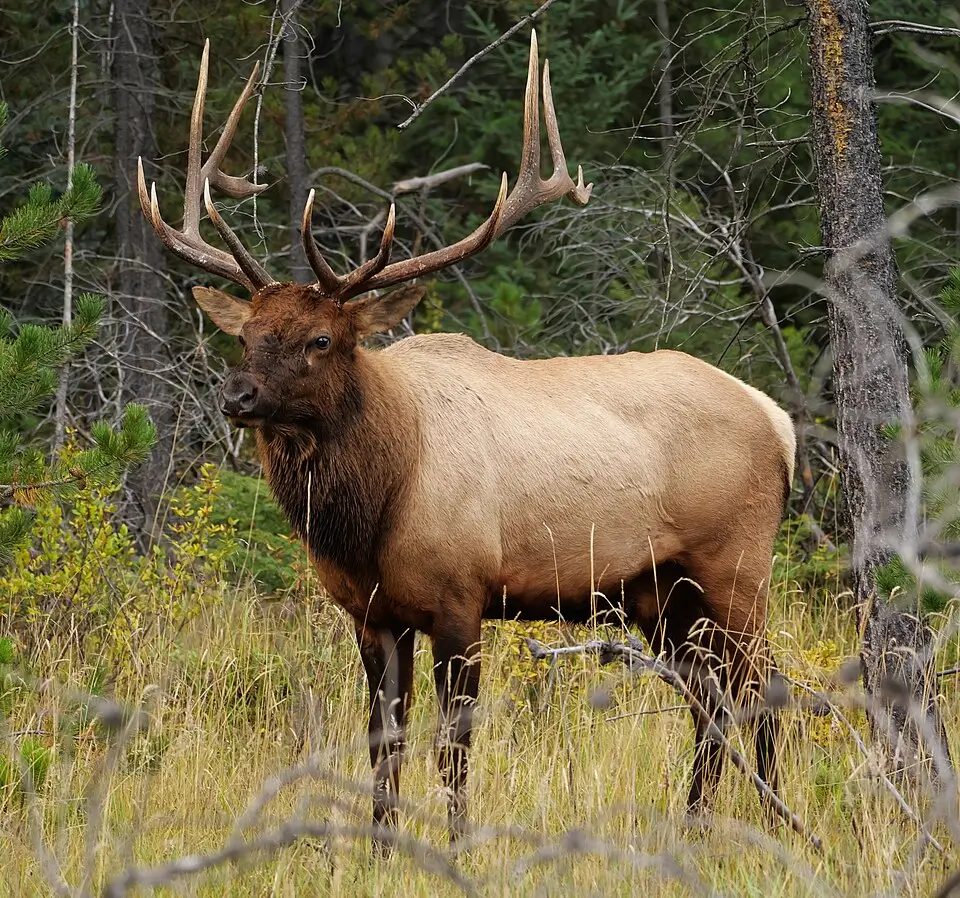
One of the elk's most defining features is the antlers carried by bulls. These bony structures are among the fastest-growing tissues found in the animal kingdom. Each year, bulls shed their antlers typically in late winter or early spring and immediately begin growing a new set. During the growth phase, antlers are covered in a soft, blood-vessel-rich skin called velvet, which supplies nutrients and oxygen to support rapid development. By late summer, blood flow decreases, velvet dries up, and bulls rub their antlers against trees and shrubs to strip it away, revealing the hardened, polished antler beneath. A mature bull's rack can feature six or more tines per side, and trophy-class antlers are celebrated trophies in North American hunting culture.
Elk are members of the order Artiodactyla, the even-toed ungulates. Like other ruminants, they have a four-chambered stomach that allows them to efficiently digest fibrous plant material. They are primarily grazers and browsers, feeding on a wide variety of grasses, sedges, forbs, shrubs, and tree bark, especially in winter when food resources become scarce.
One of the most dramatic and well-known behaviors of elk is the rut, or breeding season, which typically occurs in the fall. During this period, bulls become highly vocal, producing a distinctive call known as a bugle — a haunting, multi-note vocalization that can carry for miles through forested terrain. Bugling serves to attract cows and warn rival bulls. Bulls also engage in sparring matches, locking antlers and pushing against one another to establish dominance and secure breeding rights. Dominant bulls, called herd bulls, can gather harems of multiple cows, which they actively defend throughout the rut.
Calves are born in late spring, typically in May or June, after a gestation period of approximately 240 to 262 days. Newborn calves are spotted at birth, a camouflage adaptation that helps them blend into dappled forest light during their most vulnerable early weeks of life. Cows are attentive and protective mothers, and calves grow rapidly through the summer months.
Elk are highly social animals. Cows and calves typically form groups that can number in the dozens, while bulls tend to live apart from female groups for much of the year, coming together only during the rut. Their social nature and predictable seasonal movements have made them an important subject of wildlife research and management for decades.
Habitat & Range
Elk are remarkably adaptable animals, occupying a wide range of habitats across North America and beyond. Historically, their range extended across much of the continent, from the Atlantic coast to the Pacific. Today, due to habitat loss and historical overhunting, elk populations are concentrated primarily in the Rocky Mountain West, the Pacific Northwest, and portions of the Upper Midwest and Great Lakes regions. Reintroduction programs have also re-established elk in several eastern states.
Washington State sits squarely within prime elk country. The state's varied geography supports multiple distinct elk populations. West of the Cascade Mountains, the Olympic Peninsula is home to one of the most celebrated herds in the Pacific Northwest. The dense, moss-draped forests of the Olympic rainforest provide year-round cover, while river valleys and coastal meadows offer rich grazing. East of the Cascades, elk inhabit ponderosa pine forests, shrub-steppe environments, and the forested ridges of the Blue Mountains in the state's southeastern corner. The Blue Mountains population, shared with neighboring Oregon and Idaho, is one of the largest concentrations of Rocky Mountain elk in the entire country.
Elk are highly mobile animals and are known for making seasonal migrations between summer and winter ranges. In Washington, herds may move from high-elevation summer pastures down to lower valleys and sheltered basins as winter snows accumulate. These migration corridors are critical to population health and are an important focus of wildlife management and land conservation efforts in the state.
Hunting Information
Elk hunting holds a storied tradition in Washington State and throughout the American West. For many hunters, pursuing elk in Washington's rugged mountain terrain represents one of the most physically demanding and deeply rewarding outdoor experiences available in North America. The combination of challenging topography, dense forest, and the elk's keen senses make for a pursuit that tests skill, preparation, and patience.
Washington State manages elk hunting through its official wildlife agency, and hunters are required to obtain the appropriate licenses and tags before pursuing elk. Regulations, season dates, and area-specific rules change on a regular basis and vary depending on the elk management unit, the type of weapon used (modern firearm, archery equipment, or muzzleloader), and whether the tag applies to a bull, cow, or either-sex animal. Hunters should always consult the Washington Department of Fish and Wildlife (WDFW) directly for the most current, up-to-date regulations prior to planning any hunt.
Elk hunting in Washington typically takes place during fall, when bulls are in or approaching the rut and their behaviors become more predictable and observable. Archery hunters often have the earliest seasons, taking advantage of the bugling rut, while firearm seasons generally follow later in the fall. Scouting is a critical part of successful elk hunting — understanding the land, identifying travel corridors, locating water sources, and finding sign such as rubs, wallows, and fresh tracks can make a significant difference in hunt outcomes.
Public land access is a notable feature of elk hunting in Washington. Millions of acres of national forest, state lands, and other public property provide opportunities for hunters across a range of experience levels. Hunter orange requirements, firearm restrictions in certain areas, and the physical demands of packing out elk quarters from remote terrain are all practical considerations that every Washington elk hunter should be prepared for.
Elk meat is widely regarded as among the finest table fare available from any North American big game animal. Lean, flavorful, and nutritious, elk venison is prized by hunters and non-hunters alike. Harvesting an elk represents a significant commitment of time, effort, and resources — and for many hunters, filling an elk tag is a highlight of an entire hunting career.
Conservation
The story of elk conservation in North America is, in many ways, a success story. By the late nineteenth and early twentieth centuries, unregulated market hunting and widespread habitat destruction had drastically reduced elk populations from their historical abundance. Populations that had once roamed freely across the continent were pushed to a fraction of their former range.
The recovery of elk across much of their western range is a testament to the power of science-based wildlife management, regulated hunting, and habitat conservation. Organizations such as the Rocky Mountain Elk Foundation have invested heavily in protecting and restoring elk habitat across millions of acres. The North American Model of Wildlife Conservation, which includes regulated hunting as a central funding mechanism through license fees and excise taxes, has played a foundational role in financing the research and management work that sustains healthy elk populations today.
In Washington, elk management is overseen by the Washington Department of Fish and Wildlife, which monitors population trends, sets sustainable harvest levels, and works to maintain habitat connectivity. Maintaining the wild, undeveloped corridors that elk depend on for seasonal migration is an ongoing challenge in a state experiencing continued human population growth and land development pressure. Collaboration between public agencies, private landowners, conservation organizations, and the hunting community remains essential to ensuring that elk continue to thrive in Washington for generations to come.