Overview
Few animals are as instantly recognizable or as widely observed across North America as the Eastern gray squirrel (Sciurus carolinensis). Whether darting across a city park, leaping between the branches of a towering oak, or raiding a backyard bird feeder, this industrious and adaptable rodent has woven itself into the fabric of daily American life. For wildlife enthusiasts, the Eastern gray squirrel offers a fascinating study in behavioral complexity, ecological importance, and survival instinct. For hunters — particularly those in the Pacific Northwest state of Washington — it represents a beloved small game quarry that offers exciting opportunities and a rewarding connection to the land.
Washington state, known for its extraordinary diversity of landscapes ranging from the rain-soaked forests of the Olympic Peninsula to the dry, rolling plateaus of the eastern interior, provides a rich backdrop against which to understand this species. While the Eastern gray squirrel is not native to the Pacific Northwest, it has established itself as a notable presence in certain areas of the state, making it a subject of genuine interest for Washington's outdoor community.
This guide dives deep into the biology, behavior, habitat, and hunting traditions associated with Sciurus carolinensis, with a special focus on what hunters and wildlife watchers in Washington state need to know.
Biological Traits
The Eastern gray squirrel is a medium-sized tree squirrel belonging to the family Sciuridae, which includes all squirrels, chipmunks, marmots, and prairie dogs. As the scientific name Sciurus carolinensis suggests, the species was first formally described from specimens collected in the Carolinas, reflecting its strong historical association with the eastern United States.
Appearance
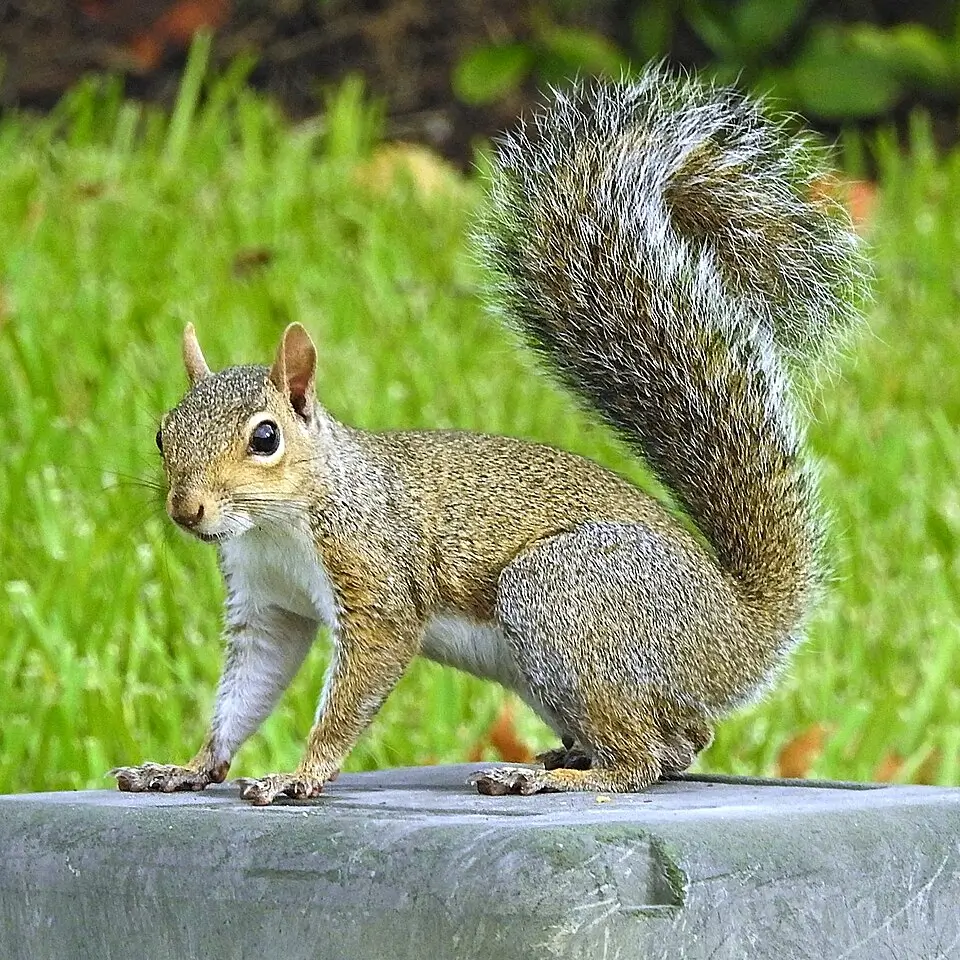
True to its name, the Eastern gray squirrel sports a coat that is predominantly grizzled gray on the upper body, often with subtle brownish or reddish tones mixed into the fur, particularly along the back and flanks. The underside is typically white or pale gray, offering a clean contrast to the darker dorsal coloration. The most iconic feature of this squirrel — and indeed of squirrels in general — is its large, bushy tail, which serves multiple purposes including balance during acrobatic leaps, warmth during cold weather, and communication with other squirrels.
Adults are generally robust and compact in build. The head is rounded with prominent, dark eyes that provide excellent vision for detecting both food sources and potential predators. Large, rounded ears sit atop the head and grant the animal a keen sense of hearing. The forelimbs are equipped with sharp, curved claws well-suited for gripping bark and manipulating food items.
A melanistic (all-black) color morph is also well known in this species and is frequently observed in certain populations, particularly in urban environments. Conversely, leucistic or partially white individuals occasionally appear, though these are considerably rarer.
Size and Weight
The Eastern gray squirrel is a moderately sized squirrel. Adults typically range from about 9 to 12 inches in body length, with the tail adding another 7 to 10 inches. Weights generally fall in a range that reflects the animal's condition and the season, with well-fed individuals in autumn — when food is abundant — tending to be heavier than those observed in early spring.
Lifespan and Reproduction
In the wild, Eastern gray squirrels face numerous predators and environmental challenges, which keeps average lifespans relatively short compared to their potential longevity. However, individuals that survive the vulnerable early months of life can live for several years. In captivity or protected settings, considerably longer lifespans are possible.
The species typically breeds twice per year — once in late winter and again in midsummer — allowing populations to grow rapidly under favorable conditions. Females give birth to litters of young, which are born blind and hairless. The young develop quickly under maternal care, and within a matter of weeks they begin venturing out of the nest to explore their surroundings.
Behavior and Intelligence
One of the most studied aspects of Eastern gray squirrel biology is its remarkable food-caching behavior. As autumn approaches, squirrels enter a period of intense foraging activity, gathering nuts, seeds, acorns, and other calorie-rich foods and burying them in scattered caches across their home range. This behavior, known as scatter-hoarding, is a critical survival strategy for winter months when food is scarce.
What makes this behavior particularly fascinating to researchers is the squirrel's demonstrated ability to remember the locations of hundreds — or even thousands — of individual caches. Studies have shown that squirrels use spatial memory and landmark recognition to relocate buried food. Some research also suggests that squirrels may engage in "deceptive caching," pretending to bury food in locations when they suspect they are being watched, only to move the item to a real cache later.
Eastern gray squirrels are diurnal, meaning they are most active during daylight hours, particularly in the morning and late afternoon. They are not true hibernators; instead, they rely on cached food stores and periods of reduced activity during the coldest weather to survive winter.
Habitat and Range
Native Range
The Eastern gray squirrel's native range spans a broad swath of eastern North America, from southern Canada down through the eastern United States, as far south as Florida and as far west as Texas and the Great Plains. The species thrives in deciduous and mixed forests, where mast-producing trees such as oaks, hickories, beeches, and walnuts provide abundant food resources. Mature forests with large trees and a dense canopy are ideal, as they offer both food and structural complexity for nesting.
Introduced Populations
Beyond its native range, Sciurus carolinensis has been introduced — both intentionally and accidentally — to numerous locations around the world, including parts of western North America, the United Kingdom, Ireland, Italy, and South Africa. In Washington state, the Eastern gray squirrel is considered an introduced species, having been brought to the Pacific Northwest outside of its natural historical range.
In Washington, populations of Eastern gray squirrels have become established in various locations, particularly in urban and suburban areas where parks, tree-lined streets, and landscaped yards provide suitable habitat. Their adaptability to human-modified environments has allowed them to thrive even in settings far removed from their ancestral forest habitats.
Nesting
Eastern gray squirrels construct two main types of nests. The first is a leaf nest, or drey, built high in the branches of trees using twigs, leaves, moss, and other plant materials. These conspicuous, roughly spherical structures are a familiar sight in deciduous trees during winter when leaves have fallen. The second type is a cavity nest, where squirrels use natural hollows in tree trunks or old woodpecker holes to create sheltered dens. Cavity nests offer superior protection from the elements and predators and are often preferred during breeding season and cold weather.
Hunting Information
Small game hunting has a long and proud tradition across much of North America, and squirrel hunting in particular occupies a special place in American outdoor culture. The Eastern gray squirrel is one of the most popular small game animals on the continent, offering hunters an accessible, challenging, and rewarding pursuit that requires patience, woodsmanship, and sharp shooting skills.
In Washington state, the Eastern gray squirrel is recognized as a huntable species. However, it is important to note that specific season dates, bag limits, licensing requirements, and any applicable regulations were not available in the source data consulted for this article. Hunters in Washington are strongly encouraged to consult the Washington Department of Fish and Wildlife (WDFW) directly for the most current and accurate regulations before pursuing Eastern gray squirrels. Regulations can change from year to year, and compliance is both a legal obligation and a mark of ethical sportsmanship.
Hunting Techniques
Squirrel hunting is an excellent entry point for new hunters and a satisfying pursuit for experienced sportsmen and sportswomen alike. The most traditional approach involves still-hunting — moving slowly and quietly through wooded areas, stopping frequently to watch and listen. Squirrels are vocal animals and will often betray their presence through chattering calls, the sound of nut shells hitting the ground, or the rustling of leaves in the canopy.
Early morning and late afternoon are generally the most productive times to hunt, as squirrels are most active during these periods. Hunting near mast-producing trees — those that bear hard-shelled nuts and seeds — is often the most reliable strategy, since squirrels concentrate around these food sources in autumn.
Hunters may pursue squirrels with small-caliber rimfire rifles (such as the classic .22 LR), shotguns loaded with small shot, or even traditional archery equipment. Each method offers its own unique challenge and appeal. Dogs trained to track and tree squirrels can add another dimension to the hunt, combining the pleasures of working with a skilled canine partner alongside the excitement of the chase.
Culinary Value
It would be a disservice to discuss squirrel hunting without mentioning the culinary traditions surrounding this game animal. Squirrel meat is lean, flavorful, and nutritious. It has been a staple of rural American cooking for generations, featuring in classic dishes such as squirrel stew, Brunswick stew, and fried squirrel. For hunters who value the full harvest experience — from field to table — the Eastern gray squirrel delivers genuine satisfaction.
Conservation
The Eastern gray squirrel is currently listed as a species of Least Concern by conservation authorities, reflecting its large, stable population across its native range and its demonstrated ability to adapt to diverse and changing environments. Robust populations exist not only in wild forests but also in urban parks and suburban neighborhoods across North America.
As an introduced species in Washington state, the Eastern gray squirrel occupies an interesting ecological position. Conservation discussions in such contexts often involve balancing the management of non-native species with the broader goals of protecting native wildlife and ecosystems. Hunters and wildlife managers both play important roles in this ongoing conversation, and responsible, regulated hunting can serve as an effective tool for managing introduced species populations.
Beyond their role in hunting culture, Eastern gray squirrels contribute meaningfully to forest ecosystems. Their scatter-hoarding behavior inadvertently results in the planting of countless tree seeds each year, as forgotten or abandoned caches germinate and grow. In this way, squirrels act as important agents of forest regeneration and tree dispersal — a reminder that even the most familiar animals can play profound ecological roles.