Overview
Few animals embody the spirit of wild North America quite like the coyote. Known scientifically as Canis latrans — a Latin phrase meaning "barking dog" — the coyote has earned a reputation as one of the most resourceful, resilient, and fascinating predators on the continent. From the sun-scorched deserts of the American Southwest to the fog-draped forests of the Pacific Northwest, from suburban backyards to remote mountain meadows, the coyote has demonstrated an unparalleled ability to thrive wherever opportunity presents itself.
In Washington State, the coyote is a fixture of the landscape. Whether you are hiking the ridgelines of the Cascades, driving the rolling wheat country of the Palouse, or walking the edge of a wetland in the Columbia Basin, the chance of encountering a coyote — or at least hearing its haunting, melodic howl echo across the land — is very real. For hunters, wildlife enthusiasts, ranchers, and naturalists alike, the coyote commands respect and attention. This article explores the biology, range, behavior, and hunting opportunities associated with one of North America's most iconic wild canids.
Biological Traits
The coyote (Canis latrans) is a member of the family Canidae, which also includes wolves, foxes, jackals, and domestic dogs. It is a medium-sized canid, generally leaner and lighter-framed than its cousin the gray wolf, and typically larger than most fox species found in North America. Adult coyotes vary considerably in size depending on their geographic location, with individuals in northern regions often growing larger than those found in warmer, southern climates — a biological pattern known as Bergmann's Rule.
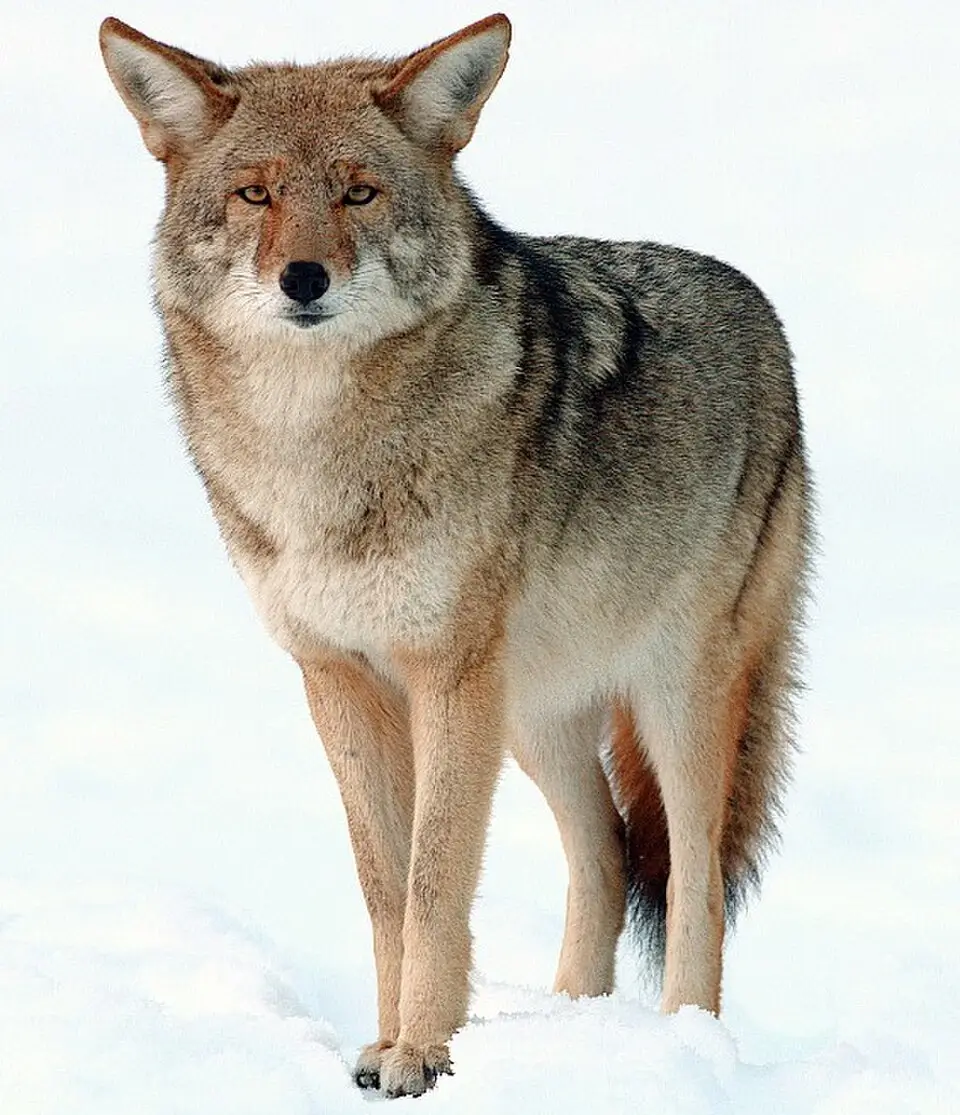
A coyote's coat is typically a grizzled gray or tawny brown, often with reddish or buff tones along the legs, face, and ears. The underside is usually paler, and the tail is bushy with a distinctive dark tip. This coloration provides excellent camouflage across a wide variety of terrains, from open grasslands to dense woodlands. The ears are large and erect, lending the coyote its characteristic alert, sharp-featured appearance and contributing to its extraordinary sense of hearing.
Coyotes are well known for their highly developed senses. Their hearing is acute enough to detect the movement of small rodents beneath snow or grass. Their sense of smell is equally impressive and is used both for locating prey and for social communication through scent marking. Vision, while perhaps slightly less dominant than hearing and smell, is sharp and well-adapted for detecting movement at distance.
As members of the order Carnivora, coyotes are classified as carnivores, but in practice they are highly opportunistic omnivores. Their diet shifts with the seasons and the availability of food sources. Small mammals — including mice, voles, ground squirrels, and rabbits — form the backbone of their diet in most environments. However, coyotes will readily consume birds, reptiles, amphibians, fish, insects, fruits, berries, carrion, and even plant material when the opportunity arises. This dietary flexibility is one of the key factors behind the species' remarkable success.
Coyotes are also known for their intelligence and behavioral adaptability. Studies and long-term observations have repeatedly shown that coyotes can learn from experience, adjust their behavior in response to human activity, and solve novel problems when motivated by food or survival. This cognitive flexibility has allowed the species to not only survive but expand its range dramatically over the past century.
Socially, coyotes are flexible as well. They may live as solitary individuals, as mated pairs, or in small family groups depending on habitat quality, prey availability, and population density. Mating typically occurs in late winter, and after a gestation period of roughly 63 days, females give birth to litters that commonly range from four to seven pups, though litter sizes can vary. Both parents participate in raising the young, and older siblings from previous litters sometimes assist as well — a behavior known as cooperative breeding. Pups are typically weaned and beginning to hunt on their own by late summer or early autumn.
The coyote's vocal repertoire is one of its most recognizable traits. The species produces a wide array of sounds, including yips, barks, whines, growls, and the iconic prolonged howl. These vocalizations serve multiple purposes: maintaining contact between family members, advertising territory, coordinating group activities, and responding to environmental stimuli. The chorus howl — in which multiple coyotes join together in a cascading symphony of sound — is one of the defining auditory experiences of the North American wilderness.
Habitat & Range
One of the most remarkable aspects of the coyote's story is its dramatic range expansion over the past century. Originally, Canis latrans was primarily associated with the open plains, deserts, and scrublands of western North America. However, as landscapes were altered by human settlement and as the gray wolf (Canis lupus) was extirpated from much of its former range, coyotes expanded rapidly eastward and northward, eventually colonizing virtually every corner of the continental United States, much of Canada, and significant portions of Central America.
Today, the coyote occupies an extraordinary diversity of habitats. It is found in arid deserts, temperate rainforests, boreal woodlands, alpine meadows, coastal marshes, agricultural lands, suburban neighborhoods, and even the outskirts of major cities. This habitat generalism — the ability to make use of widely different environments — is virtually unmatched among North American predators.
In Washington State, coyotes are present in every county and across every major habitat type. The state's diverse geography, which includes the wet, forested western slopes of the Cascades, the drier eastern shrub-steppe and grasslands, the fertile agricultural valleys, and the dramatic volcanic peaks of the Cascades, provides a wide range of suitable coyote habitat. Populations are robust throughout the state, and the species shows no signs of decline. In many parts of eastern Washington — including the Columbia Basin, the Palouse, and the Okanagan Highlands — coyotes are frequently observed in open country, where they prey on abundant small mammal populations.
Hunting Information
The coyote holds a unique place in the world of North American hunting. For predator hunters — a passionate and growing community of sportspeople — the coyote is a premier quarry. Calling for coyotes, a technique in which hunters use electronic or mouth-blown calls to imitate distressed prey animals or coyote vocalizations, is a thrilling pursuit that demands woodsmanship, patience, and a deep understanding of coyote behavior.
In Washington State, coyote hunting is a legal activity, though hunters are always encouraged to consult the Washington Department of Fish and Wildlife (WDFW) directly for the most current and specific regulations, as rules can change from season to season. Based on the source data available for this article, specific season dates and license requirements for coyote hunting in Washington were not listed, and hunters should verify current requirements directly with the WDFW before heading afield.
Generally speaking, coyote hunting in Washington — as in most western states — can be an excellent way to spend time in the field during the colder months, when coyotes are more actively vocal, moving more during daylight hours, and sporting their thickest winter coats. Hunters typically pursue coyotes using centerfire rifles in flat-shooting calibers appropriate for open country, as well as shotguns for shorter-range setups in brushy terrain. Archery hunters and those using handguns also pursue coyotes with considerable success.
Electronic callers capable of reproducing a wide variety of prey distress sounds — including rabbit distress calls, bird distress calls, and coyote vocalizations — have become popular tools among serious predator hunters. Mouth-blown calls, including open-reed and closed-reed designs, remain effective and are favored by many traditional hunters for the direct control they provide. Concealment is critical; coyotes have sharp eyes and will spot the slightest unnatural movement at considerable distance.
Spot-and-stalk hunting is another popular method in Washington's open eastern landscapes, where glassing from elevated terrain and then moving on located animals can produce exciting hunts. Night hunting for coyotes, where permitted, using lights or thermal optics, is a rapidly growing segment of the predator hunting community.
For hunters in Washington looking to sharpen their calling skills, improve their shot placement knowledge, or learn more about coyote behavior and movement patterns, connecting with local predator hunting clubs, online communities, and experienced guides can be invaluable.
Conservation
The coyote's conservation status is one of the more positive stories in North American wildlife management. Unlike many large predators that have faced severe population declines due to habitat loss and persecution, the coyote has proven extraordinarily resilient. The species is currently listed by the International Union for Conservation of Nature (IUCN) as a species of Least Concern, reflecting its large, stable, and expanding population across its range.
Interestingly, the coyote's success has come in spite of — and in some ways because of — intensive human pressure. Decades of predator control efforts, which included trapping, poisoning, and shooting, did not eliminate coyotes from any significant portion of their range and may have, paradoxically, contributed to their expansion. Coyotes respond to population pressure by increasing litter sizes and recruiting more females into breeding — a biological compensation mechanism that makes sustained population suppression extremely difficult.
From an ecological standpoint, coyotes play important roles in the ecosystems they inhabit. As mesopredators, they help regulate populations of small mammals and rabbits, which in turn can influence vegetation dynamics and the broader ecological community. In areas where apex predators like wolves and mountain lions are absent or reduced, coyotes assume a significant portion of the top predator role.
In Washington, the coyote's ecological role is recognized and valued. The state's diverse landscapes — from the wild forests of the Olympic Peninsula to the sagebrush flats of the Columbia Plateau — benefit from the presence of this adaptable, intelligent predator. Whether viewed through the lens of ecology, hunting tradition, or simple natural wonder, the coyote is an irreplaceable part of Washington's wild heritage.
The haunting howl of a coyote drifting across a moonlit Washington valley is more than just a sound — it is a reminder that wild nature, in all its resourcefulness and tenacity, endures.