A Comprehensive Guide to Puma concolor in Washington State
Few animals command as much respect, fascination, and reverence as the cougar. Known by many names — mountain lion, puma, panther, catamount — this magnificent apex predator represents one of North America's most adaptable and successful large carnivores. In Washington State, the cougar holds a particularly iconic status, haunting the dense forests of the Cascades, the rugged terrain of the Olympic Peninsula, and the rolling highlands of the eastern interior. For wildlife enthusiasts, hunters, and conservationists alike, the cougar embodies the wild spirit of the Pacific Northwest.
Washington State itself is a land of extraordinary ecological diversity. Bordered by the Pacific Ocean to the west, Oregon to the south, Idaho to the east, and the Canadian province of British Columbia to the north, Washington offers an almost unparalleled mosaic of habitats. From the temperate rainforests of the Olympic Peninsula to the sagebrush steppe of the Columbia Basin, from the volcanic peaks of the Cascades to the ancient river valleys carved by glacial floodwaters, this state is tailor-made for an animal as versatile and wide-ranging as the cougar. The state capital, Olympia, sits at the heart of a region where human communities and cougar populations intersect in increasingly complex ways, making understanding this species more important than ever.
Whether you are a hunter pursuing a legal and regulated harvest, a hiker hoping to catch a glimpse of one of nature's most elusive predators, or simply a nature lover seeking to understand the ecosystems of the Pacific Northwest, this guide will provide you with a thorough introduction to the cougar and its place in Washington's wild landscape.
Biological Traits
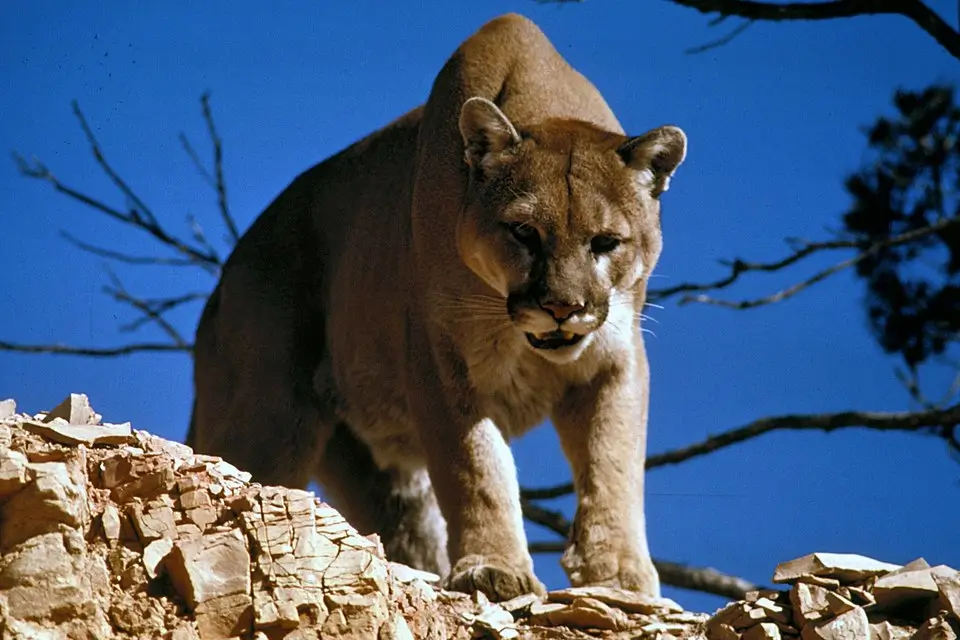
The cougar (Puma concolor) is the largest member of the subfamily Felinae and holds the distinction of having the greatest natural range of any large wild terrestrial mammal in the Western Hemisphere. Its scientific name, Puma concolor, translates roughly to "cat of one color," a reference to the animal's characteristically uniform tawny coat, which can range from a pale buff or grayish hue in some individuals to a rich reddish-brown in others. The underparts are generally lighter, often cream or white, and adults typically have dark markings on the muzzle and the backs of the ears.
Cougars are powerfully built animals, with a long body, relatively small head, and a notably long tail that helps with balance during pursuit and maneuvering through complex terrain. Adult males are considerably larger than females, a trait known as sexual dimorphism that is common among large felids. Males can reach impressive sizes, with robust muscular frames suited to taking down prey significantly larger than themselves. Females are somewhat smaller but equally athletic and capable hunters.
One of the most remarkable aspects of cougar biology is the animal's extraordinary athletic ability. Cougars are capable of explosive bursts of speed, powerful leaps — both horizontally across gaps and vertically into trees — and possess the strength to drag prey much heavier than their own body weight considerable distances. They are ambush predators, relying on stealth, patience, and a sudden rush of speed rather than prolonged pursuit. Their hind legs are notably powerful and longer than their front legs, giving them a distinctive crouching profile and the ability to generate tremendous acceleration from a standstill.
The cougar's senses are finely tuned for predation. Their vision is adapted for low-light conditions, making them highly effective hunters at dawn, dusk, and throughout the night. Their hearing is acute, capable of detecting the soft movements of prey animals at considerable distances. While their sense of smell is functional, cougars rely more heavily on sight and hearing during hunts than on olfactory cues.
Cougars are solitary animals, with the exception of females raising cubs. Adult males and females typically only associate during the brief period of mating. Females raise their young alone, nursing cubs for an extended period and teaching them the hunting and survival skills they will need as independent adults. Cubs are born with spotted coats — a form of camouflage that fades as they mature — and they stay with their mother for an extended period before dispersing to establish their own territories.
Communication among cougars takes several forms. They are well known for their vocalizations, which include hisses, growls, chirps, and a haunting scream that can startle even experienced outdoorspeople. Scent marking, scratch posts, and scrapes in the earth are also important forms of territorial communication, particularly between adult males whose home ranges may overlap partially with those of multiple females.
Habitat & Range
The cougar's ability to thrive across an astonishing variety of habitats is one of the defining characteristics of the species. Across its historical and current range, Puma concolor has been documented in tropical rainforests, high-altitude mountain ranges, arid deserts, swamps, grasslands, and everything in between. This adaptability has allowed the cougar to persist across much of its original range in western North America even as human development has fundamentally altered the landscape.
In Washington State, cougars are most commonly associated with forested and mountainous regions. The Cascade Range, which bisects the state from north to south, provides ideal cougar habitat — a combination of dense coniferous forest, rocky outcroppings, steep drainages, and abundant prey, particularly white-tailed deer and mule deer, which form the cornerstone of the cougar's diet throughout much of its range. The Olympic Peninsula to the west, with its ancient temperate rainforest and relatively isolated geography, also supports a notable cougar population. In eastern Washington, cougars utilize the forested highlands, riparian corridors, and transition zones between forest and shrub-steppe.
Cougars are territorial, with individual home ranges that can span vast areas depending on habitat quality, prey availability, and population density. Adult males typically maintain larger territories than females. These territories are not static; cougars are capable of traveling extraordinary distances, and young males in particular are known for long-distance dispersal movements as they seek out unoccupied territories after leaving their mothers.
The cougar's presence in Washington is not limited to the most remote wilderness areas. As deer populations persist and even thrive in areas adjacent to human development, cougars have demonstrated a willingness to venture into suburban fringe habitats, rural neighborhoods, and areas near farms and ranches. This proximity to human habitation makes education about cougar behavior and coexistence an important aspect of wildlife management in the state.
Hunting Information
Cougar hunting in Washington is subject to regulation by the Washington Department of Fish and Wildlife (WDFW), which manages the state's wildlife resources to ensure sustainable populations. Because specific season dates, license requirements, and harvest quotas can change from year to year based on population assessments and management objectives, hunters are strongly encouraged to consult the most current WDFW regulations and official state hunting resources before planning any hunt.
Cougar hunting is a challenging and demanding pursuit. The animals are notoriously elusive, largely nocturnal or crepuscular in their activity patterns, and masters of moving through terrain without being detected. Traditionally, cougar hunting in Washington and throughout the American West has been conducted with the aid of trained hounds. Hound hunting for cougars involves releasing dogs trained to track and tree the cat, at which point the hunter moves in to make a shot decision. This method requires considerable investment in trained dogs and the logistical support to operate in rugged mountain terrain.
Cougar hunting demands physical fitness, familiarity with the terrain, and a strong understanding of the animal's habits and habitats. Hunters pursuing cougars in Washington should be prepared for challenging conditions, including steep terrain, dense forest, and unpredictable mountain weather. Success rates in cougar hunting are generally low compared to hunting more abundant and visible species, which adds to the sense of achievement when a hunt is successful.
From a wildlife management perspective, regulated cougar hunting serves an important role in managing population levels, particularly in areas where human-cougar conflicts may be elevated or where cougar predation on deer and elk populations requires careful balance. Washington's approach to cougar management reflects broader principles of science-based wildlife conservation, aiming to maintain healthy cougar populations while addressing the legitimate needs of hunters, livestock owners, and the general public.
Conservation
The conservation status of the cougar reflects the species' resilience and adaptability. Unlike many large carnivores around the world that have suffered dramatic range contractions or face imminent extinction risk, the cougar maintains a relatively secure population across much of western North America, including Washington State. This success is due in part to effective wildlife management frameworks developed over the past century, habitat preservation efforts, and the cougar's own remarkable ability to exploit a wide range of environments.
However, cougar conservation is not without its challenges. Habitat fragmentation caused by roads, urban development, and agricultural conversion can isolate cougar populations and limit the genetic exchange necessary for long-term population health. Road mortality is a documented concern in many areas, as cougars attempting to move between habitat patches must cross highways and other infrastructure. Conservation planners and transportation authorities have increasingly recognized the importance of wildlife corridors and crossing structures that allow large predators like cougars to move safely across fragmented landscapes.
In Washington, the coexistence of cougars with a growing human population requires ongoing dialogue and education. Livestock depredation by cougars is a real concern for ranchers and farmers in cougar country, and effective, non-lethal deterrence strategies — including proper livestock husbandry, guardian animals, and secure enclosures — play an important role in reducing conflict. Understanding cougar behavior, knowing how to react during an encounter, and appreciating the ecological role of the cougar as a top predator that helps regulate prey populations are all part of fostering a culture of coexistence in Washington State.
The cougar's ecological role cannot be overstated. As an apex predator, it exerts what ecologists call a "trophic cascade" effect on the ecosystems it inhabits. By regulating deer and elk populations, cougars indirectly influence vegetation patterns, stream health, and the abundance of many other species. The presence of a healthy cougar population is often an indicator of a functioning, intact ecosystem — a reminder of the profound interconnectedness of all living things in Washington's remarkable natural landscapes.