Overview
Few animals capture the imagination of outdoor enthusiasts quite like the cottontail rabbit. With its distinctive fluffy white tail, alert eyes, and quick, bounding movement through brush and meadow, the cottontail is one of North America's most recognizable and beloved wild mammals. Whether you're a seasoned hunter looking for small game opportunities, a wildlife observer eager to learn more about backyard visitors, or simply a curious naturalist, the cottontail rabbit offers a fascinating window into the ecology of the American landscape — including the diverse terrain of Washington State.
The cottontail is not a single species but rather a genus — Sylvilagus — comprising more than a dozen distinct species distributed across North and South America. From the dense forests of the Pacific Northwest to the sprawling grasslands of the Great Plains, members of this genus have adapted to a remarkable range of environments. In Washington State, situated in the Pacific Northwest region of the United States, cottontail rabbits occupy select habitats, particularly in the drier, more open landscapes east of the Cascade Mountains, though their presence and habits in the region reflect the broader biological story of this extraordinary genus.
Understanding the cottontail — its biology, its role in the ecosystem, and its relationship with hunters and conservationists — is a rewarding endeavor. This guide explores all of these dimensions, offering a thorough look at one of North America's most enduring wild animals.
Biological Traits
The genus Sylvilagus belongs to the family Leporidae, which includes all rabbits and hares, and falls within the order Lagomorpha. This taxonomic distinction is worth noting: despite their superficial resemblance to rodents, rabbits and hares are classified separately, in their own order. Lagomorphs share certain characteristics with rodents — such as continuously growing incisors — but differ in important ways, including the presence of a second pair of small peg-like incisors behind the primary front teeth, a trait unique to lagomorphs.
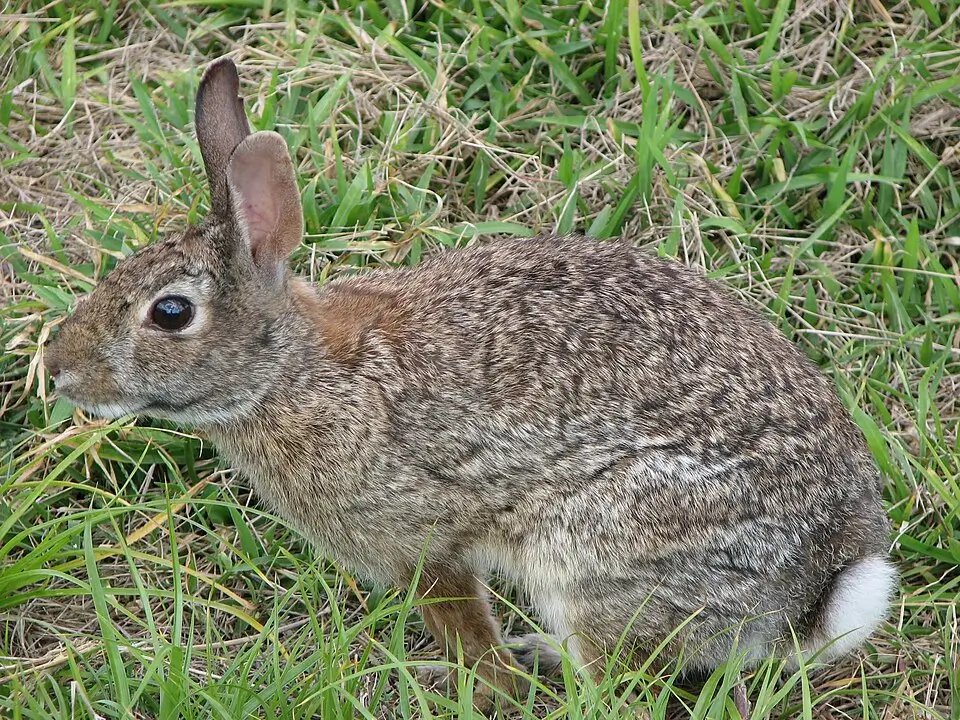
Cottontails are medium-sized rabbits, typically compact in body structure with long hind legs built for rapid acceleration and evasion. Their most iconic feature is, of course, the tail — a small, rounded puff of white fur that flashes conspicuously as the animal bounds away from a threat. This distinctive white underside of the tail gives the genus its common name and serves as a visual signal that may help other rabbits identify fleeing individuals or serve as a distraction to predators.
Their fur coloration generally tends toward shades of brown, gray, and tawny on the back and sides, providing excellent camouflage against leaf litter, dry grass, and scrubby vegetation. The underparts are typically lighter or white. Ear length varies by species but is generally shorter and rounder than those of true hares such as jackrabbits. Cottontails have large, prominent eyes positioned on the sides of their head, granting them a wide field of vision that aids in detecting approaching predators.
One of the most remarkable biological traits of cottontails is their reproductive capacity. These animals are prolific breeders by any measure. Females, known as does, can produce multiple litters per year during the breeding season, with each litter containing several offspring called kittens or kits. Young cottontails develop quickly, reaching independence in just a few weeks. This high reproductive rate is a key ecological adaptation, allowing cottontail populations to sustain themselves despite heavy predation pressure from a wide range of predators including hawks, owls, foxes, coyotes, bobcats, weasels, and snakes.
Cottontails are primarily crepuscular and nocturnal in their activity patterns, meaning they are most active during the twilight hours of dawn and dusk, though they can be observed moving about at any time of day or night depending on conditions, food availability, and predator pressure. During daylight hours, they often rest in sheltered spots called forms — shallow depressions in the grass or under brush — or take refuge in burrows, brush piles, or dense thickets.
Their diet is herbivorous and highly varied depending on the season. In warmer months, cottontails feed on a wide array of grasses, clover, wildflowers, garden plants, and leafy vegetation. During winter, when green forage becomes scarce, they shift to woody vegetation, gnawing on the bark of shrubs and young trees. Like all lagomorphs, cottontails practice a behavior known as cecotrophy — the consumption of specialized soft fecal pellets called cecotropes — which allows them to extract maximum nutrition from their plant-based diet.
Habitat & Range
The genus Sylvilagus is native to the Americas and exhibits a wide geographic distribution. Different species within the genus have adapted to dramatically different habitat types, from tropical forests and wetlands to arid deserts and alpine meadows. This ecological versatility is one of the hallmarks of the cottontail's success as a genus.
In Washington State — a state that stretches from the rugged Pacific coastline in the west across the volcanic peaks of the Cascade Range to the semi-arid shrub-steppe and agricultural lands of the Columbia Plateau in the east — cottontail rabbits are most commonly associated with the eastern portions of the state. The drier, more open habitats found in eastern Washington, including sagebrush flats, riparian corridors, brushy hillsides, and the margins of agricultural fields, align well with the habitat preferences of species like the mountain cottontail (Sylvilagus nuttallii), which is known to occur in the region.
Washington itself is a state of extraordinary ecological diversity. It borders the Pacific Ocean to the west, Oregon to the south, Idaho to the east, and shares an international border with the Canadian province of British Columbia to the north. This geographic position creates a range of climate zones and vegetation communities that support diverse wildlife populations. The wetter, heavily forested western slopes of the Cascades tend to be less favorable for cottontail rabbits, while the rain shadow east of the mountains creates conditions more conducive to their presence.
Ideal cottontail habitat typically includes a patchwork of open areas for foraging and dense cover — brush piles, thickets, rocky outcroppings, or tall grass — for escape and shelter. Edge habitat, where open ground meets dense vegetation, is particularly productive. Brushy draws, overgrown fence lines, abandoned fields, and the borders between cultivated land and natural vegetation all represent prime cottontail territory.
Hunting Information
Cottontail rabbit hunting is one of the most accessible and time-honored forms of small game hunting in North America. It is an excellent entry point for new hunters and a beloved tradition for experienced sportsmen alike. The pursuit requires relatively modest equipment — a small-bore shotgun or a .22 caliber rifle is the classic choice — and can be conducted in a wide variety of settings accessible to hunters of all mobility levels.
Hunting cottontails is often a social activity, with groups of hunters working through brushy cover and flushing rabbits into the open. Beagles and other small hounds are traditionally used to track and push cottontails, and the musical baying of a good rabbit hound through winter cover remains one of the most evocative sounds in the American hunting tradition.
In Washington State, hunters interested in pursuing cottontail rabbits should consult the Washington Department of Fish and Wildlife (WDFW) for current regulations, season dates, bag limits, and licensing requirements. Wildlife regulations are updated regularly, and it is always the hunter's responsibility to obtain accurate, up-to-date information directly from the official state wildlife agency before heading afield. As specific season dates, license requirements, and bag limits were not available in the source data for this article, readers are strongly encouraged to visit the WDFW website or contact the agency directly for the most current information applicable to their hunting area.
Generally speaking, cottontail hunting in the eastern part of Washington — where habitat is most suitable — offers the best opportunities. Hunters should focus on brushy draws, sagebrush edges, riparian thickets, and the margins of agricultural lands where cottontails find both food and cover. Early morning and late afternoon, when cottontails are most active, tend to be the most productive times to hunt.
Ethical hunting practices, including respect for landowner permission when hunting on private land, adherence to all state regulations, and responsible harvesting, are the cornerstones of a sustainable hunting tradition that benefits both wildlife and hunting communities alike.
Conservation
Cottontail rabbits occupy a vital position in the food web of nearly every ecosystem they inhabit. As herbivores that consume large quantities of plant material, they play a role in shaping vegetation structure. More significantly, they serve as a critical prey base for a remarkable diversity of predators. Raptors such as red-tailed hawks, great horned owls, and northern harriers rely heavily on cottontails as a food source. Mammalian predators including foxes, coyotes, bobcats, and weasels also depend on their abundance. In this sense, healthy cottontail populations support the broader health and diversity of predator communities.
Despite their prolific reproductive capacity, cottontail populations can be sensitive to habitat change. Loss of brushy cover, conversion of edge habitat to monoculture agriculture, urban development, and the removal of hedgerows and brush piles can all reduce the carrying capacity of a landscape for cottontail rabbits. Conservation efforts that maintain and restore brushy edge habitat, riparian corridors, and the kind of diverse, structurally complex landscapes that cottontails depend on are therefore beneficial not only to the species itself but to the entire ecological community it supports.
Hunters, interestingly, have historically been among the most active supporters of cottontail habitat conservation. Through license fees and excise taxes on sporting goods — funds directed to state wildlife agencies through mechanisms such as the Federal Aid in Wildlife Restoration Act (Pittman-Robertson Act) — hunters contribute financially to the habitat work that benefits cottontails and countless other species. The interest of hunters in sustaining healthy, accessible rabbit populations aligns naturally with broader conservation goals.
In Washington, the state's commitment to managing its extraordinary natural heritage — from the old-growth forests of the Olympic Peninsula to the open landscapes of the Columbia Basin — creates a framework within which cottontail populations can be monitored, managed, and enjoyed by wildlife enthusiasts and hunters for generations to come.