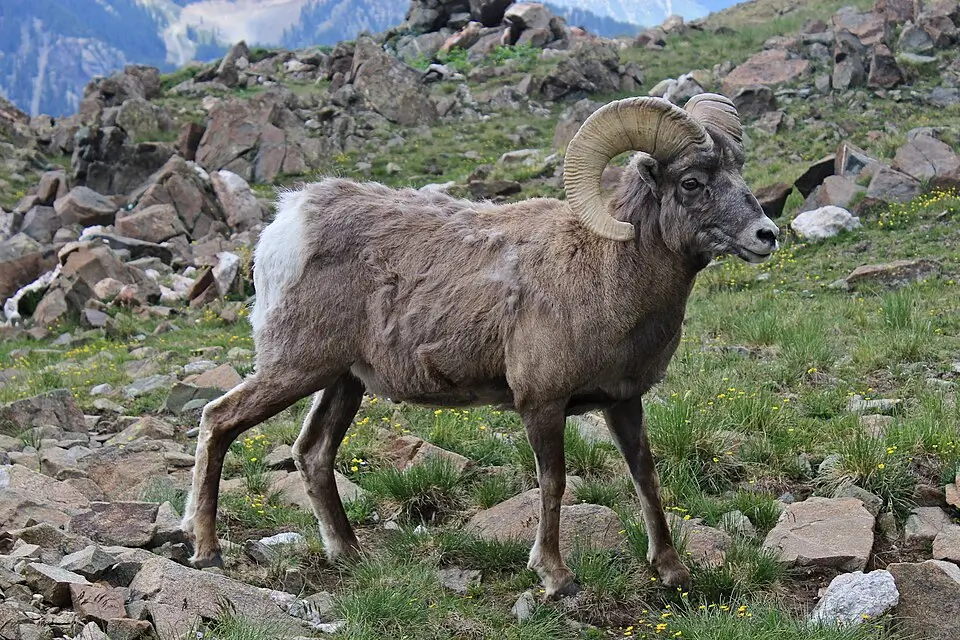
Overview
Few animals capture the rugged spirit of the American wilderness quite like the bighorn sheep. With their massive curved horns and sure-footed agility across seemingly impassable terrain, these remarkable animals have long been symbols of strength, resilience, and wild beauty. Known scientifically as Ovis canadensis, bighorn sheep are native to North America and rank among the continent's most recognizable and celebrated wildlife species. From the towering Rocky Mountains to the sun-baked desert canyons of the Southwest, bighorn sheep occupy some of the most dramatic landscapes on the continent — and in the Pacific Northwest, including portions of Washington State, they continue to inspire awe in hunters, wildlife enthusiasts, and conservationists alike.
The bighorn sheep's story is one of natural wonder, ecological importance, and a hard-fought conservation comeback that stands as one of North America's great wildlife success stories. Understanding this animal — its biology, its behavior, its habitat needs, and its place in hunting culture — offers a window into the broader health of western ecosystems.
Biological Traits
The bighorn sheep (Ovis canadensis) belongs to the family Bovidae and the subfamily Caprinae, placing it in close company with domestic sheep, mountain goats, and various wild goat and sheep species found around the world. The species name canadensis reflects its early documentation in the Canadian Rockies, though its range extends far beyond Canada's borders.
Perhaps the most iconic feature of bighorn sheep is, as the name suggests, their horns. In rams — the adult males — these horns are massive, curling structures that grow throughout the animal's lifetime and can weigh as much as 30 pounds in the largest individuals, sometimes exceeding the combined weight of all the other bones in the animal's body. The horns grow in a distinctive spiral pattern and serve as both a status symbol and a weapon during the dramatic head-butting battles that rams engage in during the autumn breeding season, known as the rut. Ewes (females) also carry horns, but theirs are considerably shorter and only slightly curved.
Bighorn sheep are heavily built, muscular animals with thick, woolly underfur covered by coarser guard hairs. Their coloration is typically brown to grayish-brown across the body, with a pale cream or white rump patch, belly, and muzzle — a contrast that makes them surprisingly recognizable even at a distance. Adults can vary considerably in size depending on subspecies and geographic location. Rocky Mountain bighorns, the largest subspecies, can see rams weighing anywhere from roughly 130 to over 300 pounds, while ewes are noticeably smaller.
One of the bighorn's most celebrated biological adaptations is its hooves. The hooves have a hard outer edge for gripping rock edges and a soft, concave inner pad that provides traction — essentially a built-in climbing shoe. This anatomical engineering allows bighorn sheep to navigate cliffs and rocky slopes with extraordinary confidence, moving at speed across terrain that would be treacherous for almost any other large mammal.
Bighorn sheep are highly social animals. Ewes, lambs, and juvenile males typically form nursery herds, while mature rams form their own bachelor groups outside of the breeding season. During the rut, rams compete fiercely for breeding rights, engaging in dramatic clashes where they charge each other at full speed and collide horn-to-horn with tremendous force. Their skulls have evolved a honeycomb-like internal structure that absorbs the shock of these impacts, allowing rams to repeat the behavior over hours without apparent injury.
The rut typically occurs in late autumn, and after a gestation period of approximately six months, ewes give birth to one lamb — occasionally two — in spring. Lambs are born precocial, meaning they are relatively developed at birth and can stand and move within hours, a critical survival adaptation given the precipitous terrain their mothers favor for lambing.
Bighorn sheep are grazers, feeding primarily on grasses and sedges in summer, and shifting to browse — including shrubs and woody plants — during leaner winter months. Their complex, multi-chambered digestive system allows them to extract nutrition from coarse vegetation efficiently.
Habitat & Range
Bighorn sheep are distributed across a broad swath of western North America, from southern Canada through the western United States and into northern Mexico. The species is generally divided into three main subspecies: the Rocky Mountain bighorn (Ovis canadensis canadensis), the Sierra Nevada bighorn (Ovis canadensis sierrae), and the desert bighorn (Ovis canadensis nelsoni), with some taxonomic disagreement about additional subspecies designations.
Rocky Mountain bighorns favor alpine and subalpine environments — steep, rocky mountain terrain with open grassy slopes for grazing and rocky cliffs for escape cover from predators. Elevational ranges can be dramatic, with herds moving to higher elevations in summer to exploit lush meadows and descending to lower, south-facing slopes during winter to find wind-swept ground free of deep snow.
Desert bighorns, as their name implies, have adapted to arid canyon country and desert mountain ranges, where they survive on sparse vegetation and have evolved physiological adaptations for tolerating heat and water scarcity.
In Washington State, bighorn sheep occupy portions of the state's rugged interior, particularly in the Cascade Range and areas of the Columbia Basin. Washington's landscape — from the high peaks of the North Cascades to the drier, broken country of the eastern part of the state — provides habitat that can support bighorn populations where terrain and vegetation align with the species' needs. The Pacific Northwest's dramatic topography, combined with the state's position bordering British Columbia to the north and Idaho to the east, creates a regional ecological context in which bighorn sheep occupy a meaningful ecological niche.
Hunting Information
Bighorn sheep are among the most coveted big game animals in North America, and hunting tags or permits are notoriously difficult to obtain. Across virtually all jurisdictions where bighorn sheep hunting is permitted, tags are allocated through limited-entry draw systems due to the relatively small and carefully managed population sizes. In many states and provinces, hunters may apply for bighorn sheep permits for years — or even decades — before drawing a tag, making a successful bighorn sheep hunt one of the rarest and most cherished experiences in North American hunting.
A bighorn sheep hunt is typically a physically demanding backcountry adventure. The rugged terrain these animals inhabit means that hunters must be prepared for steep elevation changes, long glassing sessions, and arduous pack-outs across challenging country. Many hunters consider the bighorn sheep one of the "Grand Slam" species — a hunting achievement that involves harvesting all four species of North American wild sheep: bighorn, Dall, Stone, and desert bighorn.
Regarding specific hunting regulations, season dates, and license requirements for bighorn sheep in Washington State, hunters are strongly advised to consult the Washington Department of Fish and Wildlife (WDFW) directly for the most current and accurate information. Hunting regulations for limited-entry species like bighorn sheep can change from year to year, and official state sources provide the definitive, up-to-date guidance on draw deadlines, legal units, and any special requirements. Because bighorn sheep populations are carefully managed, understanding and complying with all applicable regulations is not only a legal obligation but an ethical one that supports the long-term health of the state's herds.
Conservation
The conservation story of bighorn sheep is both cautionary and inspiring. Prior to European settlement of North America, bighorn sheep were estimated to number in the millions, ranging across an enormous swath of western terrain. By the early 20th century, however, unregulated hunting, habitat loss, competition with domestic livestock, and — critically — disease transmission from domestic sheep had reduced bighorn populations to a fraction of their historic numbers. At one point, some estimates placed the continental population as low as tens of thousands of animals.
The recovery of bighorn sheep populations over the subsequent decades represents a landmark achievement in North American wildlife conservation. Regulated hunting programs, habitat protection and restoration efforts, transplant and reintroduction programs, and broad cooperation between state and federal agencies, tribal nations, conservation organizations, and the hunting community all contributed to meaningful population recovery across much of the species' historic range.
Organizations such as the Wild Sheep Foundation have played significant roles in funding research, reintroduction efforts, and habitat work on behalf of bighorn sheep and other wild sheep species. In many states, revenue from the auction and raffle of bighorn sheep permits has generated substantial funding for conservation programs — a model that demonstrates the powerful synergy between regulated hunting and wildlife management.
Disease remains one of the most significant ongoing challenges for bighorn sheep conservation. Respiratory disease, caused in part by Mycoplasma ovipneumoniae and often linked to contact with domestic sheep and goats, can devastate bighorn herds with high mortality rates, particularly among lambs. Managing separation between domestic and wild sheep populations remains a priority for wildlife managers across the West.
In Washington State, ongoing management efforts aim to maintain and grow viable bighorn sheep populations across suitable habitat. The state's rugged terrain and committed wildlife management infrastructure provide a foundation for continued conservation success.