Overview
Few birds capture the imagination of North American wildlife enthusiasts and hunters quite like the wild turkey. Bold, intelligent, and unmistakably American, the wild turkey (Meleagris gallopavo) is one of the continent's most iconic game birds. With its distinctive plumage, remarkable wariness, and deeply embedded place in American cultural history, the wild turkey stands as a symbol of wildness and resilience across the landscape.
In Vermont, the wild turkey holds a special place in the hearts of hunters and wildlife watchers alike. Nestled in the New England region of the Northeastern United States, Vermont's rolling hills, hardwood forests, and agricultural valleys provide an ideal backdrop for wild turkey populations to thrive. Whether you are a seasoned turkey hunter heading into the Green Mountains or simply a curious naturalist hoping to catch a glimpse of these spectacular birds at the forest edge, understanding the biology, behavior, and habitat needs of Meleagris gallopavo will greatly enrich your experience.
This comprehensive guide covers everything from the wild turkey's biological traits and natural history to what hunters and wildlife lovers can expect in Vermont's distinctive landscape. Let's explore one of North America's greatest wildlife success stories.
Biological Traits
The wild turkey is the largest native game bird in North America and a member of the family Phasianidae, which also includes pheasants, grouse, and peacocks. The species name Meleagris gallopavo comes from Latin and Greek roots, with Meleagris referencing a type of guinea fowl and gallopavo combining words for rooster and peacock — a fitting tribute to the bird's striking appearance.
Size and Physical Appearance
Wild turkeys are large, heavy-bodied birds with long legs, broad tails, and small, featherless heads. Adult males, called toms or gobblers, are significantly larger than females (hens). Toms can weigh anywhere from 11 to 24 pounds, while hens are typically smaller and more subtly colored. The wingspan of a mature gobbler can reach up to five feet, making these birds an impressive sight in flight.
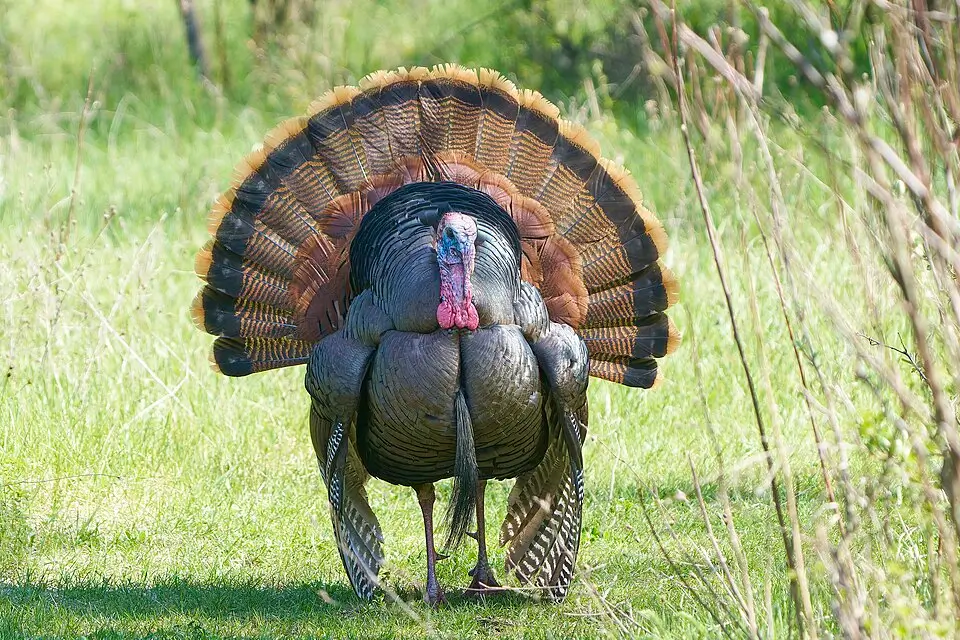
The plumage of a mature tom is one of the most visually stunning displays in the avian world. Their body feathers shimmer with iridescent bronze, green, copper, and gold tones depending on the angle of light. The tail feathers, when fanned during display, form a magnificent semicircle tipped in chestnut brown. The bare skin of a tom's head can shift between red, white, and blue, particularly during courtship and aggressive encounters. Toms also grow a distinctive "beard" — a cluster of modified, hair-like feathers protruding from the chest — and sharp leg spurs that can be used in combat with rival males.
Hens, by contrast, are typically brown and buff-colored, providing excellent camouflage while nesting on the ground. Juvenile males (jakes) resemble hens but begin showing beard growth and other adult characteristics during their first year.
Behavior and Intelligence
Wild turkeys are widely regarded as highly intelligent birds. They possess keen eyesight with nearly 270-degree vision and can detect movement at great distances. Their hearing is equally sharp, making them notoriously difficult to approach in the wild. Turkeys are social animals that typically travel in flocks segregated by sex and age outside of the breeding season. Toms generally group with other males during fall and winter, while hens form their own flocks, sometimes accompanied by young birds called poults.
The breeding season, known as the "strut season," is among the most spectacular wildlife displays in North America. Dominant toms gobble loudly at dawn and dusk to attract hens, fan their tails, puff their body feathers, and drag their wing tips on the ground in a hypnotic display. This gobbling can be heard from well over a mile away in ideal conditions, and it is the sound that every spring turkey hunter dreams of hearing echoing through the early morning woods.
Diet
Wild turkeys are omnivores with a highly varied diet. They feed on acorns, beechnuts, seeds, berries, grasses, insects, salamanders, and even small snakes. Their feeding behavior is largely driven by seasonal availability. In fall and winter, hard mast — particularly acorns — forms a critical component of their diet. In spring and summer, insects and tender green vegetation become important food sources, especially for poults that need high-protein diets to fuel rapid growth.
Reproduction
Hens nest on the ground, typically at the base of a tree, under brush, or in dense vegetation. A clutch usually contains around 10 to 12 eggs, which are incubated solely by the hen for approximately 28 days. Poults are precocial, meaning they are mobile and able to feed themselves within hours of hatching. Despite this early independence, poult survival rates in the first few weeks of life can be significantly impacted by cold, wet weather and predation.
Habitat & Range
The wild turkey is native to North America and is one of only two turkey species in the world, the other being the ocellated turkey of Central America. Meleagris gallopavo ranges across most of the continental United States, parts of northern Mexico, and has been introduced to Hawaii, New Zealand, and parts of Europe.
There are six recognized subspecies of wild turkey, each adapted to different regions of the continent. The Eastern wild turkey (Meleagris gallopavo silvestris) is the subspecies found throughout the eastern United States, including Vermont. It is the most widely distributed and most heavily hunted of the six subspecies.
Wild turkeys are adaptable habitat generalists, but they thrive in landscapes that offer a mosaic of mature hardwood or mixed forests interspersed with open fields, meadows, and agricultural lands. They rely on mature forest for roosting — typically choosing large, horizontal tree branches well off the ground — and on forest openings and field edges for feeding. Streams, wetland edges, and forest understory also contribute to turkey habitat quality.
Vermont's landscape is ideally suited for wild turkey populations. The state's mix of northern hardwood forests dominated by beech, maple, and oak, combined with its valleys, farms, and forest clearings, provides excellent year-round habitat. Turkeys in Vermont face cold, snowy winters that can stress populations, particularly when deep snow covers food sources, but the species has proven highly resilient and adaptable to northeastern conditions.
Hunting Information
Wild turkey hunting is a beloved tradition across much of North America, and Vermont is no exception. The state offers both spring and fall turkey hunting seasons, reflecting the strong demand among Vermont hunters to pursue this challenging and rewarding game bird.
Spring turkey hunting is generally considered the classic turkey experience. Hunters use calls to mimic the vocalizations of hens, attempting to draw lovesick gobblers within shotgun or archery range. The sport demands patience, woodsmanship, and an understanding of turkey behavior that takes years to fully develop. A gobbling tom at close range is widely considered one of the most thrilling moments in all of North American hunting.
Fall hunting differs in strategy from spring. In autumn, hunters typically work to locate and scatter a flock, then use calls to reassemble birds as they try to reconnect with their companions. This method offers a different but equally engaging challenge that appeals to many hunters.
Hunters interested in pursuing wild turkeys in Vermont are encouraged to consult the Vermont Fish & Wildlife Department directly for the most current and accurate season dates, licensing requirements, bag limits, and any special regulations that may apply. Regulations can change from year to year, and staying current ensures that every hunting experience is both legal and ethical. Vermont's hunting community benefits from active wildlife management, and turkey hunters play an important role in supporting conservation efforts through license fees and excise taxes on equipment.
Conservation
The wild turkey's conservation story is one of the great wildlife management achievements of the twentieth century. By the early 1900s, populations had been decimated by unregulated hunting and widespread habitat loss across much of their original range. At their lowest point, wild turkeys had been eliminated from many states, including Vermont.
Through the combined efforts of state wildlife agencies, the National Wild Turkey Federation (NWTF), and dedicated sportsmen and women, populations were carefully restored through live-trapping and relocation programs beginning in earnest during the mid-twentieth century. Today, wild turkeys are abundant across their historic range and have even expanded into areas where they may not have historically occurred.
In Vermont, the restoration of wild turkeys stands as a model of successful wildlife management. Starting from essentially zero in the state just a few decades ago, populations have grown to support sustainable hunting seasons while continuing to thrive in Vermont's forests and farmlands. This success would not have been possible without the financial contributions of hunters, whose license fees and equipment taxes fund the very programs that make wildlife conservation possible across the country.
The species faces ongoing challenges, including habitat fragmentation, predation, disease, and the impacts of severe weather events on poult survival. Wildlife managers continue to monitor population trends carefully and adjust hunting seasons as needed to ensure that turkey populations remain healthy for future generations of hunters and wildlife watchers alike.