Overview
Few animals capture the imagination of hunters, naturalists, and wildlife enthusiasts quite like the wild boar. Known scientifically as Sus scrofa, the wild boar is one of the most widely distributed and ecologically significant mammals on the planet. With a lineage stretching back millions of years, this remarkable creature has not only survived alongside humanity but has thrived in virtually every environment it has encountered. From the dense forests of Europe to the scrublands of Asia, and from the swamps of North America to the open plains of Australia, the wild boar has proven itself to be among the most adaptable large mammals in the animal kingdom.
Wild boar are the direct ancestors of domestic pigs, a relationship that speaks volumes about the species' intelligence, resourcefulness, and biological versatility. Today, populations of wild and feral swine — often blends of domesticated escapees and true wild stock — can be found on every continent except Antarctica. Their widespread presence has made them an important subject in wildlife biology, wildlife management, and hunting culture around the world.
For hunters, the wild boar represents one of the most challenging and rewarding quarry available. They are powerful, cunning, and unpredictable, demanding a combination of skill, patience, and respect. For wildlife biologists and conservationists, the species presents both fascinating opportunities for study and significant management challenges. Understanding the wild boar in its full complexity — its biology, behavior, habitat preferences, and relationship with human communities — is essential for anyone who ventures into territory where this animal roams.
Biological Traits
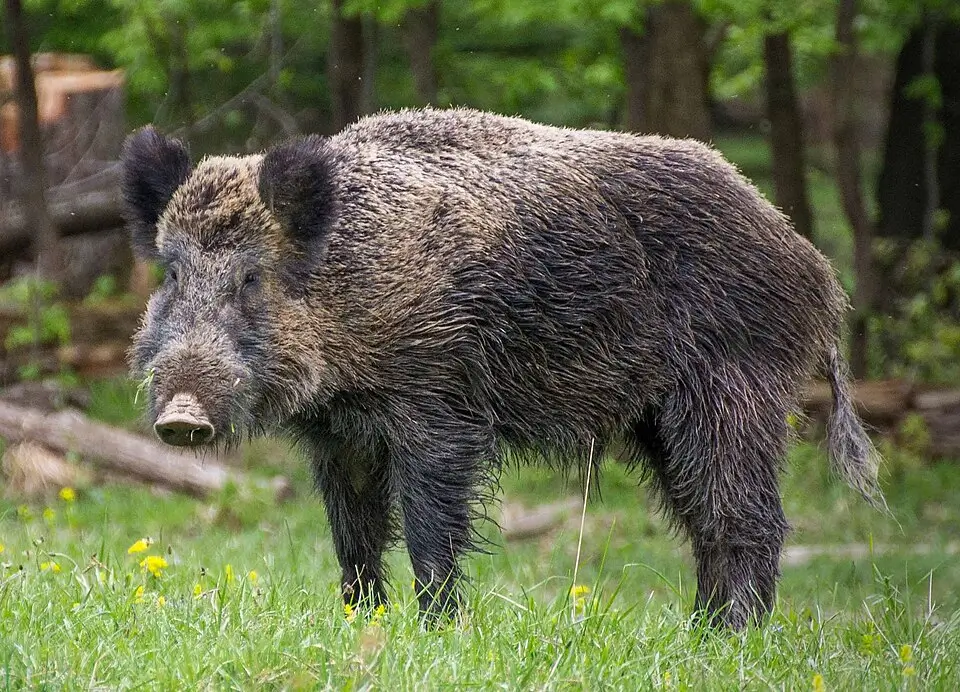
The wild boar, Sus scrofa, belongs to the family Suidae, the pig family, within the order Artiodactyla (even-toed ungulates). It is the largest wild member of the pig family and serves as the wild ancestor of the domestic pig (Sus scrofa domesticus). The species is characterized by a robust, heavily built body with a large, wedge-shaped head, a tough and highly sensitive snout, and relatively short but powerful legs.
One of the most distinctive physical features of the wild boar is its snout. The snout is not merely a sensory organ — it is also a powerful digging tool, reinforced by a specialized disk of cartilage and bone called the prenasal bone. This structure allows wild boar to root through soil, leaf litter, and even compacted ground in search of food, a behavior that is central to their foraging strategy and has significant ecological impacts on the environments they inhabit.
Wild boar are covered in a coarse coat of bristly hair, typically ranging in color from dark brown to black, with lighter underfur. Piglets, however, are born with distinctive horizontal stripes of light and dark coloring, a pattern that provides effective camouflage in dappled forest light. This striped pattern fades as the young animals mature, usually within the first few months of life.
Both males (boars) and females (sows) possess tusks, though those of mature males are considerably more pronounced. The tusks are enlarged canine teeth that curve outward and upward from the lower jaw. In males, these tusks continue to grow throughout their lives and can reach impressive lengths, serving as both weapons in combat with rival males and as tools for rooting and defense against predators.
Wild boar are omnivores with a highly varied diet. They consume roots, tubers, fungi, acorns, berries, insects, small vertebrates, carrion, and agricultural crops. This dietary flexibility is one of the key factors behind the species' extraordinary ecological success. Their powerful digestive systems allow them to process a wide range of foods that other animals cannot, giving them a competitive advantage in environments where food resources fluctuate seasonally.
Reproductive success is another hallmark of the species. Sows typically reach sexual maturity within their first year under favorable conditions, and gestation lasts approximately 115 days — just under four months. Litter sizes can range from a few piglets to over a dozen under ideal circumstances, meaning that wild boar populations are capable of rapid growth when habitat and food resources are sufficient.
Wild boar are also notable for their keen senses. Their sense of smell is exceptional — widely considered superior even to that of domestic dogs — and they rely heavily on olfactory cues to detect food, identify other individuals, and sense danger. Their hearing is also acute, though their eyesight is generally considered to be less sharp than their other senses.
Habitat & Range
Sus scrofa boasts one of the broadest natural ranges of any large terrestrial mammal. The species is native to much of Europe, Asia, and North Africa, and has been introduced — either intentionally or through the escape of domestic pigs — to North America, South America, Australia, and numerous island groups around the world.
Wild boar are habitat generalists, capable of living in a wide variety of environments. They are commonly associated with temperate and subtropical forests, particularly those that produce mast crops such as acorns and beechnuts, which provide important seasonal food resources. However, they are equally at home in grasslands, wetlands, agricultural margins, scrublands, and Mediterranean-type shrublands.
The key habitat requirements for wild boar include access to water, suitable cover for resting and farrowing, and reliable food sources. Dense vegetation provides shelter from both predators and extreme weather, while proximity to water is essential for drinking and wallowing. Wallowing — the behavior of rolling in mud or shallow water — serves multiple functions, including thermoregulation, parasite control, and skin conditioning.
In North America, wild and feral swine populations have expanded considerably over recent decades. These animals are predominantly found in the southeastern United States, Texas, California, and other warmer regions, though sightings and small populations have been reported in an increasing number of northern states and Canadian provinces. Climate, habitat suitability, and human activity all play roles in shaping the distribution of these animals across the continent.
Hunting Information
Wild boar hunting is a tradition with deep roots in human culture, stretching back thousands of years to ancient civilizations in Europe and Asia where the boar was considered one of the most prestigious and dangerous quarry. Today, boar hunting remains a popular and respected pursuit in many parts of the world, including North America, Europe, and beyond.
Hunters who pursue wild boar generally appreciate the challenge the animal presents. Boar are intelligent and wary, capable of detecting human presence at considerable distances through their extraordinary sense of smell. They are also notably tough and resilient, capable of absorbing significant energy before being stopped. This combination of wariness and physical toughness demands that hunters approach the pursuit with respect and preparation.
Common methods for hunting wild boar include spot-and-stalk hunting, still hunting in forested areas, hunting over bait or feed stations (where legally permitted), and the use of trained hunting dogs. Dog hunting, in particular, has a long cultural heritage in many regions, with specially bred dogs used to bay or catch boar.
Regarding wild boar hunting specifically in Vermont, it is important for prospective hunters to be aware that the state does not have a well-established wild boar population, and the Vermont Fish and Wildlife Department does not currently list wild boar or feral swine as a huntable game species with defined seasons or licensing structures in the available official information. Vermont's hunting culture is rich and diverse, centered primarily on white-tailed deer, black bear, wild turkey, and various small game and waterfowl species. Anyone interested in hunting wild boar should contact the Vermont Fish and Wildlife Department directly for the most current and accurate regulatory guidance, as regulations can change and private hunting preserves may offer different opportunities.
For hunters traveling to states or regions where wild boar hunting is well-established, standard ethical hunting practices apply: know your quarry, ensure clean and humane shots, follow all applicable local regulations, and respect private and public land boundaries.
Conservation
From a global conservation standpoint, Sus scrofa is listed by the International Union for Conservation of Nature (IUCN) as a species of Least Concern, reflecting its wide distribution, large population numbers, and adaptability. In many parts of its native range, the wild boar is a thriving and ecologically important species that plays significant roles in seed dispersal, soil aeration through rooting behavior, and as a prey species for large predators such as wolves, bears, and tigers.
However, the picture is more complex when considering the species in regions where it has been introduced. Feral pigs and wild boar in non-native environments can have substantial impacts on native ecosystems, including disruption of ground-nesting bird habitats, competition with native wildlife for food resources, and alteration of soil and plant communities through rooting behavior. Wildlife managers in affected regions work to balance population management with ecological stewardship.
In its native range, conservation of suitable forest habitats, particularly those with abundant mast-producing trees, is essential to supporting healthy wild boar populations. The species also benefits from the presence of natural predators that help regulate population dynamics.
Wild boar occupy a unique space in human culture — simultaneously respected as challenging game, recognized as an important ecological actor, and managed as a wildlife species that requires thoughtful stewardship. Understanding this complexity is central to responsible engagement with the species, whether as a hunter, naturalist, or conservationist.