Overview
Few animals are as deeply woven into the fabric of North American wildlife culture as the white-tailed deer. Known scientifically as Odocoileus virginianus, the white-tailed deer is one of the most recognized, celebrated, and widely distributed large mammals on the continent. From the dense hardwood forests of New England to the open brushlands of Texas, this graceful and adaptable creature has captured the imagination of naturalists, wildlife photographers, and hunters alike for generations.
In Vermont, the white-tailed deer holds a place of special significance. Vermont is a landlocked state nestled in the New England region of the Northeastern United States, bordered by Massachusetts to the south, New Hampshire to the east, New York to the west, and the Canadian province of Quebec to the north. Its rolling hills, maple forests, river valleys, and agricultural patchwork create an ideal mosaic of habitat for white-tailed deer. For the state's roughly 648,000 residents — and for the many hunters and wildlife enthusiasts who travel to Vermont each year — the white-tailed deer represents both a treasured natural resource and a vital part of the outdoor tradition.
This guide offers a comprehensive look at the white-tailed deer: its biology and behavior, its habitat and range, the hunting traditions surrounding it, and the conservation efforts that help ensure healthy deer populations for generations to come.
Biological Traits
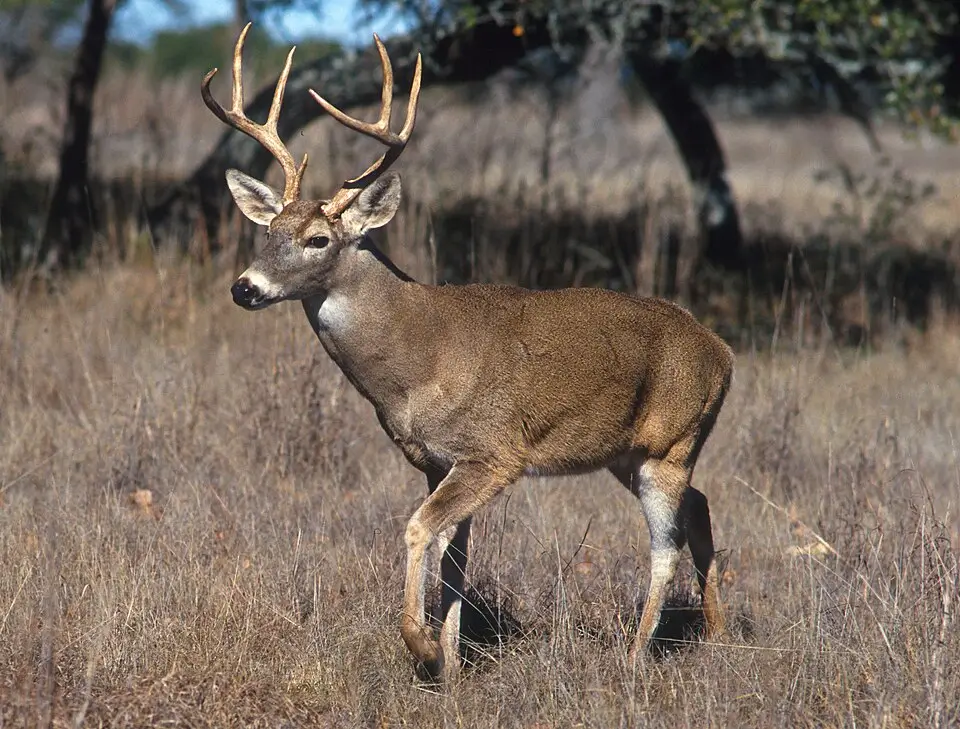
The white-tailed deer (Odocoileus virginianus) belongs to the family Cervidae, the deer family, which also includes elk, moose, and caribou. It is a medium-to-large ungulate, with adult does (females) typically weighing between 90 and 200 pounds and bucks (males) ranging considerably larger depending on region and food availability. Northern deer, including those found in Vermont, tend to be larger than their southern counterparts — a biological pattern known as Bergmann's Rule, which describes how animals in colder climates often evolve larger body sizes to conserve heat.
One of the most iconic features of this species is the distinctive tail from which it takes its common name. When alarmed, a white-tailed deer raises its tail to expose a bright white underside, a behavior believed to serve as a warning signal to other deer and possibly to confuse predators. This "flagging" behavior is instantly recognizable and one of the most enduring images associated with North American wildlife.
Bucks grow and shed antlers on an annual cycle governed by photoperiod — the changing ratio of daylight to darkness throughout the year. Antler growth typically begins in spring, spurred by increasing daylight and rising testosterone levels. During growth, antlers are covered in a soft, blood-rich tissue called velvet, which supplies nutrients to the rapidly developing bone. By late summer or early fall, velvet dries and is shed as bucks rub their antlers against trees and shrubs. The antlers are then used in sparring and dominance displays during the rut, or breeding season, which typically peaks in November across much of the Northeast.
White-tailed deer are ruminants, meaning they have a complex, multi-chambered digestive system that allows them to process a wide variety of plant material. Their diet shifts with the seasons: in spring and summer, deer favor tender grasses, forbs, and the leaves of woody plants. In fall, they readily consume hard mast such as acorns and beechnuts — critical high-energy foods that help them build fat reserves for winter. In winter, deer in northern states like Vermont rely heavily on woody browse, including the twigs and bark of conifers and hardwood saplings.
Does typically give birth to one or two fawns in late May or early June, though triplets are not unheard of in areas with abundant food resources. Fawns are born with a spotted coat that provides excellent camouflage on the forest floor. The spots fade within the first few months of life. Does are attentive mothers, but they often leave fawns hidden and alone for extended periods while they forage — a behavior that sometimes leads well-meaning people to mistakenly believe a fawn has been abandoned.
The sensory capabilities of white-tailed deer are extraordinary. Their wide-set eyes provide a nearly 300-degree field of vision, making it difficult to approach them undetected. Their sense of smell is estimated to be many times more sensitive than that of a human, and their large, mobile ears can swivel independently to pinpoint sounds. These traits make deer both fascinating subjects of wildlife study and a genuinely challenging quarry for hunters.
Habitat & Range
The white-tailed deer is arguably the most adaptable large mammal in North America. Its range extends from the southern reaches of Canada southward through the entirety of the contiguous United States and into Central and South America. In the United States alone, white-tailed deer are present in virtually every state.
Vermont's landscape is particularly well-suited to white-tailed deer. The state's terrain is defined by the Green Mountains running north to south through its center, flanked by river valleys, farmland, and mixed hardwood and softwood forests. This varied landscape provides deer with nearly everything they need: hardwood ridges rich in mast-producing oaks and beeches, softwood stands of hemlock and cedar that offer thermal cover during harsh winters, and agricultural fields and forest edges that supply abundant forage.
Edge habitat — the transition zone between forest and open land — is especially important for white-tailed deer. Vermont's mosaic of farms, woodlots, and regenerating forests creates an abundance of these productive edge environments. Deer are most active during the low-light hours of dawn and dusk, when they move between bedding areas in dense cover and feeding areas in fields, forest openings, and clear-cuts.
Winter severity plays a significant role in deer population dynamics across Vermont. Deep snow can limit deer mobility and access to food, and during particularly harsh winters, deer congregate in "deer yards" — areas of dense softwood cover, often hemlocks, that intercept snow and moderate temperatures. These traditional wintering areas are critical to deer survival in northern New England.
Hunting Information
White-tailed deer hunting is a cornerstone of Vermont's outdoor heritage. Each autumn, hunters from across the state and beyond take to Vermont's woods in pursuit of one of North America's most prized game animals. The white-tailed deer is the most popular big-game species in Vermont, and deer season is a deeply anticipated event that connects hunters to the land, to wildlife, and to generations of tradition.
Vermont offers multiple deer hunting seasons, typically including archery, muzzleloader, and rifle seasons, though hunters should always consult the Vermont Fish & Wildlife Department for the most current and specific season dates, bag limits, licensing requirements, and regulations, as these details can change from year to year. Specific season dates and license details were not available in the source data consulted for this article, and prospective hunters are strongly encouraged to visit the official Vermont Fish & Wildlife website for up-to-date regulatory information.
What is well established is that deer hunting in Vermont demands skill, patience, and a deep understanding of deer behavior. Hunters employ a variety of methods, including stand hunting from tree stands or ground blinds positioned along travel corridors, active still-hunting through the forest, and deer drives. The rut, which typically peaks in November in Vermont, is considered by many hunters to be the most exciting and productive period of the season, as bucks become more active during daylight hours in their search for does.
Vermont's hunting culture is characterized by a strong ethic of fair chase and respect for the resource. Hunters in Vermont are encouraged to pursue deer in a manner that upholds these values, and many deer hunters in the state are also strong advocates for wildlife conservation.
Conservation
The white-tailed deer's story is, in many respects, one of the great conservation success stories in North American history. By the late 19th and early 20th centuries, unregulated market hunting and widespread habitat loss had reduced deer populations to dangerously low levels across much of their range. Through the implementation of science-based wildlife management, regulated hunting seasons, and habitat restoration efforts, deer populations rebounded dramatically throughout the 20th century.
Today, white-tailed deer are abundant across their range, and healthy deer populations in Vermont and elsewhere are maintained through careful management by state wildlife agencies. Hunters play a direct and meaningful role in this management by providing license revenue that funds conservation programs, habitat work, and wildlife research. The Federal Aid in Wildlife Restoration Act — commonly known as the Pittman-Robertson Act — channels an excise tax on the sale of firearms and ammunition directly into wildlife conservation, and white-tailed deer management is among the primary beneficiaries of these funds.
Conservation challenges do exist. In some areas, deer populations can become locally overabundant, leading to overbrowsing of forest understories and increased deer-vehicle collisions. Wildlife managers work to balance deer populations at levels that are healthy for both the deer and the ecosystems they inhabit. Additionally, diseases such as Chronic Wasting Disease (CWD), a fatal neurological illness affecting deer and other cervids, represent an ongoing concern for wildlife managers across North America, and monitoring programs are in place in many states to detect and manage its spread.
In Vermont, the conservation of white-tailed deer is intertwined with the stewardship of the broader landscape. Maintaining forest health, protecting deer yards and critical winter habitat, and managing hunting pressure responsibly are all part of ensuring that Vermont's deer population remains vibrant and sustainable for the future.