Overview
Few animals in North America capture the imagination quite like the snowshoe hare (Lepus americanus). A symbol of resilience and adaptability, this medium-sized lagomorph has evolved remarkable survival strategies that allow it to thrive across some of the continent's most demanding environments. From the boreal forests of Canada to the mountainous woodlands of the northeastern United States, the snowshoe hare occupies a vital ecological niche — serving simultaneously as both a consummate prey species and a keystone component of healthy forest ecosystems.
Vermont, with its rolling Green Mountains, dense northern hardwood forests, and cold, snowy winters, provides some of the finest snowshoe hare habitat in the entire northeastern United States. The state's landscape — characterized by a patchwork of young forest stands, brushy thickets, and conifer swamps — closely mirrors the kind of complex terrain that snowshoe hares depend upon for food, shelter, and reproduction. For wildlife enthusiasts, conservationists, and hunters alike, the snowshoe hare represents one of Vermont's most fascinating and beloved wild residents.
Understanding this species means appreciating not only its biology and behavior, but also its profound role in shaping the ecosystems it inhabits. From its iconic seasonal coat change to its cyclical population dynamics, the snowshoe hare is a creature of extraordinary biological sophistication.
Biological Traits
The snowshoe hare (Lepus americanus) is a member of the family Leporidae — the same family that includes all rabbits and hares. Its common name derives from one of its most distinctive physical features: its remarkably large, heavily furred hind feet. These oversized feet function like natural snowshoes, distributing the animal's weight across soft snow and enabling it to move swiftly and efficiently through deep winter conditions that would quickly exhaust most predators.
Adult snowshoe hares are medium-sized mammals, generally weighing between two and four pounds, with body lengths typically ranging from around 16 to 21 inches. Like all members of the genus Lepus, they are true hares — meaning their young, called leverets, are born fully furred, with open eyes, and are capable of movement within hours of birth. This is in contrast to rabbits, whose offspring are born blind, hairless, and entirely helpless.
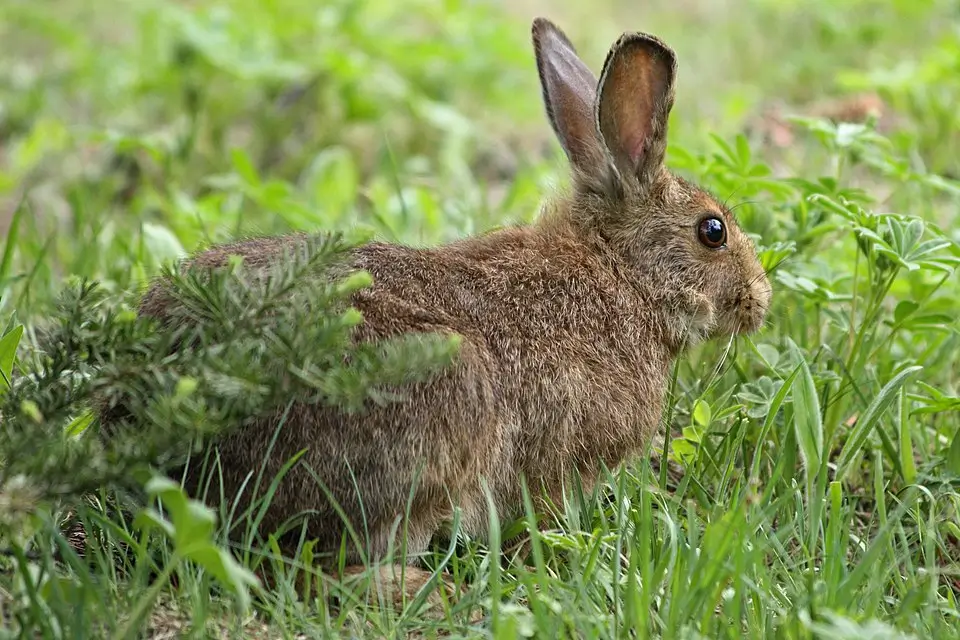
Perhaps the most visually stunning adaptation of the snowshoe hare is its seasonal change in coat color, known as molting. During the warmer months of spring, summer, and early fall, the hare wears a coat of rich brown and gray fur that provides excellent camouflage against the leaf litter, soil, and vegetation of the forest floor. As winter approaches and day length shortens, hormonal changes triggered by photoperiod — the length of daylight hours — initiate a dramatic transformation. The hare's coat gradually shifts to a brilliant, almost pure white, rendering it nearly invisible against a backdrop of snow and ice. Come spring, the process reverses, and the brown coat returns. This twice-yearly transformation is one of nature's most elegant examples of adaptive coloration.
Snowshoe hares are primarily crepuscular and nocturnal, meaning they are most active during the hours around dawn and dusk, as well as throughout the night. They spend daylight hours resting in shallow depressions called "forms" — simple hiding spots beneath brush piles, fallen logs, or dense conifer branches. Their diet is highly seasonal. In summer, hares graze on a wide variety of grasses, forbs, ferns, and leafy vegetation. In winter, they shift to a diet of woody browse, consuming the twigs, bark, and buds of species such as willow, birch, alder, and various conifers. This dietary flexibility is crucial to their year-round survival.
One of the most compelling aspects of snowshoe hare biology is their famous population cycle. Across much of their range — particularly in the boreal forests of Canada — snowshoe hare populations rise and fall dramatically over an approximately 8 to 11 year cycle. At peak population densities, hares can be extraordinarily abundant. During crash phases, populations can decline by more than 90 percent. This cycle is closely linked to the population dynamics of their primary predators, most notably the Canada lynx (Lynx canadensis), whose own numbers track hare abundance with a predictable lag. The relationship between the snowshoe hare and the Canada lynx is one of the most studied predator-prey dynamics in ecological science.
Habitat & Range
The snowshoe hare has one of the broadest ranges of any North American lagomorph. Its distribution extends from Alaska across the entirety of Canada and southward through the Rocky Mountains, the Appalachian Mountains, and the Great Lakes region of the United States. In the East, populations are found as far south as the mountainous regions of Tennessee and North Carolina, wherever suitable cool-climate habitat exists.
In Vermont, snowshoe hares are found statewide, though their density varies considerably depending on the availability of appropriate habitat. They favor early successional forests and areas with dense understory cover — young stands of mixed conifers and hardwoods, alder thickets along stream corridors, boreal bogs, and regenerating clear-cuts where shrubby vegetation provides both food and concealment. Conifer swamps, particularly those dominated by spruce and fir, are especially valuable winter habitat, offering overhead cover that intercepts snow and maintains passable corridors even during heavy winters.
Vermont's varied landscape provides a mosaic of these habitat types. The northern portions of the state, with their greater proportion of boreal and mixed forest, tend to support higher hare densities. The Northeast Kingdom — Vermont's rugged, sparsely populated northeastern corner — is widely regarded as prime snowshoe hare country. However, suitable populations can be found across much of the state wherever young, dense forest and brushy edges exist.
The species is well adapted to Vermont's dramatic seasonal climate. Cold, snowy winters that persist for months are no obstacle for an animal equipped with natural snowshoes, a thermally insulating white coat, and a digestive system capable of extracting nutrition from woody plant material.
Hunting Information
Snowshoe hare hunting is a cherished tradition throughout northern New England, and Vermont's forests offer wonderful opportunities for sportsmen and sportswomen seeking this challenging quarry. Hunting hares is a pursuit that rewards patience, woodsmanship, and a deep understanding of the animal's habits and preferred habitat.
One of the most classic and beloved methods for hunting snowshoe hares is with a pack of beagles or other small hounds. When a hare is jumped and begins to run, it typically follows a large, looping circuit and tends to return toward the area where it was first flushed. Hunters position themselves along the hare's likely path and wait as the hounds work the cover, listening for the music of the chase. This traditional style of hunting is deeply embedded in New England's sporting culture and remains popular in Vermont to this day.
Still-hunting — moving slowly and quietly through dense cover — is another effective approach, particularly after a fresh snowfall when tracks reveal hare activity and the white-coated animals may be spotted against darker vegetation. Jump-shooting, where hunters walk through brushy thickets to flush hares, is also productive.
Because specific season dates and licensing requirements for snowshoe hare hunting in Vermont were not available in the source data consulted for this article, hunters are strongly encouraged to consult the Vermont Fish & Wildlife Department's official publications for current and accurate regulations. Regulations can vary by year and may include specific season dates, bag limits, and licensing requirements. Always verify the most up-to-date rules before heading afield.
Conservation
The snowshoe hare is currently classified as a species of least concern by wildlife conservation organizations, reflecting its broad range and generally stable populations across much of North America. However, like all wildlife, snowshoe hares face challenges associated with habitat change, climate variability, and land use patterns.
One area of growing scientific interest is the potential impact of climate change on snowshoe hare populations. The hare's white winter coat — so critical for camouflage against snow — is triggered by changes in day length rather than actual snow cover. In regions experiencing shorter and less consistent snow seasons due to shifting climate patterns, hares may spend extended periods in white coats against snow-free brown and gray backgrounds — a phenomenon sometimes called "coat color mismatch." Researchers have observed that this mismatch can increase predation rates and represents a potential long-term challenge for the species in certain parts of its range.
In Vermont, maintaining and restoring young forest habitat is widely recognized as beneficial for snowshoe hare populations. Active forest management, including timber harvesting that creates young, dense regenerating stands, can produce excellent hare habitat. Conservation organizations and state wildlife agencies in Vermont support habitat management practices that maintain the diverse age structure of forests that benefits hares and many other species.
Vermont's overall landscape — with its mix of private forestland, state forests, wildlife management areas, and working farms — continues to provide substantial habitat for snowshoe hares. The state's relatively low human population density and strong tradition of land stewardship contribute to the preservation of wild spaces where hares and the broader ecosystem can flourish.