Overview
Few birds capture the spirit of the northeastern American forest quite like the Ruffed Grouse (Bonasa umbellus). Known to hunters and naturalists alike as one of the most challenging and rewarding game birds on the continent, the Ruffed Grouse has earned a legendary status in the upland hunting community. Whether you encounter one while hiking through a stand of young aspens or flush one unexpectedly from a thicket during a crisp October morning, the explosive takeoff of a Ruffed Grouse is an experience that stays with you long after the woods have gone quiet again.
In Vermont, the Ruffed Grouse is more than just a game bird — it is a symbol of the state's rich forested landscape and deep outdoor heritage. Vermont's rolling hills, mixed hardwood forests, and dense early successional habitats create an ideal environment for this species, making the Green Mountain State one of the premier destinations in the Northeast for grouse hunters and wildlife enthusiasts alike. With a history of hunting culture that stretches back centuries, Vermont's residents and visitors have long celebrated the Ruffed Grouse as a cornerstone of the upland hunting experience.
This article explores the biology, habitat, hunting traditions, and conservation status of the Ruffed Grouse, offering a comprehensive look at one of North America's most fascinating and beloved birds.
Biological Traits
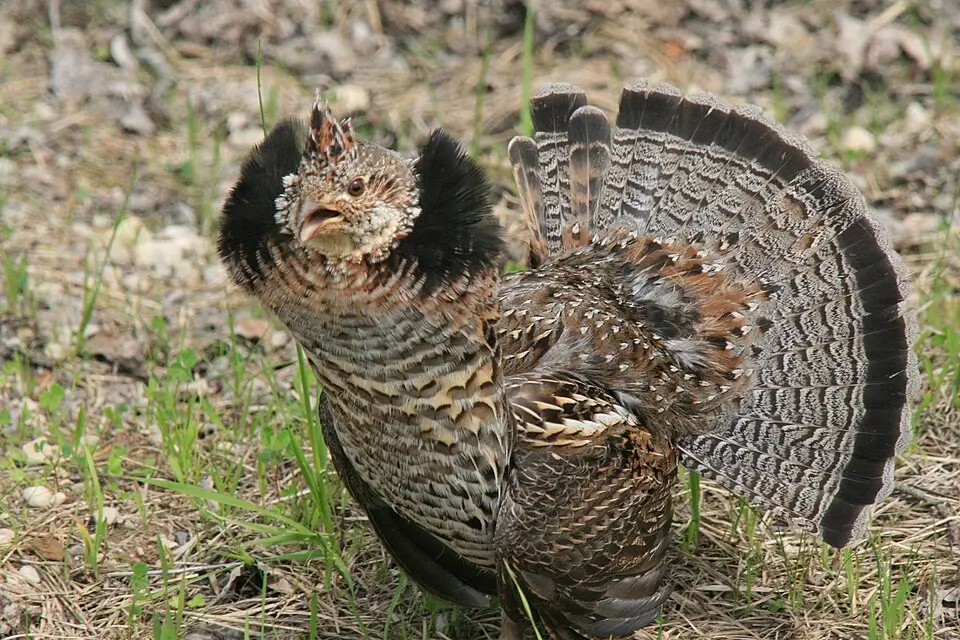
The Ruffed Grouse (Bonasa umbellus) is a medium-sized bird belonging to the family Phasianidae, the same broad family that includes pheasants, turkeys, and other grouse species. The genus name Bonasa is derived from the Latin word for bison, a reference to the thunderous drumming sound the bird produces, while umbellus refers to the umbrella-like ruff of feathers around the neck that gives the species its common name.
Adult Ruffed Grouse are well adapted for life in forested environments. They display cryptic, mottled plumage in shades of brown, gray, and russet that allows them to blend seamlessly into the leaf litter and dappled light of the forest floor. This remarkable camouflage is one of the bird's primary defenses against predators. Two primary color morphs exist — a brown phase and a gray phase — with the gray phase being somewhat more common in northern populations and the brown phase more prevalent in southern and Appalachian populations.
One of the most iconic behavioral traits of the Ruffed Grouse is the drumming display performed by males. A male grouse will stand on a favored log, rock, or raised surface and rapidly beat his wings against the air — not against his body or the log — creating a resonant, accelerating thumping sound that carries through the forest. This drumming serves to establish territory and attract females. The sound begins slowly and increases in tempo, resembling the distant roar of a small engine starting up. Hunters and naturalists who learn to recognize this sound gain a significant advantage in locating birds during spring and fall.
Ruffed Grouse are year-round residents throughout their range and do not migrate. During winter months in the north, they have evolved a remarkable adaptation: they grow small, comb-like projections called pectinations along the sides of their toes, which function like snowshoes and allow them to walk across the surface of snow more easily. On very cold nights, grouse will dive into soft snow and create a snow roost, using the insulating properties of snow to retain body heat and survive frigid temperatures.
The diet of the Ruffed Grouse is highly varied and changes seasonally. In spring and summer, birds consume insects, berries, green leaves, and other soft vegetation. As fall arrives, the diet shifts heavily toward buds, catkins, and fruits. In winter, particularly in northern forests like those found in Vermont, the birds rely extensively on the buds and catkins of aspen, birch, and other hardwood trees. This dietary flexibility is a key factor in the species' ability to thrive across a broad geographic range.
Ruffed Grouse are generally solitary birds outside of the breeding season. Breeding occurs in spring, with males drumming from late winter through spring to attract hens. A female will typically lay a clutch of 9 to 12 eggs in a shallow, leaf-lined nest on the forest floor, often positioned at the base of a tree or under a brush pile for concealment. The hen incubates the eggs alone, and the chicks are precocial — meaning they are mobile and capable of feeding themselves shortly after hatching. Young grouse, called chicks or poults, grow rapidly and are capable of short flights within a couple of weeks of hatching.
Habitat & Range
The Ruffed Grouse has one of the broadest ranges of any upland game bird in North America. The species is found from Alaska and the Yukon in the northwest, across Canada, and south through the Appalachian Mountains into Georgia and Alabama. In the eastern United States, the species is strongly associated with the forested landscapes of New England, the Great Lakes states, and the Appalachian region.
The species is a habitat generalist within forested ecosystems, but it shows a strong preference for early successional forests — those young, dense stands of trees and shrubs that spring up following logging, fire, or other disturbance. These habitats feature dense understory cover, abundant fruiting shrubs, and a diversity of plant species that provide both food and protection from predators. Aspen stands, in particular, are widely recognized as among the most productive Ruffed Grouse habitats in the northern part of the range, largely because aspens provide an abundant winter food source in the form of buds and catkins.
In Vermont, the landscape is uniquely suited to supporting healthy Ruffed Grouse populations. The state's extensive forested terrain, which covers more than three-quarters of its total land area, includes a mosaic of habitats ranging from mature hardwood ridges to regenerating clearcuts and brushy edges. Vermont's forest management history, including periods of widespread logging and subsequent regrowth, has created patchwork landscapes of young and old forest that benefit grouse and many other wildlife species. Abandoned farmland that has reverted to brushy cover also provides excellent habitat, particularly in the more rural corners of the state.
Ruffed Grouse are closely tied to forest edges and transitional zones between different types of cover. They favor areas where dense shrubs and young trees provide overhead concealment while still allowing relatively open movement on the ground. Access to drumming logs, dusting areas, and reliable winter food sources such as aspen buds are all critical components of high-quality grouse habitat.
Hunting Information
The Ruffed Grouse holds a special place in the tradition of upland hunting across North America, and Vermont is no exception. Hunting this species with a pointing dog or a flushing spaniel through the colorful autumn woods is considered by many hunters to be among the finest sporting experiences available on the continent. The bird's tendency to hold tight in cover and then flush explosively at close range, combined with the dense, obstacle-filled environments in which it lives, makes for challenging and deeply rewarding wing shooting.
Hunters pursuing Ruffed Grouse in Vermont should familiarize themselves with the most current regulations provided by the Vermont Fish & Wildlife Department, as season dates, bag limits, and licensing requirements are subject to change and must be verified before heading afield. While specific current season dates and license details were not available in the source data consulted for this article, Vermont has historically maintained a fall grouse season that aligns with peak habitat conditions and bird availability in the state's forested regions.
Dog work is central to the grouse hunting tradition for many hunters. Breeds such as the English Setter, Brittany, and various pointing and flushing breeds have long been favored for their ability to locate and work birds in thick cover. However, grouse can also be effectively hunted without a dog by walking slowly through promising cover and pausing frequently, a technique that encourages nervous birds to flush rather than run.
Scouting is a critical component of grouse hunting success. Hunters who take the time to locate productive cover — young aspen stands, alder runs, regenerating clearcuts, and brushy forest edges — before the season opens will have a significant advantage. Sign such as feathers, droppings, and the distinctive scratch marks left by feeding birds can help identify active areas.
Conservation
The Ruffed Grouse has historically been one of the most abundant upland game birds in North America, and it remains widespread across much of its range today. However, populations in parts of the northeastern United States, including New England, have experienced notable declines in recent decades. These declines are generally attributed to a combination of factors, including the maturation of forests that were once in the early successional stage ideal for grouse, changes in land use patterns, and, in some areas, the impacts of disease and parasites.
The West Nile virus has been identified as a significant mortality factor in some grouse populations, and ongoing research continues to investigate its impact across the species' range. Habitat management remains the most widely recommended tool for supporting healthy grouse populations, with an emphasis on creating and maintaining young forest habitats through timber harvesting, prescribed fire, and other management practices.
Conservation organizations such as the Ruffed Grouse Society have been active in promoting habitat management, supporting scientific research, and advocating for policies that benefit grouse and other early successional wildlife species. Vermont's working forests and active forest management traditions position the state well for continued conservation efforts on behalf of this iconic bird.
Hunters play an important role in grouse conservation through license fees and excise taxes on sporting equipment, which fund wildlife management programs across the country. The continued popularity of grouse hunting in states like Vermont helps ensure that this species and its habitats remain a priority for wildlife managers and policymakers.