Overview
Few wild animals capture the human imagination quite like the red fox. With its flame-colored coat, bushy tail, and quick, intelligent eyes, Vulpes vulpes has earned a place in folklore, literature, and the cultural heritage of countless societies around the world. From Aesop's fables to Native American legends, the red fox has long been celebrated — and respected — as a symbol of cunning, adaptability, and resourcefulness. In the real world, this reputation is well-deserved. The red fox is one of the most widely distributed wild carnivores on the planet, thriving in environments as diverse as Arctic tundra, temperate forests, suburban neighborhoods, and rolling farmland.
In Vermont, the red fox finds an especially welcoming home. The Green Mountain State's patchwork of forests, meadows, wetlands, and agricultural fields provides ideal habitat for this versatile predator. Vermont's rural character — combined with its rich mosaic of wild and working landscapes — supports healthy red fox populations, making the state a fascinating place to observe, study, and, for those who choose to pursue them, hunt these remarkable animals.
This article explores the biology, behavior, habitat, and hunting traditions surrounding the red fox, with particular attention to the Vermont context.
Biological Traits
The red fox, Vulpes vulpes, belongs to the family Canidae — the same family that includes wolves, coyotes, and domestic dogs. It is the largest member of the Vulpes genus and one of the most recognizable wild animals in the Northern Hemisphere.
Appearance
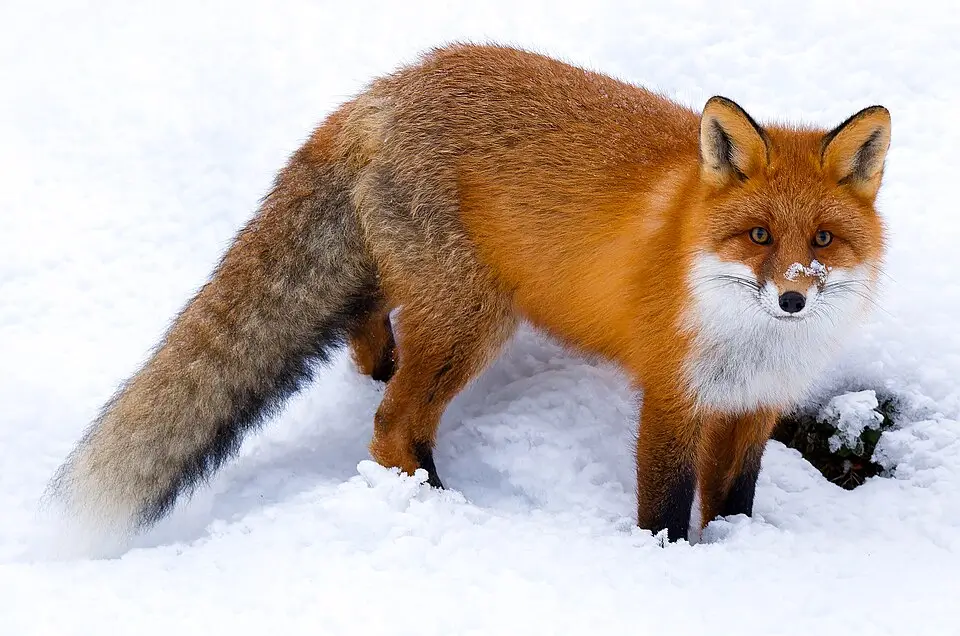
The red fox is perhaps best known for its striking coat, which is most commonly a rich reddish-orange across the back and sides, with white underparts, a white-tipped tail, and black legs and feet. However, color variation in red foxes is considerable. Color morphs including the "cross fox" (which displays a dark cross pattern across the shoulders) and the "silver fox" (which appears black with silver-tipped guard hairs) occur naturally in wild populations. Despite these variations, all are the same species — Vulpes vulpes.
Adults are relatively slender and agile, built for speed and maneuverability. The tail, known as a "brush," is long and thick and serves multiple purposes, including balance, communication, and warmth during cold weather, as the fox will curl its tail around its body like a blanket when resting in frigid conditions.
The fox's face is narrow and pointed, with large, upright ears that provide excellent hearing. Their eyes are notable for having vertically slit pupils — an adaptation that enhances their ability to judge distance and detect movement, particularly useful during low-light conditions at dawn and dusk.
Senses and Intelligence
Red foxes possess acute senses of hearing, smell, and vision. Their large ears can rotate independently, allowing them to pinpoint sounds with remarkable precision. This hearing is so sensitive that foxes are known to detect small rodents moving beneath snow — and then perform a characteristic leaping pounce to break through the snow's surface and catch their prey.
Their sense of smell is also highly developed, used both in hunting and in complex social communication. Red foxes communicate through a system of scent marking using urine, feces, and secretions from specialized scent glands. These scent marks convey a wealth of information to other foxes, including territorial boundaries, individual identity, and reproductive status.
Diet and Feeding Behavior
The red fox is an opportunistic omnivore with a remarkably broad diet. Small mammals — particularly voles, mice, rabbits, and squirrels — form a core component of their diet, but foxes also consume birds and their eggs, insects, earthworms, berries, fruits, and carrion. This dietary flexibility is one of the key reasons for the species' extraordinary success across such a wide range of habitats and climates.
Red foxes are primarily crepuscular and nocturnal hunters, most active around dawn and dusk. However, they are frequently observed during daylight hours, particularly during the breeding season or when raising young.
Reproduction and Life Cycle
Red foxes typically breed once per year. The breeding season, or "rut," generally occurs in late winter — often in January and February — and is heralded by the distinctive, high-pitched barking and screaming vocalizations that foxes use to attract mates. These sounds, often described as eerie or haunting, are a familiar part of the Vermont winter soundscape.
After a gestation period of approximately 52 days, a vixen (female fox) gives birth to a litter of cubs, typically ranging from four to six pups, though larger litters are possible. Cubs are born in underground dens, which the vixen may dig herself or, more commonly, take over from another animal such as a groundhog or badger. Both parents participate in raising the young, with the male (called a "dog fox") providing food to the nursing mother and, later, to the growing cubs. By autumn, young foxes typically disperse to establish their own territories.
Vocalizations
Red foxes are among the more vocal members of the canid family. They produce a wide variety of sounds, including barks, howls, whimpers, and the infamous "vixen's scream" — a blood-curdling shriek used primarily during the breeding season. These vocalizations serve important roles in mate attraction, territorial defense, and family communication.
Habitat and Range
Vulpes vulpes has one of the broadest natural ranges of any wild mammal, occupying much of the Northern Hemisphere including North America, Europe, Asia, and North Africa. The species has also been introduced to Australia, where it has become a significant wildlife management concern.
Within North America, the red fox is found from the Arctic coast of Canada and Alaska southward through the continental United States, with populations present in most U.S. states and Canadian provinces.
The red fox demonstrates a remarkable ability to exploit edge habitats — areas where different vegetation types meet, such as the boundary between a forest and a meadow, or a woodlot adjacent to farmland. These transitional zones tend to support high prey densities and offer both cover and open hunting ground, making them ideal for foxes. In Vermont, the state's agricultural valleys, mixed hardwood forests, river corridors, and village edges all provide this kind of varied, productive habitat.
Vermont itself is defined by its forested ridges, Green Mountain highland, and the fertile Champlain Valley to the west. This varied topography supports a diverse wildlife community, and the red fox is a well-established and widespread resident throughout the state — from the lowland agricultural fields of the Champlain Valley to the wooded hillsides of the Northeast Kingdom.
Hunting Information
Red fox hunting has a long and storied tradition in North America and in Vermont specifically. Hunters and trappers have pursued foxes for centuries, driven by both the value of their pelts and the sporting challenge these intelligent, wary animals present.
Fox hunting in Vermont, as in other parts of New England, can take several forms. Some hunters pursue foxes with hounds, enjoying the music of the chase through winter fields and woodlands. Others hunt foxes by calling — using predator calls that mimic the distress cries of small prey animals to lure curious or hungry foxes into range. Still others incorporate fox hunting into broader predator hunting or trapping activities during the fall and winter seasons.
The red fox's wariness and keen senses make it a challenging quarry. Successful fox hunters typically pay close attention to wind direction, move slowly and quietly, and make careful use of available cover. Fox populations in Vermont appear to be maintaining themselves as part of a healthy and balanced predator-prey community.
It is important to note that specific season dates, licensing requirements, and regulations for hunting red fox in Vermont were not available in the source data consulted for this article. Hunters interested in pursuing red fox in Vermont are strongly encouraged to consult the Vermont Fish & Wildlife Department directly and to review the most current edition of the Vermont Hunting and Trapping Regulations. Regulations can change from year to year, and compliance with all applicable state and federal rules is both a legal requirement and a cornerstone of ethical hunting.
Conservation
The red fox is currently classified as a species of Least Concern by the International Union for Conservation of Nature (IUCN), reflecting its wide distribution, large global population, and demonstrated resilience in the face of human-altered landscapes. In fact, the red fox has benefited in many regions from land use changes such as forest clearing and agricultural development, which create the open and edge habitats it favors.
In Vermont, the red fox coexists with other members of the predator community, including the coyote — a relatively recent arrival to the Northeast — as well as the gray fox, fisher, and bobcat. Interestingly, coyote expansion across the Northeast has been associated with local reductions in red fox numbers in some areas, as coyotes are dominant competitors and will exclude foxes from prime territories. Despite this competitive pressure, red foxes remain a common and familiar part of Vermont's wildlife.
Vermont's forests and farmlands provide sustainable habitat for red foxes, and responsible hunting and trapping, conducted within regulated seasons and bag limits, plays an important role in wildlife management. Hunters and wildlife managers share a common interest in maintaining healthy, balanced ecosystems where species like the red fox can continue to thrive.
Vermont has a strong culture of conservation, and the state's Fish & Wildlife Department works continuously to monitor wildlife populations, set sustainable harvest levels, and protect critical habitat. Hunters, trappers, and wildlife enthusiasts all contribute to this conservation effort — through license fees, excise taxes on sporting goods, and direct participation in the stewardship of Vermont's natural heritage.
Conclusion
The red fox is one of nature's great success stories — a highly intelligent, physically capable, and ecologically flexible predator that has managed to thrive alongside humanity in a way few wild animals have matched. In Vermont, this remarkable animal remains a vibrant part of the state's wildlife community, offering opportunities for observation, photography, and hunting.
Whether glimpsed at the edge of a snow-covered field at dusk, heard calling across frozen hills on a January night, or pursued with hounds through the mixed landscape of the Northeast Kingdom, the red fox embodies the wild spirit of Vermont's outdoors. Understanding and respecting this animal — its biology, its behavior, and its ecological role — is part of what it means to be a thoughtful participant in Vermont's rich outdoor heritage.