Overview
Few birds capture the spirit of wetlands, rivers, and open water quite like the Mallard (Anas platyrhynchos). Recognized by casual birdwatchers and seasoned hunters alike, the Mallard stands as perhaps the most familiar waterfowl species in the Northern Hemisphere. From the shimmering emerald head of the drake to the distinctive quack that has become synonymous with "duck" in the popular imagination, this bird has woven itself deeply into both natural ecosystems and human culture. Whether you are glassing a misty Vermont marsh at first light, feeding ducks in a local park, or setting up decoys along a river bend, the Mallard is almost certainly part of the picture.
The Mallard belongs to the family Anatidae, the large and diverse group of birds that includes all ducks, geese, and swans. Within that family, it is classified in the genus Anas, which groups together the dabbling ducks — those species that feed primarily at or near the water's surface rather than diving deeply. Its scientific name, Anas platyrhynchos, derives from Latin and Greek roots roughly meaning "flat-billed duck," a fitting nod to the broad, spatulate bill that is one of the species' most practical anatomical features.
The Mallard's story is one of remarkable adaptability, wide-ranging distribution, and enduring appeal to hunters, naturalists, and wildlife managers across the globe. Understanding this bird — its biology, its habits, its habitat needs, and its role in the hunting tradition — offers a window into the broader world of waterfowl conservation and outdoor heritage.
Biological Traits
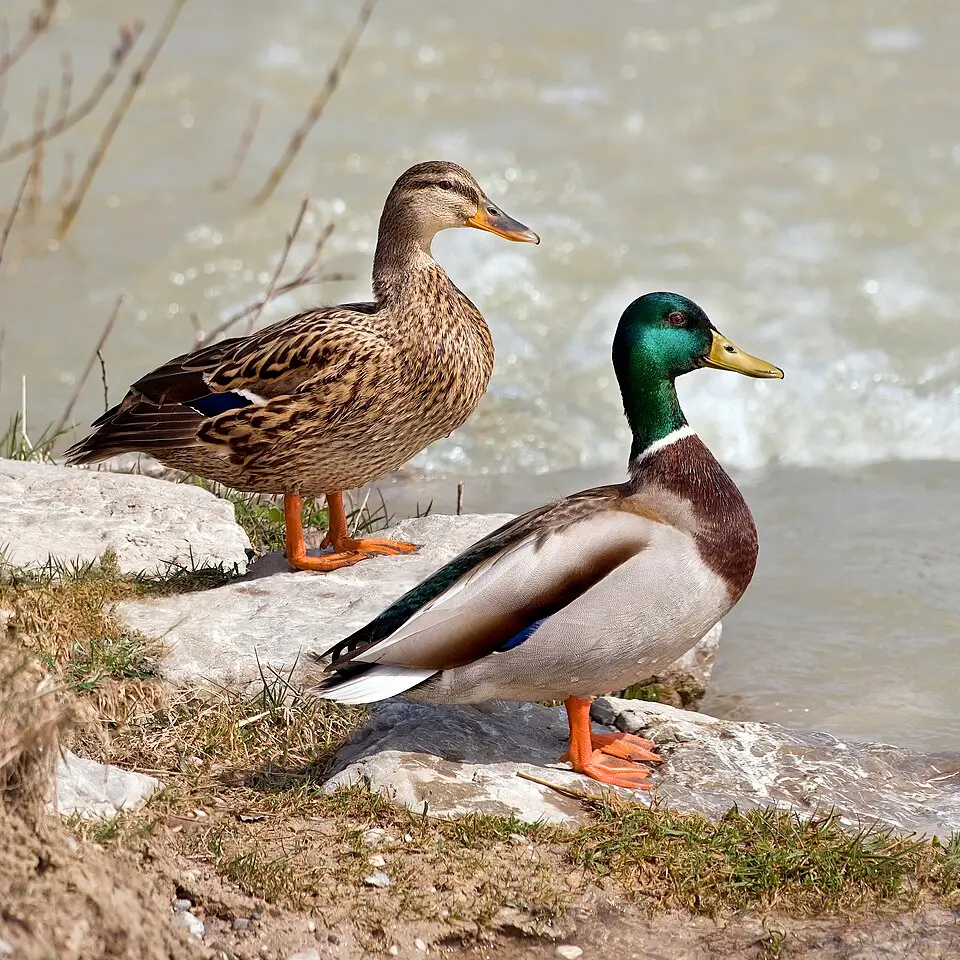
The Mallard is a medium-to-large dabbling duck, and the sexual dimorphism between males (drakes) and females (hens) is among the most striking in the waterfowl world. The breeding drake is instantly recognizable: a glossy, iridescent green head, a white neck ring, a chestnut-brown breast, and a pale gray body. The bill is characteristically yellow-orange, and the tail features the distinctive curled central feathers — the "drake feathers" — that hunters and artists have long used as a hallmark of the species. In flight, both sexes display a bright blue-purple speculum (a patch of color on the secondary wing feathers) bordered by white bars, which flashes brilliantly as the bird banks and turns.
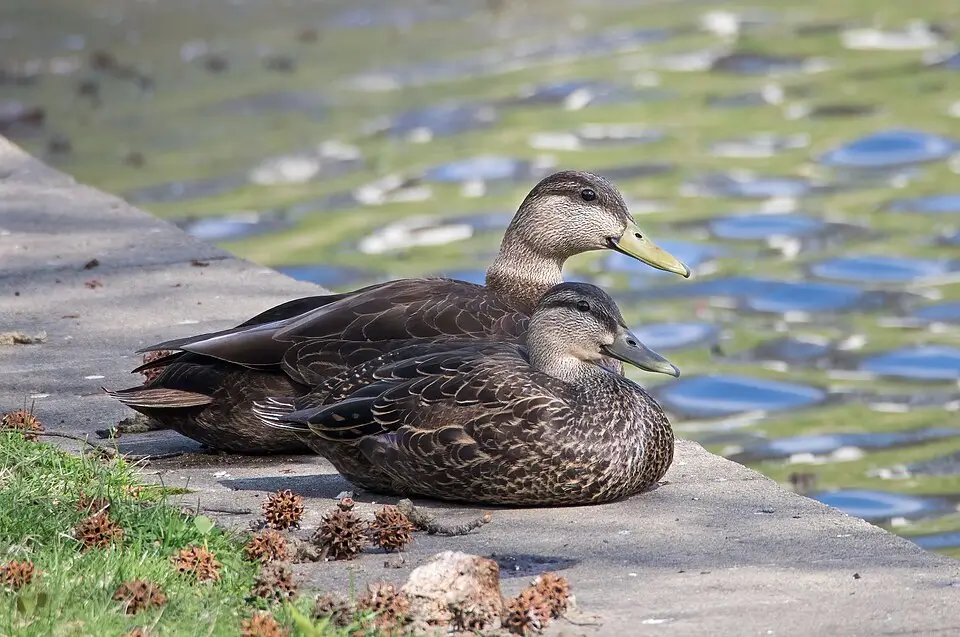
The hen, by contrast, is a study in practical camouflage. Her plumage is a warm, mottled brown — an ideal disguise for a bird that must sit quietly on a nest for weeks at a time. Her bill ranges from orange to brownish-orange, often with dark markings. Despite appearing less showy than the drake, the hen's plumage rewards close inspection with intricate patterns of buff, brown, and black that are beautiful in their own right.
Mallards are dabbling ducks, meaning they feed by tipping forward in shallow water to reach aquatic vegetation, seeds, invertebrates, and small aquatic organisms below the surface. Their broad, flat bills are equipped with lamellae — comb-like structures along the bill edges — that act as filters, allowing the bird to sieve food from water and mud with remarkable efficiency. They are highly opportunistic omnivores, adapting their diet seasonally to take advantage of whatever food sources are most abundant, from aquatic plants and agricultural grains to insects and small fish.
The Mallard is also notable for its vocalizations. The loud, classic "quack" is produced by the female; drakes make a softer, raspy "reeb" or low grunt. This distinction is a reliable way to identify the sex of a calling bird even when visual identification is difficult.
Mallards are strong, agile fliers. They can take off nearly vertically from the water — a valuable skill when predators are near — and can reach cruising speeds that make them a genuine challenge for hunters in the field. Their wingbeats are rapid and powerful, and migrating Mallards can cover impressive distances in a single flight. They are one of the more vocal species during flight, and the sound of a flock of Mallards working over a set of decoys, wings cupped and calling, is one of the iconic sounds of waterfowl hunting.
Habitat & Range
The Mallard boasts one of the widest distributions of any duck species on Earth. Native to the temperate and boreal regions of the Northern Hemisphere, it breeds across a vast swath of North America — from Alaska and Canada south through the continental United States — as well as across Europe and much of Asia. It has also been introduced to Australia, New Zealand, and parts of South America, where feral populations have established themselves.
In North America, Mallards are year-round residents in many areas and migratory visitors in others. They are highly adaptable when it comes to habitat selection. While they thrive in classic prairie pothole country — the glacially carved wetland landscape of the northern Great Plains and Canadian prairies that serves as the primary breeding ground for North American waterfowl — Mallards are equally at home on farm ponds, river backwaters, coastal marshes, urban park lakes, and flooded agricultural fields.
In Vermont, Mallards are a well-known and beloved part of the avian landscape. Vermont's geography, shaped by glacial activity and defined by the Green Mountains, the Champlain Valley, and numerous rivers and lakes, provides a diverse mosaic of wetland habitats. Lake Champlain, which forms much of Vermont's western border with New York, is a particularly important waterfowl corridor. River systems like the Connecticut, Winooski, and Lamoille Rivers, along with countless smaller brooks, beaver ponds, and wetland complexes, offer year-round or seasonal habitat for Mallards.
During the breeding season, Mallard hens nest in a wide variety of locations — from dense emergent vegetation at the water's edge to upland fields, brush piles, and even urban gardens. The nest is a shallow depression lined with plant material and down feathers plucked from the hen's own breast. A typical clutch contains roughly eight to thirteen eggs, and the hen incubates them alone for approximately four weeks. Once hatched, the precocial ducklings are capable of leaving the nest and swimming within hours of hatching, though they remain under the hen's care for several weeks.
As temperatures drop in the fall and early winter, many Mallards that bred in northern areas migrate southward, while others remain wherever open water is available. In Vermont, freeze-up on smaller water bodies pushes birds toward larger, slower-freezing waters, and late-season Mallards can often be found concentrated on open stretches of the Connecticut River or along Lake Champlain.
Hunting Information
The Mallard is the most sought-after duck in North America, and for good reason. Its abundance, wide distribution, sporting qualities, and excellent table fare make it the premier quarry for waterfowl hunters from coast to coast. In Vermont, Mallard hunting is a cherished tradition, particularly in the Champlain Valley and along the state's major river systems where birds concentrate during the fall migration.
Hunters pursuing Mallards in Vermont must comply with all applicable federal and state regulations. Waterfowl hunting in the United States is federally regulated through the U.S. Fish and Wildlife Service in cooperation with state wildlife agencies. Hunters are required to purchase both a federal duck stamp and the appropriate Vermont hunting license and state migratory bird stamp. Regulations regarding season dates, bag limits, shooting hours, and approved steel or non-toxic shot requirements are set annually and can change from year to year; hunters should always consult the most current Vermont Fish and Wildlife Department regulations before heading afield.
Because specific season dates and bag limits for Vermont were not available in the source data consulted for this article, hunters are strongly encouraged to visit the Vermont Fish and Wildlife Department's official website or contact the department directly for the most up-to-date and accurate regulatory information.
Common Mallard hunting methods include hunting from blinds over decoy spreads, jump-shooting along rivers and beaver ponds, and pass-shooting birds flying between roosting and feeding areas. Calling is an important skill in Mallard hunting — the classic hen quack and feeding chuckle are effective tools for pulling birds into range, and skilled callers can coax even wary birds into the decoys. Hunting with well-trained retrievers, particularly Labrador Retrievers, is both a practical and deeply traditional part of the Mallard hunting experience.
Conservation
The Mallard is currently listed as a species of Least Concern by the International Union for Conservation of Nature (IUCN), reflecting its large global population and broad distribution. North American Mallard populations are monitored annually through the Waterfowl Breeding Population and Habitat Survey conducted by the U.S. Fish and Wildlife Service and the Canadian Wildlife Service, and hunting seasons are set using this population data to ensure sustainable harvest.
Habitat conservation is the cornerstone of waterfowl management. Organizations such as Ducks Unlimited have invested billions of dollars in wetland conservation and restoration across North America, protecting and enhancing the habitats that Mallards and dozens of other waterfowl species depend upon. In Vermont, wetland protection under state and federal law, along with conservation easements on agricultural land, helps maintain the mosaic of habitats that supports healthy Mallard populations.
Hunters play a direct role in Mallard conservation through the purchase of Federal Duck Stamps, the proceeds of which fund the acquisition and protection of wetland habitats. This model of hunter-funded conservation has protected millions of acres of critical waterfowl habitat across the continent and stands as one of the most successful wildlife funding mechanisms ever devised.
The Mallard's adaptability is both an asset and a nuanced conservation consideration. In some parts of the world, feral Mallards and their hybrids with related species raise concerns about genetic integrity of closely related wild duck populations. Wildlife managers and researchers continue to study these dynamics to ensure that management decisions support healthy, genetically diverse waterfowl populations over the long term.