Overview
Few wildlife encounters stir the soul quite like the sight of a bull elk standing at the edge of a meadow, his massive antlers silhouetted against a morning sky. Cervus canadensis, commonly known as the elk or wapiti, is one of the most iconic and revered large mammals in North America. Admired by wildlife enthusiasts, photographers, and hunters alike, the elk occupies a unique place in the cultural and ecological fabric of the continent. From the bugling calls that echo through mountain valleys each autumn to the quiet grace of a cow and her calf grazing in an alpine clearing, elk inspire wonder at every turn.
The word "wapiti" comes from the Shawnee and Cree languages, meaning "white rump" — a fitting description for this unmistakable animal. Whether you encounter elk in a national park, spot them from a wilderness trailhead, or pursue them across steep terrain during hunting season, understanding the biology, behavior, and conservation status of this magnificent species adds profound depth to the experience.
Biological Traits
Elk are members of the family Cervidae, which also includes white-tailed deer, mule deer, moose, and caribou. As one of the largest members of this family in North America, elk are immediately recognizable by their size, coloration, and impressive antler growth.
Size and Appearance
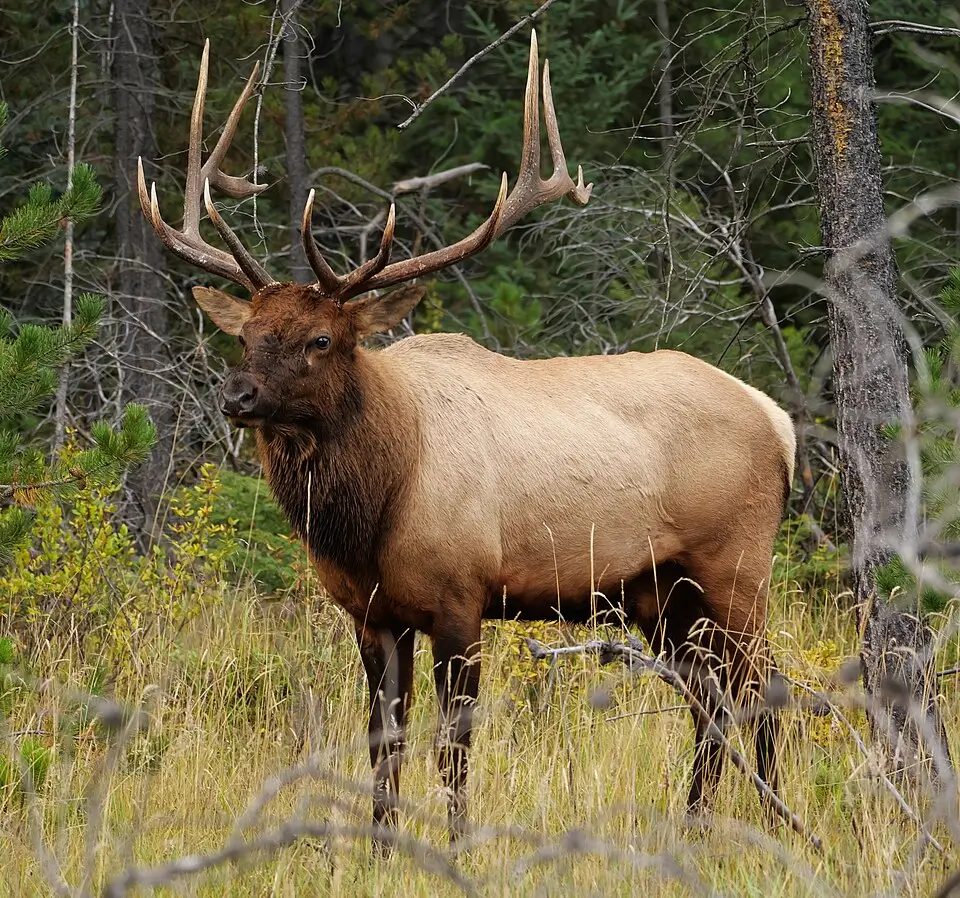
Elk display significant sexual dimorphism, meaning males (bulls) and females (cows) differ noticeably in size and physical features. Bulls are substantially larger than cows, and during the peak of their prime years, mature bulls can be truly imposing animals. Their coats vary seasonally — in summer, elk tend toward a reddish-brown or tan coloration, while their winter coats darken to a grayish-brown. One of the most distinctive features of any elk is the pale, cream-colored rump patch, which contrasts sharply with the darker neck and body. The neck of a bull elk is often thick and mane-like, especially pronounced during the rut.
Antlers
Perhaps no single feature defines the elk more powerfully than the antlers of a mature bull. Growing from permanent bony structures called pedicles on the skull, elk antlers are shed and regrown each year in a cycle tied closely to photoperiod — the changing length of daylight throughout the seasons. Antler growth begins in spring and continues through summer, during which time the antlers are covered in a soft, blood-rich tissue called velvet. By late summer, the velvet dries and is rubbed off as the antlers harden into dense bone in preparation for the breeding season.
A mature bull's antler rack can feature multiple tines, and large, well-developed sets are highly prized by hunters and wildlife observers alike. Antler development is influenced by genetics, age, nutrition, and overall health of the animal.
The Rut
One of the most dramatic wildlife spectacles in North America is the elk rut, which typically takes place in early to mid-autumn. During this period, bulls become highly active, vocal, and competitive. The characteristic bugling call of a bull elk — a rising, haunting sound that transitions into a series of grunts — is used to attract cows and warn rival bulls. Bulls may engage in dramatic sparring matches, locking antlers and pushing against one another to establish dominance. Dominant bulls, known as herd bulls, may gather and defend harems of cows throughout the breeding period.
Diet and Feeding Behavior
Elk are ungulates and strict herbivores. Their diet changes with the seasons and varies based on availability. During the warmer months, elk graze heavily on grasses, sedges, and forbs found in meadows and open areas. In winter, when snow covers the ground, they shift toward browsing on shrubs, tree bark, and other woody vegetation. Like other ruminants, elk have a multi-chambered stomach that allows them to efficiently extract nutrients from fibrous plant material through a process of fermentation and regurgitation known as cud-chewing.
Lifespan and Reproduction
In the wild, elk typically live between 10 and 13 years, though some individuals may survive longer under favorable conditions. Cows give birth to a single calf, typically in late spring or early summer, following a gestation period of approximately 240 to 262 days. Calves are born spotted, which provides camouflage during their vulnerable early weeks of life. They grow rapidly and are generally weaned by autumn.
Habitat & Range
Elk are highly adaptable animals that occupy a wide variety of habitats across North America. Historically, their range extended across much of the continent, from the eastern seaboard to the Pacific Coast, and from the Canadian boreal forest down into portions of northern Mexico. However, due to a combination of historical overhunting and habitat loss, elk were extirpated from large portions of their original eastern range during the 18th and 19th centuries.
Today, the largest and most robust elk populations are found in the Rocky Mountain states and provinces of the American West and western Canada. States such as Colorado, Montana, Wyoming, Idaho, and Oregon support thriving elk herds. Significant populations also exist in parts of the Pacific Northwest, the Great Lakes region, and portions of the Southwest. Conservation and reintroduction programs have helped restore elk to parts of their historic range, including areas in the eastern United States such as Kentucky, Tennessee, Pennsylvania, and Michigan.
Elk favor a mosaic of habitats that provides a balance of open areas for foraging and forested zones for cover and security. They are commonly found in mountain meadows, mixed conifer forests, aspen groves, and river valleys. Seasonally, elk often migrate between higher-elevation summer ranges and lower-elevation winter ranges, sometimes covering considerable distances.
Hunting Information
Elk hunting is one of the most sought-after and celebrated hunting pursuits in North America. The combination of challenging terrain, the physical demands of the hunt, and the sheer size and wariness of the quarry make elk hunting a true test of skill, patience, and perseverance. For many hunters, a bull elk taken in the backcountry represents the pinnacle of the North American hunting experience.
Elk are typically pursued using a variety of methods, including rifle hunting, archery, and muzzleloader seasons. Calling techniques — mimicking the bugle of a bull or the chirp of a cow — are highly effective during the rut and are widely used by elk hunters. Spot-and-stalk hunting is another popular approach, particularly in open western landscapes where glassing with optics allows hunters to locate animals from a distance before closing the gap.
Elk Hunting in Vermont
For hunters based in Vermont, it is important to note that elk are not currently a huntable species within the state's borders. Vermont, a landlocked state nestled in the New England region of the Northeastern United States, does not have an established wild elk population, and as such, no elk hunting seasons, licenses, or tags are currently offered by Vermont Fish & Wildlife. The state's official hunting information does not include any provisions for elk hunting at this time.
Vermont hunters who wish to pursue elk have excellent options by traveling west to states with established seasons and tag systems. Many western states offer both resident and non-resident elk tags through lottery draws and over-the-counter systems. Planning an out-of-state elk hunt typically involves researching tag availability, hiring an outfitter or guide, and preparing physically for the demands of hunting in rugged terrain.
For the most current and accurate information on elk hunting regulations in any state, hunters should always consult the relevant state wildlife agency directly, as seasons, bag limits, and licensing requirements can change from year to year.
Conservation
The story of elk conservation in North America is, in many respects, a story of remarkable success. By the late 1800s and early 1900s, unregulated market hunting and sweeping habitat destruction had reduced elk populations to a fraction of their historic numbers. Recognizing the crisis, conservationists, hunters, and government agencies united to protect and restore the species.
The establishment of national parks, wildlife refuges, and regulated hunting seasons provided the foundation for elk recovery. Organizations such as the Rocky Mountain Elk Foundation (RMEF) have played a crucial role in protecting and restoring elk habitat across millions of acres throughout North America. Hunters have been among the most significant financial contributors to elk conservation through the purchase of licenses, tags, and excise taxes on firearms and ammunition directed to wildlife management through programs such as the Federal Aid in Wildlife Restoration Act (Pittman-Robertson Act).
Today, North American elk populations are generally considered healthy and well-managed across much of their current range. Ongoing conservation priorities include habitat connectivity, predator-prey balance, minimizing human-wildlife conflict, and addressing emerging threats such as Chronic Wasting Disease (CWD), a fatal neurological disease that affects cervids including elk, deer, and moose.
Elk continue to serve as a flagship species for broader conservation efforts in North America, representing the power of science-based wildlife management and the enduring partnership between hunters, conservationists, and public land managers.