Overview
Few animals embody the spirit of North American wilderness quite like the coyote. Known scientifically as Canis latrans — a Latin phrase meaning "barking dog" — the coyote is one of the most adaptable, intelligent, and widely distributed wild canids on the continent. Whether you hear its haunting howl echoing across a Vermont hillside on a cold winter evening or catch a fleeting glimpse of its tawny form bounding through a snow-covered meadow, the coyote commands attention and respect from naturalists, wildlife managers, and hunters alike.
Once primarily a creature of the open western plains, the coyote has undergone one of the most remarkable range expansions of any large mammal in North American history. Today, it thrives from the deserts of the American Southwest to the boreal forests of Canada, from the sun-scorched prairies of Texas to the densely wooded hills and valleys of New England, including the Green Mountain State of Vermont. This adaptability is a testament to the coyote's biological resilience and its extraordinary capacity to live alongside human civilization in ways that few other wild predators can manage.
This article serves as a comprehensive guide to understanding the coyote — its biology, its behavior, its habitat preferences, and its place within the outdoor heritage of Vermont. Whether you are a wildlife watcher, a curious naturalist, or a hunter seeking to deepen your knowledge of this remarkable animal, read on for an in-depth look at one of North America's most fascinating wild canids.
Biological Traits
The coyote (Canis latrans) is a member of the family Canidae, which includes wolves, domestic dogs, and foxes. It is closely related to the gray wolf (Canis lupus) and the domestic dog (Canis lupus familiaris), and it is known to hybridize with both species under certain conditions. The so-called "coywolf" — a coyote-wolf hybrid — is particularly relevant in the northeastern United States and Canada, where eastern coyotes tend to be notably larger than their western counterparts, in part due to historic interbreeding with gray wolves and domestic dogs.
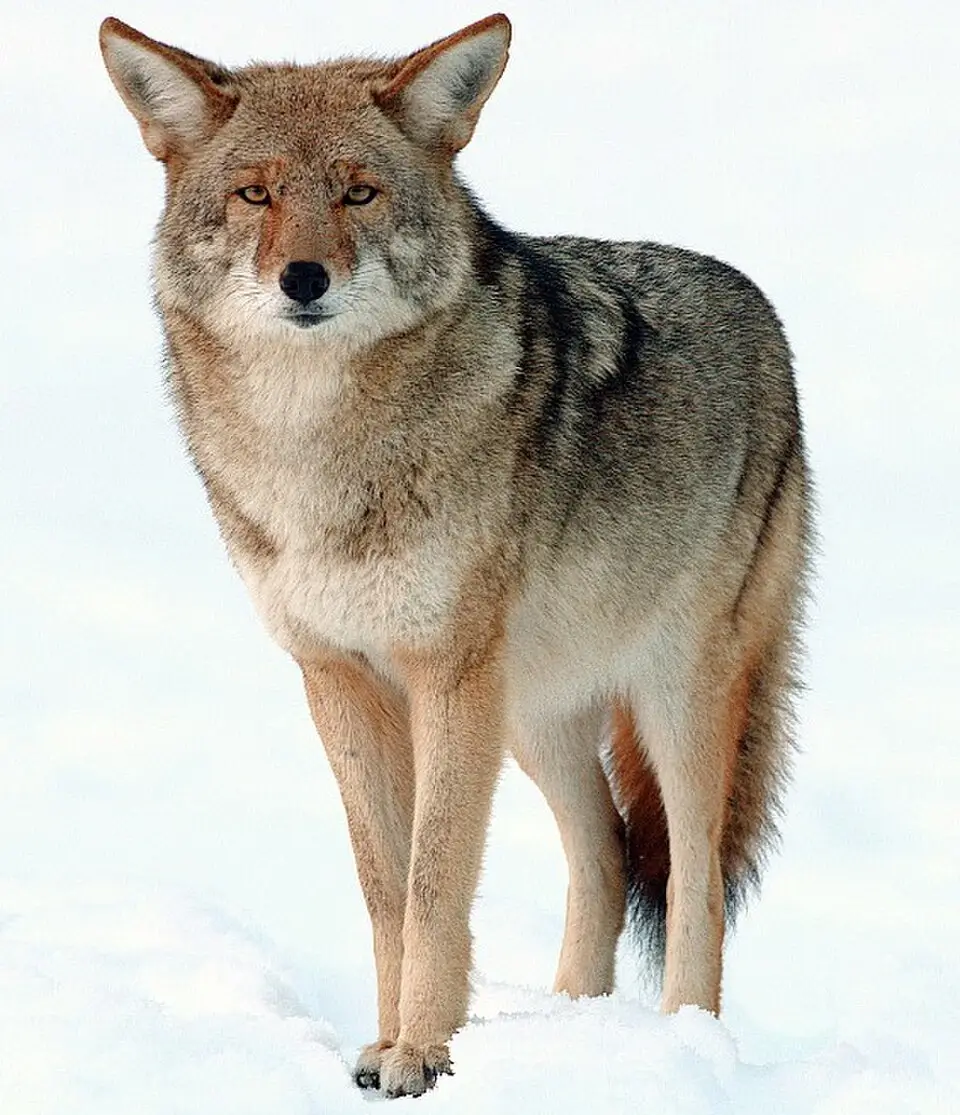
In terms of physical appearance, coyotes are medium-sized canids, typically weighing between 20 and 50 pounds, though eastern coyotes found in Vermont and across New England often fall on the heavier end of this range. They have a slender, athletic build with long legs, a narrow muzzle, large pointed ears, and a bushy tail that is typically held low while running — a key visual difference from domestic dogs, which often carry their tails upright. Coat coloration varies considerably but is generally a mix of gray, brown, and tan on the back and sides, with a lighter cream or white underside. Some individuals display reddish tones around the legs and face, while others appear more silvery or dark.
Coyotes are highly vocal animals, possessing one of the most varied vocal repertoires of any North American mammal. They communicate through a complex mix of howls, yips, barks, and whines. The classic coyote chorus — a rising, wavering howl punctuated by sharp yips — is often heard at dusk or after dark and serves to establish territory, maintain contact between family members, and bring the pack together after a hunt. This vocalization is a defining sound of the American wilderness and is increasingly familiar to residents of Vermont's rural communities and even suburban neighborhoods.
Coyotes are omnivores with a highly flexible diet. They are opportunistic feeders that consume small mammals such as rabbits, mice, and voles, as well as birds, reptiles, insects, fruits, berries, and carrion. In agricultural areas, they may also prey on domestic livestock, particularly young lambs and poultry, which occasionally brings them into conflict with farmers. In forested regions like Vermont, deer — particularly fawns in spring and weakened or injured adults in winter — can form a significant portion of their diet during certain seasons.
Socially, coyotes are adaptable. They can live as solitary individuals, as mated pairs, or in small family groups depending on habitat and food availability. They are monogamous breeders, with mated pairs often staying together for multiple years or even for life. Breeding typically occurs in late winter, with pups born in spring after a gestation period of approximately 63 days. Litter sizes average between four and seven pups, though larger litters are possible. Both parents participate in raising the young, and older siblings from previous litters sometimes help as well. This cooperative breeding strategy contributes to the coyote's remarkable reproductive success and its ability to quickly repopulate areas where individuals have been removed.
Coyotes are primarily crepuscular and nocturnal — most active at dawn, dusk, and throughout the night — though they are regularly observed during daylight hours, particularly in areas where human disturbance is minimal.
Habitat & Range
The coyote's range encompasses virtually all of North America, from Panama in the south to Alaska and northern Canada in the north. This extraordinary geographic spread reflects the species' unmatched ability to exploit diverse habitats, including grasslands, shrublands, deserts, forests, agricultural land, and even urban and suburban environments. Few wild mammals can claim such a broad ecological tolerance.
In Vermont, coyotes inhabit the full spectrum of available landscapes. The state's diverse geography — which includes the Green Mountains running north to south through the center of the state, rolling agricultural valleys, hardwood and mixed forests, wetlands, and river corridors — provides excellent habitat for coyotes year-round. They are found from the dense forests of the Northeast Kingdom in the north to the open farmland of the Champlain Valley in the west and the southern hills bordering Massachusetts.
Vermont's forested landscape offers coyotes both cover and a rich prey base. White-tailed deer, snowshoe hares, wild turkeys, and a variety of small rodents all contribute to sustaining healthy coyote populations throughout the state. Vermont's mosaic of farmland and forest edges creates ideal hunting habitat, as these transitional zones — known as ecotones — tend to support higher densities of prey species than either pure forest or open agricultural land alone.
As a landlocked state in the New England region, Vermont shares its borders with New Hampshire to the east, New York to the west, Massachusetts to the south, and the Canadian province of Quebec to the north. Coyotes move freely across these borders, and Vermont's population is part of a broader, interconnected northeastern coyote population that spans the entire region. Vermont's relatively low human population density — approximately 648,493 residents according to the most recent U.S. census estimates, making it the second-least populated state in the country — means that large swaths of the state remain lightly developed, providing extensive undisturbed habitat for wildlife, including coyotes.
Hunting Information
Coyote hunting is a well-established outdoor tradition across New England, and Vermont is no exception. Hunters and predator callers pursue coyotes throughout the state using a variety of methods, including electronic and mouth-blown calls that mimic the sounds of distressed prey animals, as well as howling sequences designed to elicit a territorial or curious response from nearby coyotes.
Because coyotes are most active at dawn, dusk, and at night, both daytime and nighttime hunting approaches are practiced where permitted. Hunters often focus on field edges, forest clearings, and areas near known deer yards in winter, as coyotes tend to concentrate in these locations when prey is abundant or concentrated by deep snow conditions. Popular firearms for coyote hunting include centerfire rifles chambered in flat-shooting calibers, as well as shotguns loaded with heavy shot for closer encounters in dense cover. Archery equipment is also used by some dedicated hunters.
Electronic calls capable of reproducing rabbit distress screams, mouse squeaks, and coyote vocalizations have become increasingly popular and effective tools for bringing coyotes within range. Hunters setting up stands typically focus on concealment and wind direction, as coyotes possess an acute sense of smell and will commonly circle downwind before committing to approach a call.
It is important to note that specific season dates, licensing requirements, and bag limits for coyote hunting in Vermont are subject to regulation by the Vermont Fish & Wildlife Department. Prospective hunters are strongly encouraged to consult the Vermont Fish & Wildlife Department's official website and the most current Vermont Hunting & Trapping Guide for up-to-date, accurate regulatory information before heading afield. Regulations can change from year to year, and compliance with all state and local laws is essential.
Conservation
The coyote occupies a unique and important role in the ecological communities it inhabits. As a mesopredator — occupying a middle tier in the predator hierarchy — the coyote helps regulate populations of rodents, rabbits, and other small prey animals, contributing to the overall health and balance of ecosystems. In Vermont, where the gray wolf has been absent for well over a century, the coyote has effectively stepped into a similar ecological role as the region's dominant wild canid, shaping prey behavior and contributing to the complex web of predator-prey dynamics that define healthy forest and field ecosystems.
Coyote populations across North America are generally considered stable and, in many regions, expanding. The species is not currently listed as threatened or endangered, and its remarkable adaptability suggests it will remain a fixture of North American wildlife for generations to come. Wildlife managers and hunters alike play a role in monitoring coyote populations and contributing to the data needed to manage them responsibly.
In Vermont, as in other states, the relationship between coyotes and humans is an evolving one. Increased awareness and appreciation for the coyote's ecological role can help foster coexistence and support sound, science-based wildlife management. For hunters, the coyote represents a challenging, rewarding quarry that demands skill, patience, and a deep understanding of animal behavior — qualities that are at the heart of the North American hunting tradition.