Overview
Few animals capture the spirit of the American countryside quite like the cottontail rabbit. Whether bounding through a frost-covered field at dawn, darting between hedgerows in the golden light of autumn, or pausing motionless among tangled brush while a hunter watches from a distance, the cottontail is an enduring symbol of wild abundance and the joy of small game hunting. Belonging to the genus Sylvilagus, cottontail rabbits are among the most widely recognized and ecologically significant mammals on the continent. From the rolling green hills of Vermont to the sun-baked desert Southwest, these resilient animals have carved out a place in nearly every corner of North America — and in the hearts of hunters, wildlife enthusiasts, and naturalists alike.
For hunters in Vermont and across New England, the cottontail represents a deeply traditional pursuit. Generations of families have spent cool autumn mornings pushing brush piles and briar patches, listening for the telltale rustle of a rabbit breaking cover. The experience connects participants to the land in an immediate and meaningful way, offering both challenge and reward in equal measure. This guide takes an in-depth look at the cottontail rabbit — its biology, behavior, habitat preferences, and its place in the hunting traditions of Vermont and beyond.
Biological Traits
The cottontail rabbit belongs to the genus Sylvilagus, which is part of the family Leporidae and the order Lagomorpha. This order also includes hares and pikas, distinguishing lagomorphs from rodents despite a superficial resemblance. The Sylvilagus genus encompasses more than a dozen recognized species across North America and parts of South America, making it one of the most diverse rabbit genera on Earth.
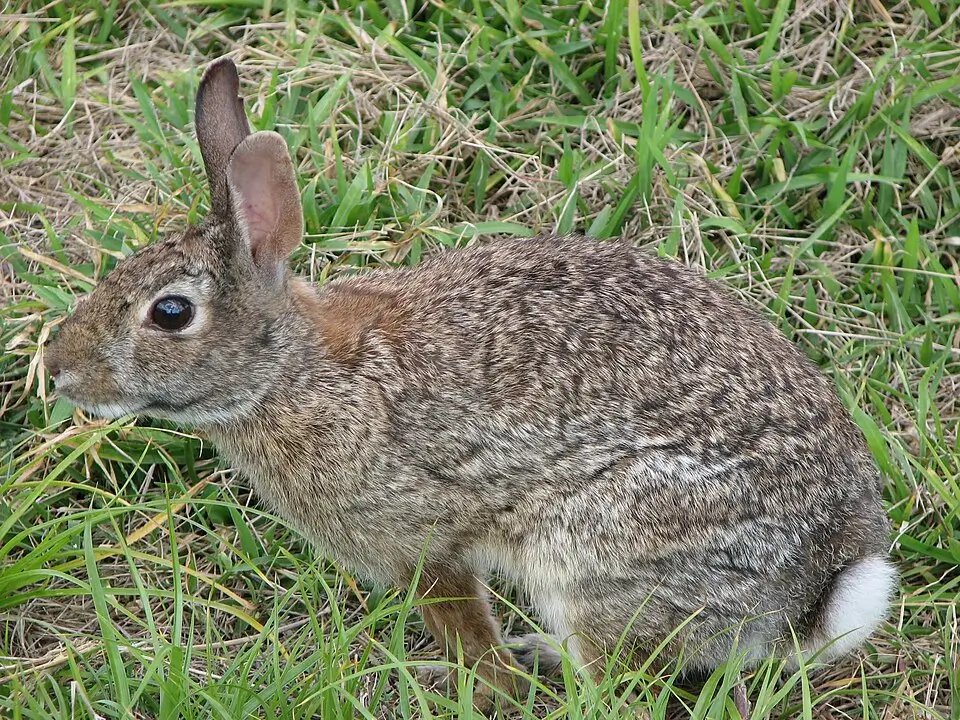
The most widely distributed and commonly encountered species in the eastern United States — including Vermont — is the Eastern cottontail (Sylvilagus floridanus). This is the quintessential cottontail that most hunters and wildlife watchers are familiar with: a compact, muscular animal with large hind legs built for explosive bursts of speed, long sensitive ears that funnel sound from remarkable distances, and large dark eyes positioned on the sides of the head to provide a nearly panoramic field of view. The coat is typically a rich mix of brown, gray, and buff tones along the back and sides, providing excellent camouflage in brushy, leaf-strewn environments. The underside is white, and the distinctive short, fluffy tail — white on the underside, giving the animal its common name — is often the last thing a hunter or predator sees as a rabbit dashes to safety.
Cottontails are well known for their remarkable reproductive capacity. They are capable of producing multiple litters throughout the warmer months of the year. Young cottontails, called kittens or kits, are born in shallow nests lined with grass and the mother's own fur. Unlike hares, cottontail kits are born relatively helpless — blind, with minimal fur — but develop rapidly. Within just a few weeks, they are mobile and beginning to fend for themselves. This accelerated development is a critical survival adaptation in a species that faces heavy predation pressure from nearly every predator in its range.
Cottontails are herbivores, and their diet shifts with the seasons. During warmer months, they graze on grasses, clovers, wildflowers, and the tender shoots of garden plants and young trees. In winter, particularly in snow-covered landscapes like Vermont, they rely more heavily on woody browse — the twigs, bark, and buds of shrubs and small trees. This adaptability in diet mirrors their broader ecological flexibility, which is a hallmark of the Sylvilagus genus.
As prey animals, cottontails occupy a central and crucial role in the food web. They are an important food source for a wide array of predators, including red foxes, coyotes, bobcats, great horned owls, red-tailed hawks, and mink. Their high reproductive rate is, in large part, a direct evolutionary response to this constant predation pressure — populations can rebound quickly even after significant losses.
Habitat & Range
The genus Sylvilagus is remarkably adaptable, and different species within the genus have colonized a staggering variety of habitats across the Americas. In the northeastern United States, including Vermont, the Eastern cottontail is most commonly associated with edge habitats — the transitional zones where forests meet open fields, meadows, and shrubby clearings. These edges provide everything a cottontail needs: dense cover for escape and resting, adjacent open areas for feeding, and the kind of structural diversity that supports year-round survival.
Vermont, with its patchwork landscape of agricultural lands, forested hillsides, river valleys, and small towns, provides a mosaic of habitats that can support cottontail populations where suitable brushy cover exists. Old farm fields reverting to shrubs and young trees, overgrown stone walls draped in brambles, hedgerows separating hay fields, and brushy stream banks are all classic cottontail haunts. The state's small size and diverse land use history — shaped by centuries of farming and subsequent reforestation — create a dynamic landscape where cottontail habitat can be found in many corners of the state, though populations may be localized depending on land management and snow conditions.
In more southerly portions of their range, cottontails are practically ubiquitous, thriving in suburban backyards, agricultural areas, and open woodlands alike. In northern states like Vermont, winter conditions can be a limiting factor, as deep, crusted snow can make foraging difficult and reduce access to food sources. However, cottontails that find areas with dense low cover — such as conifer thickets, brushy slopes, and bramble patches — can persist through even harsh New England winters.
Hunting Information
The cottontail rabbit holds a cherished place in American small game hunting culture, and Vermont is no exception. Hunting cottontails is one of the most accessible and rewarding forms of small game hunting available to sportsmen and women in the Northeast. The pursuit requires minimal specialized equipment — a shotgun or small-caliber rifle, appropriate clothing for the season, and a willingness to push through the kind of thick, tangled cover that rabbits love — making it an excellent entry point for new hunters and a satisfying tradition for experienced ones.
There are two primary methods for hunting cottontails. The first is simply walking up rabbits by moving slowly through likely habitat — brush piles, briar patches, overgrown fields, and weedy edges — and flushing them from cover. This method rewards patience and attention to detail, as rabbits will often sit tight and rely on their camouflage before breaking. The second, and arguably more traditional, method involves hunting with beagles. These small hounds are bred for exactly this purpose, using their exceptional noses to track rabbits through cover. A good beagle will put a rabbit into motion and push it in wide, looping circles — a behavior innate to cottontails — eventually bringing it back past the waiting hunter. The sound of beagles on a hot rabbit track is one of the most evocative sounds in all of small game hunting.
Hunters in Vermont interested in pursuing cottontails should consult the Vermont Fish & Wildlife Department for current season dates, bag limits, and licensing requirements, as specific regulations were not available in the source data used for this article. It is always important to verify the most current regulations before heading afield, as rules can change from season to season.
Beyond the sporting tradition, cottontail rabbit is genuinely excellent table fare. The meat is mild, lean, and white, lending itself to a wide variety of preparations — from simple pan-frying to slow-braised stews and pot pies. Many hunters regard cottontail as among the finest wild game available in the Northeast.
Conservation
Cottontail rabbits are not currently considered a species of conservation concern across most of their range. The Sylvilagus genus as a whole is well represented and widely distributed. However, localized populations in some northern and northeastern states have faced pressures related to habitat change. The maturation of formerly agricultural land back into closed-canopy forest, a process well underway throughout much of New England over the past century, has reduced the amount of suitable edge habitat in some areas. Habitat management practices that maintain open brushy areas — such as controlled burns, timber harvesting, and brush management — can benefit cottontail populations significantly.
Hunters play a meaningful role in cottontail conservation through their participation in license and tag sales, which fund state wildlife management programs. Additionally, hunting organizations and sportsmen's clubs frequently engage in habitat improvement projects that benefit rabbits and a host of other wildlife species. The relationship between hunters and wildlife conservation is longstanding and well-documented, and cottontail rabbit hunting is very much part of that broader conservation story.