Overview
Few waterfowl command as much attention along cold, clear rivers and lakes as the Common merganser (Mergus merganser). With its sleek, torpedo-like body, serrated bill, and striking plumage, this large diving duck is one of the most recognizable waterbirds across the Northern Hemisphere. Whether you encounter one gliding silently along a Vermont mountain stream or watch a flock cut across a winter sky, the Common merganser leaves a lasting impression on hunters, birders, and outdoor enthusiasts alike.
Known in some parts of the world as the "goosander," particularly in Europe and parts of Asia, the Common merganser holds an important place in both the ecological fabric of freshwater systems and in the traditions of waterfowl hunting. In the United States, this bird ranges widely across the northern tier of states, the Rocky Mountain West, and much of Canada, making it a familiar target for duck hunters who brave cold-weather conditions. Vermont, nestled in the heart of the New England region, provides excellent habitat for this species along its rivers, lakes, and reservoirs — and the state's outdoor culture makes it a fitting backdrop for understanding this remarkable bird.
Biological Traits
The Common merganser is the largest merganser species found in North America, and it belongs to the family Anatidae — the same family that includes all ducks, geese, and swans. Within that family, mergansers belong to the "sea duck" tribe, though they are equally at home on freshwater systems far from the coast.
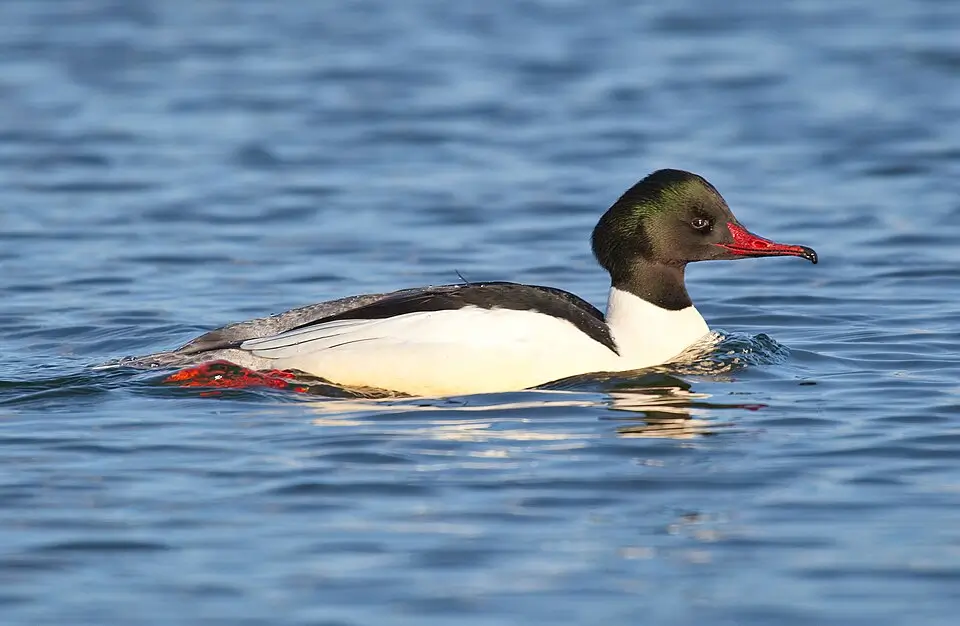
One of the most immediately recognizable features of the Common merganser is its bill. Unlike the flat, wide bill typical of dabbling ducks, the merganser's bill is long, narrow, and serrated along the edges — an adaptation perfectly suited for gripping slippery fish. This distinctive feature gives mergansers and their relatives the informal nickname "sawbills," a term that hunters and birders alike have used for generations.
Sexual dimorphism is pronounced in this species. The adult male is a stunning bird during breeding season, featuring a dark, iridescent green head that can appear nearly black in low light, a white body with salmon-pink or peachy undertones on the breast and flanks, a deep red-orange serrated bill, and a clean black back. The overall impression is one of bold contrast and elegance. Females and immature birds, by contrast, display a rusty-chestnut head with a shaggy, crested appearance, a gray body, and the same reddish bill. The clear demarcation between the chestnut head and gray neck in females is a useful field identification mark.
Common mergansers are built for diving. Their bodies are long and streamlined, their legs set far back on the body to provide powerful propulsion underwater, and their feet are large and webbed. These birds can dive to impressive depths in pursuit of fish, which form the overwhelming majority of their diet. They are highly skilled underwater hunters, using their keen eyesight and agile swimming to chase down small fish such as trout, perch, and various minnow species. Occasionally, they will supplement their diet with aquatic invertebrates, amphibians, and even small crustaceans.
Nesting behavior in the Common merganser is particularly interesting. These birds are cavity nesters, meaning they seek out hollow trees, rock crevices, or other enclosed spaces in which to lay their eggs. A female will typically select a nest site close to water, and clutches commonly consist of around 8 to 12 eggs, though this can vary. The eggs are incubated by the female alone for approximately four weeks. Shortly after hatching, the precocial ducklings are led to water by their mother, where they quickly begin developing their diving and foraging skills. It is not uncommon to observe a female Common merganser leading a large brood of ducklings in a tight group along a river — a memorable sight for anyone fortunate enough to witness it.
The lifespan of Common mergansers in the wild can extend to over a decade in favorable conditions, though many birds do not reach their full potential age due to predation, hunting pressure, and environmental factors. Natural predators include raptors such as eagles and ospreys, as well as mammalian predators that may raid nests.
Habitat & Range
The Common merganser has a broad Holarctic distribution, meaning it is found across the northern portions of both the Old and New Worlds. In North America, the breeding range extends from Alaska and Canada southward into the northern contiguous United States, including New England, the Great Lakes region, and portions of the Rocky Mountain West. During winter months, birds from northern breeding grounds migrate southward, often following river systems and congregating on larger lakes, reservoirs, and coastal estuaries where open water remains available.
In Vermont, the Common merganser is a familiar presence throughout much of the year. Vermont's landscape, characterized by clear mountain streams, cold rivers such as the Connecticut and Lamoille, and large bodies of water like Lake Champlain and Lake Memphremagog, provides superb habitat. The abundance of cold, fish-rich waterways makes Vermont's rivers and lakes attractive both as breeding habitat during warmer months and as important wintering or migratory stopover locations during the fall and winter seasons.
These ducks strongly prefer clean, clear water with good underwater visibility — a reflection of their dependence on sight-hunting for fish. Fast-moving rivers with rocky substrates, deep pools, and adjacent forested riverbanks that offer nesting cavities represent ideal habitat. However, Common mergansers are adaptable and will make use of a wide variety of freshwater environments, from small woodland streams to expansive lake systems.
Hunting Information
The Common merganser is a legal waterfowl quarry in the United States, managed under the Migratory Bird Treaty Act and regulated through frameworks established by the U.S. Fish and Wildlife Service in cooperation with individual states. Hunters pursuing mergansers — which include the Common merganser, Red-breasted merganser, and Hooded merganser — typically do so during the regular duck hunting season, as mergansers fall under the broader waterfowl hunting regulations.
In Vermont, waterfowl hunting is a cherished tradition that aligns naturally with the state's abundant river and lake habitats where Common mergansers are found. However, it is important to note that specific season dates, bag limits, and licensing requirements for Vermont are subject to change on an annual basis and are determined by the Vermont Fish and Wildlife Department in coordination with federal guidelines. Hunters planning to pursue Common mergansers in Vermont should always consult the most current Vermont hunting regulations before heading afield, as up-to-date official information was not available at the time this article was written.
What is consistent across most jurisdictions is that a valid state hunting license and a federal Migratory Bird Hunting and Conservation Stamp — commonly known as the "Duck Stamp" — are required to hunt mergansers and other migratory waterfowl. Vermont residents and non-residents alike must comply with these requirements.
From a practical standpoint, hunting Common mergansers often takes place on rivers and larger water bodies during the late season when birds have migrated or concentrated on open water. Decoys, calls, and concealment along riverbanks or in boats can all be effective strategies. Mergansers are fast, agile fliers, and hunters often note that their speed and erratic flight patterns make them a challenging and rewarding target. Because of their predominantly fish-based diet, Common mergansers are sometimes considered less desirable table fare than grain-fed dabbling ducks, though proper preparation — including skinning rather than plucking, and marinating the meat — can significantly improve the eating quality.
Conservation
The Common merganser is currently listed as a species of Least Concern by the International Union for Conservation of Nature (IUCN), reflecting a stable and widespread global population. In North America, populations are generally considered healthy, supported by the relative abundance of clean freshwater habitat across the northern part of the continent.
That said, Common mergansers, like all waterfowl, benefit from ongoing conservation efforts. Clean water is the foundation of merganser habitat, and efforts to protect river systems, reduce pollution, and maintain riparian forests all contribute positively to merganser populations. The preservation of large, mature trees along waterways is also important, given this species' dependence on natural cavities for nesting.
Waterfowl hunters play a meaningful role in conservation through the purchase of Duck Stamps, which fund the acquisition and protection of wetland habitats. Organizations such as Ducks Unlimited have invested heavily in wetland conservation projects that benefit not only popular game species but also birds like the Common merganser that rely on healthy aquatic ecosystems.
Vermont's commitment to clean water — evidenced by strong environmental protections for Lake Champlain and its river tributaries — bodes well for the long-term presence of Common mergansers in the region. As long as cold, clear, fish-rich waterways are protected and managed responsibly, this magnificent sawbill will continue to be a fixture of Vermont's wild landscapes for generations to come.