Overview
Few animals embody the wild spirit of North America's wetlands quite like the American mink. Agile, fierce, and strikingly beautiful, this semi-aquatic mammal has fascinated naturalists, trappers, and wildlife enthusiasts for centuries. Known scientifically as Neogale vison, the American mink is a member of the family Mustelidae — a diverse and successful group of carnivores that also includes otters, weasels, badgers, and wolverines. With its lustrous, water-resistant coat and remarkable adaptability, the American mink has carved out a niche as one of the most effective predators in riparian and wetland ecosystems across the continent.
In Vermont, a state celebrated for its dense forests, pristine rivers, and unspoiled natural landscapes, the American mink finds an ideal home. Vermont's network of streams, beaver ponds, marshes, and lake shorelines provides exactly the kind of habitat this resourceful animal thrives in. From the banks of the Connecticut River to the marshy shores of Lake Champlain, mink quietly go about their lives as skilled hunters, playing a vital role in maintaining the ecological balance of these waterway communities. Understanding the American mink — its biology, behavior, habitat needs, and relationship with hunters and conservationists — offers a window into the broader story of wildlife stewardship in the Green Mountain State and beyond.
Biological Traits
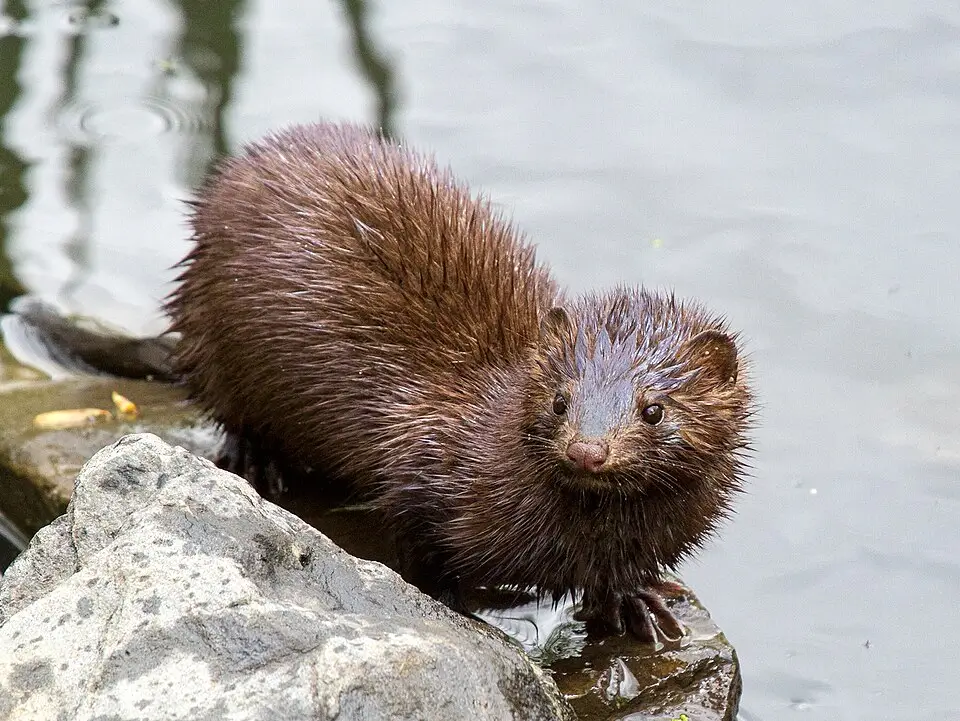
The American mink is a compact, muscular predator built for efficiency in both terrestrial and aquatic environments. Its body is long and slender, with short legs, a pointed snout, and small, rounded ears set close to the head. The tail is bushy and moderately long, contributing to the animal's overall streamlined silhouette. The paws are partially webbed, an adaptation that makes the mink a capable and confident swimmer, able to pursue prey beneath the surface of rivers, ponds, and marshes with surprising speed and agility.
One of the mink's most recognizable features is its fur. The natural coat is typically a rich, dark brown — sometimes approaching near-black — often with a small patch of white on the chin or throat. The underfur is dense and soft, while the outer guard hairs are longer and somewhat coarser, together creating a coat that repels water effectively. This waterproofing is essential for an animal that frequently dives into cold water in pursuit of food, particularly during the challenging months of late autumn and winter.
Males are noticeably larger than females, a trait known as sexual dimorphism that is common among mustelids. Adult males can measure between 19 and 28 inches in total body length and typically weigh between 1.5 and 3.5 pounds, though some individuals may be heavier. Females are considerably smaller, generally weighing less than 1.5 pounds. This size difference may reduce competition between the sexes for food resources, allowing both to coexist in overlapping territories.
The American mink is a solitary and largely nocturnal animal, though it can also be active during dawn and dusk hours. It is highly territorial, with both males and females maintaining home ranges along waterways. Males tend to have larger territories than females, and they will actively defend these areas against rivals, particularly during the breeding season.
Breeding occurs in late winter, typically between January and March. Mink are induced ovulators, meaning that the act of mating triggers ovulation. They also exhibit delayed implantation, a fascinating reproductive strategy in which the fertilized egg does not immediately implant in the uterine wall. As a result, the gestation period can vary considerably — anywhere from 40 to 75 days — with most litters arriving in April or May. A typical litter consists of three to six kits, though larger litters are possible. The young are born blind and helpless, relying entirely on their mother for warmth and nourishment. They grow quickly, however, and by late summer most juveniles are nearly full-grown and beginning to disperse to establish their own territories.
The American mink is an opportunistic and voracious predator. Its diet reflects both its aquatic lifestyle and its remarkable versatility as a hunter. Muskrats are a particularly important prey item and may form a substantial portion of the diet in areas where they are abundant. Fish, frogs, crayfish, and aquatic invertebrates are also commonly taken, as are small mammals such as mice, voles, and rabbits when opportunity allows. Birds and their eggs may be taken seasonally. The mink's metabolism is high, requiring it to hunt frequently and consume a significant amount of food relative to its body size.
Like other mustelids, the American mink possesses scent glands that produce a strong, musky odor. This scent is used for territorial marking and communication, and it serves as a notable — if rarely welcomed — reminder of the animal's presence along a streambank or marsh edge.
Habitat and Range
The American mink is native to North America and enjoys one of the broadest distributions of any semi-aquatic mammal on the continent. Its range extends from the Atlantic coast to the Pacific, and from the southern United States northward through Canada to the edge of the boreal forest. The species is notably absent from parts of the arid Southwest and from high-elevation alpine zones where suitable wetland habitats do not exist.
Throughout this vast range, the mink's habitat preferences remain strikingly consistent: it is almost always found in close association with water. Rivers, streams, lakes, ponds, marshes, swamps, and estuaries all provide suitable habitat, provided they support adequate prey populations and offer suitable denning sites along the banks. The mink does not construct elaborate burrows of its own but instead makes use of cavities beneath tree roots, hollow logs, rock piles, and the abandoned burrows and lodges of muskrats and beavers. Dense streamside vegetation provides cover and conceals travel routes between hunting areas.
Vermont is particularly well-suited to support healthy mink populations. The state's geography — shaped by millennia of glaciation — is rich in lakes, ponds, rivers, and wetlands. The Champlain Valley in the west, the Connecticut River Valley in the east, and the numerous streams and beaver flowages that lace the interior of the state all offer prime mink habitat. Vermont's agricultural landscape, with its network of drainage ditches, farm ponds, and flooded meadows, adds further diversity to the available habitat mosaic. The state's relatively low human population density and strong tradition of land conservation also work in the mink's favor, allowing many wetland corridors to remain largely undisturbed.
Hunting and Trapping Information
The American mink has been prized by trappers for centuries, primarily for its exceptionally fine fur. The species played a significant role in the early history of the North American fur trade, and it remains a legitimate and regulated quarry for licensed trappers across much of its range today. In Vermont, trapping and hunting of furbearers including mink are regulated by the Vermont Fish & Wildlife Department, which sets seasons, licensing requirements, and methods of take to ensure sustainable harvest in accordance with sound wildlife management principles.
Because specific season dates, licensing requirements, and bag limits for mink trapping in Vermont were not available in the source data consulted for this article, hunters and trappers interested in pursuing mink in the Green Mountain State are strongly encouraged to consult the Vermont Fish & Wildlife Department directly or visit their official website for the most current and accurate regulatory information. Regulations can change from year to year, and it is always the individual hunter's or trapper's responsibility to be fully informed and compliant before taking to the field.
Generally speaking, mink are most often taken by trappers using water sets — traps placed at the water's edge or partially submerged near runs, slides, or den entrances along streambanks and pond margins. Success in trapping mink relies heavily on knowledge of the animal's habits and travel patterns, making scouting an important part of any trapping strategy. Signs to look for include mink tracks in mud or snow along waterways, scat deposited on prominent rocks or logs, and the remains of prey items left near feeding areas.
It is worth noting that mink fur has historically been among the most commercially valuable of all North American furbearers. The dense, silky underfur and attractive natural color of wild mink pelts have made them a longtime favorite among the fur trade, though market conditions for wild fur can vary considerably from season to season.
Conservation
The American mink is currently classified as a species of Least Concern by the International Union for Conservation of Nature (IUCN), reflecting its broad distribution, adaptability, and generally stable populations across most of its native range. In Vermont and throughout the northeastern United States, mink populations are considered healthy, supported by the region's extensive wetland habitats and robust prey communities.
That said, the American mink does face ongoing pressures in certain areas. Wetland loss and degradation remain the most significant long-term threats to mink habitat, as draining, filling, and development of wetlands reduces the availability of suitable foraging and denning areas. Water quality is also a concern, as mink — being high on the aquatic food chain — can bioaccumulate environmental contaminants such as mercury and PCBs from their prey. Research has indicated that mink can be sensitive indicators of aquatic ecosystem health, making their presence and population dynamics useful data points for environmental monitoring.
In Vermont, the state's strong tradition of wetland conservation, bolstered by programs like Vermont Wetlands Program and the work of organizations such as the Vermont Land Trust and Ducks Unlimited, helps protect much of the habitat upon which mink and countless other species depend. Responsible trapping, regulated by the Vermont Fish & Wildlife Department, also contributes to conservation by generating funding through license sales and federal excise taxes on trapping equipment, resources that flow directly back into wildlife management and habitat protection efforts.
The American mink's story in Vermont and across North America is ultimately one of resilience — a testament to the adaptability of a species that has thrived alongside human landscapes while continuing to depend on the clean water and healthy wetlands that define its world.