Overview
Few creatures embody the spirit of the American wilderness quite like the wild turkey. Long before it became a symbol of Thanksgiving tradition, the wild turkey (Meleagris gallopavo) roamed the forests, grasslands, and river bottoms of North America as one of the continent's most impressive and intelligent birds. For hunters, wildlife enthusiasts, and conservationists alike, the wild turkey holds a cherished place in the outdoor heritage of the United States — and nowhere is that passion more evident than in the vast and diverse state of Texas.
The wild turkey is the heaviest member of the order Galliformes found in North America, and it carries itself with a presence that commands respect. Whether you encounter a strutting tom in the predawn light of a spring morning or catch a glimpse of a wary hen slipping through the cedar breaks of the Texas Hill Country, a close encounter with a wild turkey is an experience that lingers long in the memory. This article takes a comprehensive look at this magnificent bird — its biology, its habitat, its role in hunting culture, and the conservation efforts that have helped it thrive across the American landscape.
Biological Traits
The wild turkey (Meleagris gallopavo) is a large, ground-dwelling bird belonging to the family Phasianidae, which it shares with pheasants, grouse, and quail. It is one of only two species of turkey in the world, the other being the ocellated turkey (Meleagris ocellata) of the Yucatán Peninsula in Mexico.
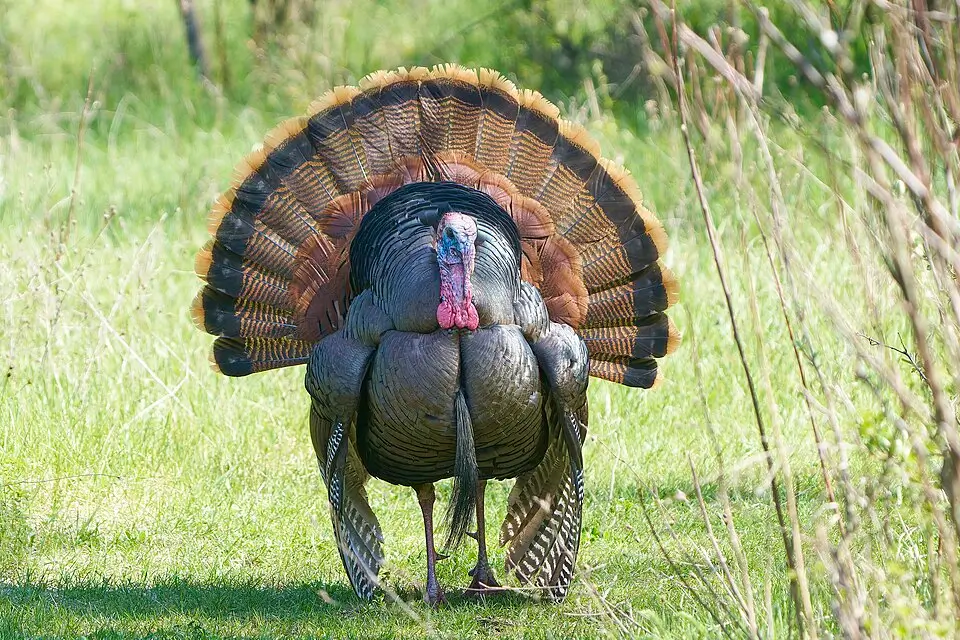
Adult male wild turkeys, known as toms or gobblers, are among the most visually striking birds in North America. They are adorned with iridescent plumage that shimmers with hues of bronze, copper, gold, and green depending on the angle of the light. Their bare heads and necks display vivid patches of red, white, and blue skin — colors that can intensify dramatically during periods of excitement or display. One of the most distinctive features of the tom is the "snood," a fleshy protuberance that hangs over the bill, along with a "wattle" of red skin beneath the chin. Toms also grow a "beard," a cluster of coarse, hair-like feathers projecting from the breast — a feature that hunters often use to assess the age and status of a bird.
Female wild turkeys, known as hens, are considerably more subdued in appearance, featuring brown and buff-toned plumage that provides excellent camouflage while nesting. This sexual dimorphism is a hallmark of the species and reflects the different survival strategies each sex employs throughout the year.
Wild turkeys are polygamous. During the spring breeding season, toms engage in elaborate courtship displays — fanning their tail feathers into a magnificent semicircular wheel, puffing up their body feathers, and producing the iconic "gobble" vocalization that carries for a mile or more through the still morning air. This gobble, produced by toms primarily in spring, serves both to attract hens and to announce territory to rival males.
Hens are solely responsible for incubating their eggs and raising their young, called poults. A typical clutch consists of around 10 to 14 eggs, and incubation lasts approximately 28 days. Poults are precocial — meaning they are mobile and capable of feeding themselves almost immediately after hatching — though they remain with the hen for several months. Wild turkeys are highly social birds and typically gather in flocks outside the breeding season, with hens and poults forming family groups that sometimes merge into larger aggregations.
Wild turkeys are omnivores with a varied diet that includes acorns, seeds, berries, insects, small reptiles, and even amphibians. Their dietary flexibility is one of the reasons they are so adaptable and successful across a wide range of environments. They are also strong fliers despite their large size, capable of reaching speeds of up to 55 miles per hour in short bursts, and they typically roost in trees at night to avoid ground predators.
There are six recognized subspecies of wild turkey in North America: the Eastern (M. g. silvestris), the Osceola or Florida (M. g. osceola), the Rio Grande (M. g. intermedia), the Merriam's (M. g. merriami), the Gould's (M. g. mexicana), and the South Mexican (M. g. gallopavo). Of particular relevance to Texas hunters is the Rio Grande turkey, which is the predominant subspecies found throughout much of the Lone Star State.
Habitat & Range
The wild turkey is native to North America and parts of central Mexico, and its range today spans most of the continental United States, parts of southern Canada, and Mexico. Thanks to decades of reintroduction and wildlife management efforts, wild turkeys now occupy much of their historical range and have even expanded into areas where they were not historically present.
Wild turkeys are remarkably adaptable and can thrive in a variety of habitat types, including deciduous and mixed forests, open woodlands, river bottoms, brushy grasslands, and savanna-like environments. They generally favor areas that offer a combination of open ground for foraging, dense cover for nesting and escape from predators, and tall trees for nighttime roosting.
Texas, with its enormous size and ecological diversity, supports healthy wild turkey populations across multiple regions. The state's varied landscapes — from the Piney Woods of East Texas to the brush country of South Texas, from the rugged terrain of the Edwards Plateau to the rolling plains of the Panhandle — provide suitable habitat for multiple subspecies. The Rio Grande turkey thrives across much of central and western Texas, particularly in the oak-juniper woodlands and riparian corridors of the Hill Country and beyond.
Hunting Information
Wild turkey hunting ranks among the most beloved and challenging pursuits in American hunting culture. The combination of sharp eyesight, acute hearing, and unpredictable behavior makes the wild turkey a formidable quarry that tests the patience, skill, and woodsmanship of even the most experienced hunters.
In Texas, wild turkey hunting is managed by the Texas Parks and Wildlife Department (TPWD), which oversees seasons, regulations, and harvest reporting requirements. According to TPWD, harvest reporting is mandatory for all wild turkeys harvested in all counties during all seasons — a requirement that underscores the department's commitment to responsible wildlife management and accurate population monitoring. Hunters in Texas should consult the official TPWD resources for the most current season dates and license requirements, including the upcoming 2026–2027 hunting season information available through the TPWD website.
Turkey hunting in Texas takes place primarily in the spring, when gobblers are actively responding to calls and pursuing hens during the breeding season. This is widely considered the most exciting time to hunt turkeys, as hunters can use a variety of calls — including box calls, slate calls, and mouth calls — to mimic the sounds of hens and draw toms within range. Fall turkey hunting, which focuses more on locating flocks and using scatter-and-call tactics, is also available in Texas depending on the specific regulations for a given area.
The Rio Grande turkey, the primary target for most Texas turkey hunters, is renowned for its relatively open habitat and its tendency to use large roost trees along creek drainages and river systems. Successfully locating roost trees before season, scouting travel routes, and setting up within calling distance before first light are all keys to a productive Texas turkey hunt.
For non-resident hunters, Texas offers incredible turkey hunting experiences, particularly on private ranch lands where Rio Grande turkeys can be found in impressive numbers. Public land opportunities also exist through TPWD-managed areas, and hunter education resources are available through the department's official channels. All hunters are encouraged to check the latest TPWD regulations and ensure they have the proper licensing before heading afield.
Conservation
The story of the wild turkey's recovery across North America is one of the great conservation successes of the twentieth century. By the early 1900s, unregulated hunting and widespread habitat destruction had reduced wild turkey populations to dangerously low levels — estimated by some wildlife biologists at fewer than 30,000 birds across the continent. Through a combination of regulated hunting seasons, reintroduction programs, and habitat restoration efforts, wild turkey populations rebounded dramatically over the following decades.
The National Wild Turkey Federation (NWTF), founded in 1973, has been a driving force in turkey conservation, working alongside state wildlife agencies to restore populations and protect critical habitat. Today, wild turkey populations across North America are estimated in the millions, a testament to what dedicated conservation efforts and science-based wildlife management can achieve.
In Texas, TPWD continues to monitor wild turkey populations and adjust seasons and regulations as needed to ensure sustainable harvests. The mandatory harvest reporting requirement for all wild turkeys taken in Texas is a direct reflection of the state's commitment to maintaining healthy, viable populations for future generations of hunters and wildlife enthusiasts.
The wild turkey's recovery also highlights the important role that hunters play in conservation. Through license fees, excise taxes on hunting equipment (as established by the Federal Aid in Wildlife Restoration Act, commonly known as the Pittman-Robertson Act), and direct involvement with organizations like the NWTF, hunters have contributed significantly to the funding and advocacy that made the wild turkey's comeback possible. This hunter-conservationist relationship remains one of the most effective models for wildlife management in the world.
Conclusion
The wild turkey is far more than a seasonal symbol or a table bird — it is a living testament to the resilience of North American wildlife and the power of collaborative conservation. In Texas, where the landscape offers sweeping variety and wild turkey populations continue to flourish, the opportunity to pursue this magnificent bird connects hunters to a tradition that stretches back to the earliest days of American outdoor culture. Whether you are a seasoned turkey hunter or a first-time visitor to the spring woods, the wild turkey offers an unmatched blend of challenge, beauty, and wildness that keeps sportsmen and women coming back year after year.