Overview
Few creatures capture the imagination quite like the American alligator (Alligator mississippiensis). A living relic of the age of dinosaurs, this formidable reptile has prowled the wetlands, swamps, and waterways of the American South for millions of years, outlasting countless other species through sheer biological resilience. Today, the American alligator stands as one of the great conservation success stories of the modern era — a species that was once pushed to the brink of extinction, only to rebound in spectacular fashion thanks to dedicated wildlife management efforts.
From the cypress swamps of Louisiana to the coastal marshes of Texas and the subtropical wetlands of Florida, the American alligator is the undisputed apex predator of its freshwater domain. It is a creature of extraordinary evolutionary refinement, perfectly adapted to its environment over tens of millions of years. For wildlife enthusiasts, hunters, and naturalists alike, the American alligator commands respect, fascination, and a deep appreciation for the wild places it calls home.
Biological Traits
The American alligator is the largest reptile native to North America. Males can grow to impressive lengths, regularly exceeding ten feet and sometimes surpassing thirteen feet in large, mature individuals. Females are generally smaller, typically ranging between eight and ten feet in length. The sheer mass of a large adult alligator is equally impressive, with big males capable of weighing well over a thousand pounds.
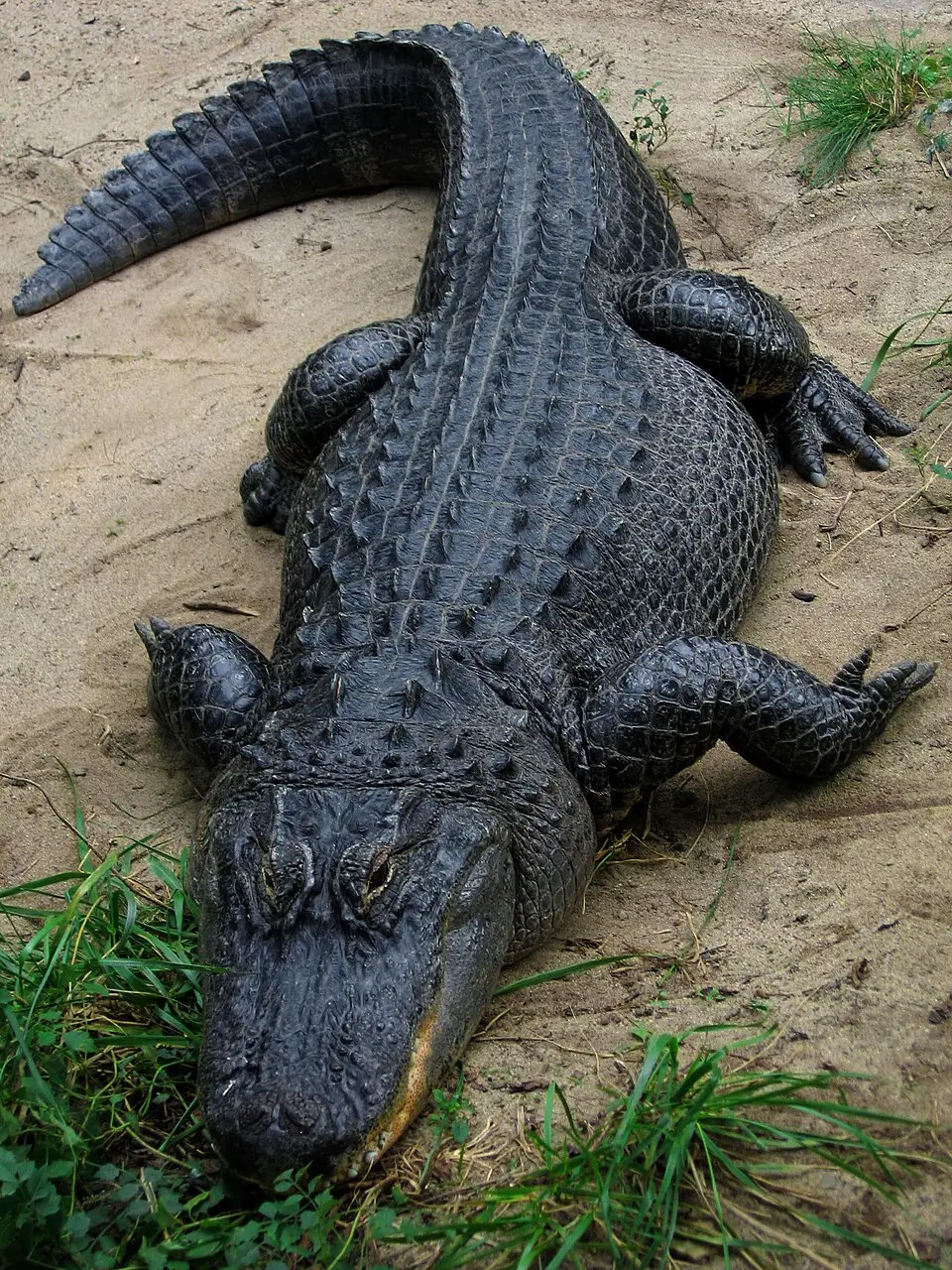
Like all crocodilians, the American alligator is covered in a tough, armored skin composed of bony plates called osteoderms, or scutes, embedded within the scales along the back and tail. This natural armor provides significant protection and gives the animal its distinctive rugged appearance. The skin on the belly, however, is softer and more pliable, which is the portion most prized in the commercial leather trade.
One of the most distinctive features that separates alligators from their close relatives, the crocodiles, is the shape of the snout. The American alligator has a broad, rounded, U-shaped snout, whereas crocodiles typically have a narrower, V-shaped snout. When an alligator closes its mouth, the teeth of the lower jaw fit into sockets in the upper jaw, making them largely invisible — a key distinction from crocodiles, whose lower teeth remain exposed when the mouth is closed.
The coloration of adult American alligators is typically a dark olive-brown to nearly black, which provides excellent camouflage among the dark waters, mud, and vegetation of their wetland habitat. Juveniles are born with bright yellow cross-banding on a darker body, which gradually fades as the animals mature.
The American alligator is an ectotherm, meaning it relies on external sources of heat to regulate its body temperature. This behavioral thermoregulation involves basking in the sun to warm up and retreating to water or shade to cool down. During periods of extreme cold, alligators can enter a state of torpor, remaining dormant and even submerged — sometimes with their snouts poking through ice — until warmer temperatures return.
Alligators are also remarkable for their longevity. In the wild, they can live for several decades, and individuals in captivity have been documented living well beyond fifty years. Their slow metabolism and robust constitution contribute to this impressive lifespan.
The diet of the American alligator is broad and opportunistic. Younger alligators feed primarily on invertebrates, small fish, frogs, and other small prey. As they grow, their diet expands to include larger fish, turtles, birds, and mammals such as raccoons, nutria, and even deer. Large adult alligators are capable of taking surprisingly large prey. Their hunting technique typically involves ambush — lying still near the water's surface or edge and lunging with explosive speed when prey ventures close enough.
Alligators play a critically important ecological role as a keystone species. During dry seasons, they excavate depressions in the ground known as "gator holes," which retain water and provide vital refuges for fish, turtles, birds, and other wildlife when surrounding areas dry out. These gator holes are biodiversity hotspots and represent a clear example of how a single species can shape an entire ecosystem.
Reproduction in the American alligator is a fascinating process. Females construct large mound nests from vegetation, sticks, leaves, and mud, typically near the water's edge. The decomposing organic matter in the nest generates heat that incubates the eggs. Notably, the sex of developing alligators is determined by the temperature of incubation — a phenomenon known as temperature-dependent sex determination. Females tend to hatch at cooler temperatures, while males develop at warmer temperatures. After an incubation period of approximately sixty-five days, juveniles hatch and are guarded by the mother, who assists hatchlings in reaching the water. This maternal care behavior is relatively unusual among reptiles and speaks to the complexity of alligator behavior.
Habitat and Range
The American alligator is native exclusively to the southeastern United States, making it one of only two alligator species in the world — the other being the critically endangered Chinese alligator (Alligator sinensis). Its range extends across a broad swath of the Southeast, from the coastal Carolinas west through Georgia, Florida, Alabama, Mississippi, Louisiana, Arkansas, and into the eastern portions of Oklahoma and Texas.
Texas represents the western edge of the alligator's natural range. Within the Lone Star State, alligators are primarily found in the eastern portion — in the coastal marshes, bayous, swamps, rivers, and lakes of the Gulf Coast region. The Big Thicket area, the Sabine River bottomlands, the coastal prairies, and the extensive wetlands along the Gulf Coast provide ideal habitat. Texas's proximity to Louisiana, where alligator populations are among the densest in the country, has historically supported robust populations along shared river systems and coastal zones.
Alligators are highly adaptable in terms of their freshwater habitat preferences. They thrive in swamps, marshes, rivers, lakes, ponds, and brackish coastal estuaries. They are primarily freshwater animals, but they can tolerate salinity to a degree, occasionally venturing into brackish or even lightly saline coastal waters. As opportunistic habitat generalists, they will also colonize man-made water bodies such as retention ponds, drainage canals, and reservoirs when suitable conditions exist.
Hunting Information
The American alligator occupies a unique and important place in the hunting traditions of the American South. Alligator hunting is a cultural institution in states like Louisiana, Florida, and Texas, combining elements of wilderness skill, patience, and a deep connection to the wetland landscape.
In Texas, alligator hunting falls under the jurisdiction of the Texas Parks and Wildlife Department (TPWD). Prospective hunters should always consult the most current TPWD regulations, as season dates, licensing requirements, bag limits, and legal methods of take are subject to change and vary by region. The TPWD is the definitive authority on current alligator hunting rules in Texas, and their official resources provide the most accurate and up-to-date guidance for hunters planning a legal alligator hunt.
Alligator hunting methods across the South traditionally include the use of baited lines, harpoons, snatch hooks, and archery equipment. These methods require skill, patience, and a thorough understanding of alligator behavior and habitat. Safety is of paramount importance when hunting these powerful animals, and experienced guides are an invaluable resource for hunters new to the pursuit.
Beyond the sporting dimension, alligator hunting contributes meaningfully to conservation funding and wildlife management. Revenue generated through licensing and regulated harvest directly supports the research and management programs that maintain healthy alligator populations. The sustainable use model applied to alligator management has proven remarkably effective and is cited as an international example of conservation success.
Conservation
The American alligator's conservation story is one of the most celebrated in American wildlife management history. By the mid-twentieth century, decades of unregulated hunting and habitat loss had devastated alligator populations across much of their range. The species was listed as an endangered species in 1967, prompting federal protections and a dramatic shift in management approach.
The recovery was swift and striking. Through a combination of legal protection, regulated harvest, habitat conservation, and ranching programs, alligator populations rebounded to robust levels throughout the Southeast. By 1987, the American alligator was removed from the endangered species list and reclassified as a species of "least concern" — though it remains protected under the Convention on International Trade in Endangered Species (CITES) as a look-alike species, to prevent illegal trade in crocodilian products.
Today, the American alligator is considered a conservation success story of the highest order, demonstrating what science-based wildlife management and regulatory cooperation can achieve. Healthy alligator populations are now estimated in the millions across the southeastern United States.