Overview
Few birds capture the rugged spirit of the American Southwest quite like the scaled quail (Callipepla squamata). Known affectionately by hunters and wildlife enthusiasts alike as the "cottontop" — a nod to the distinctive fluffy white crest perched atop its head — this compact, ground-dwelling gamebird has carved out a remarkable niche in some of North America's most demanding landscapes. From the rocky desert scrublands of New Mexico and Arizona to the sprawling semi-arid ranchlands of West Texas, the scaled quail is a symbol of resilience, adaptability, and wild country living.
Unlike its more famous cousin, the northern bobwhite, the scaled quail tends to get less attention in popular hunting media, yet among those who have pursued it across sunbaked mesas and through thickets of cholla cactus, it commands enormous respect. Its ability to run ahead of pointing dogs rather than hold tight, its preference for vast open country, and the physical demands of hunting it in extreme heat make the scaled quail a true test of a hunter's patience, fitness, and dog work. This article dives deep into the biology, habitat, hunting traditions, and conservation status of this fascinating bird.
Biological Traits
The scaled quail (Callipepla squamata) belongs to the family Odontophoridae — the New World quails — and is closely related to the California quail and Gambel's quail, sharing the same genus Callipepla. It is a medium-sized quail, generally similar in body size to the northern bobwhite, with a stocky build well-suited for life on the ground.
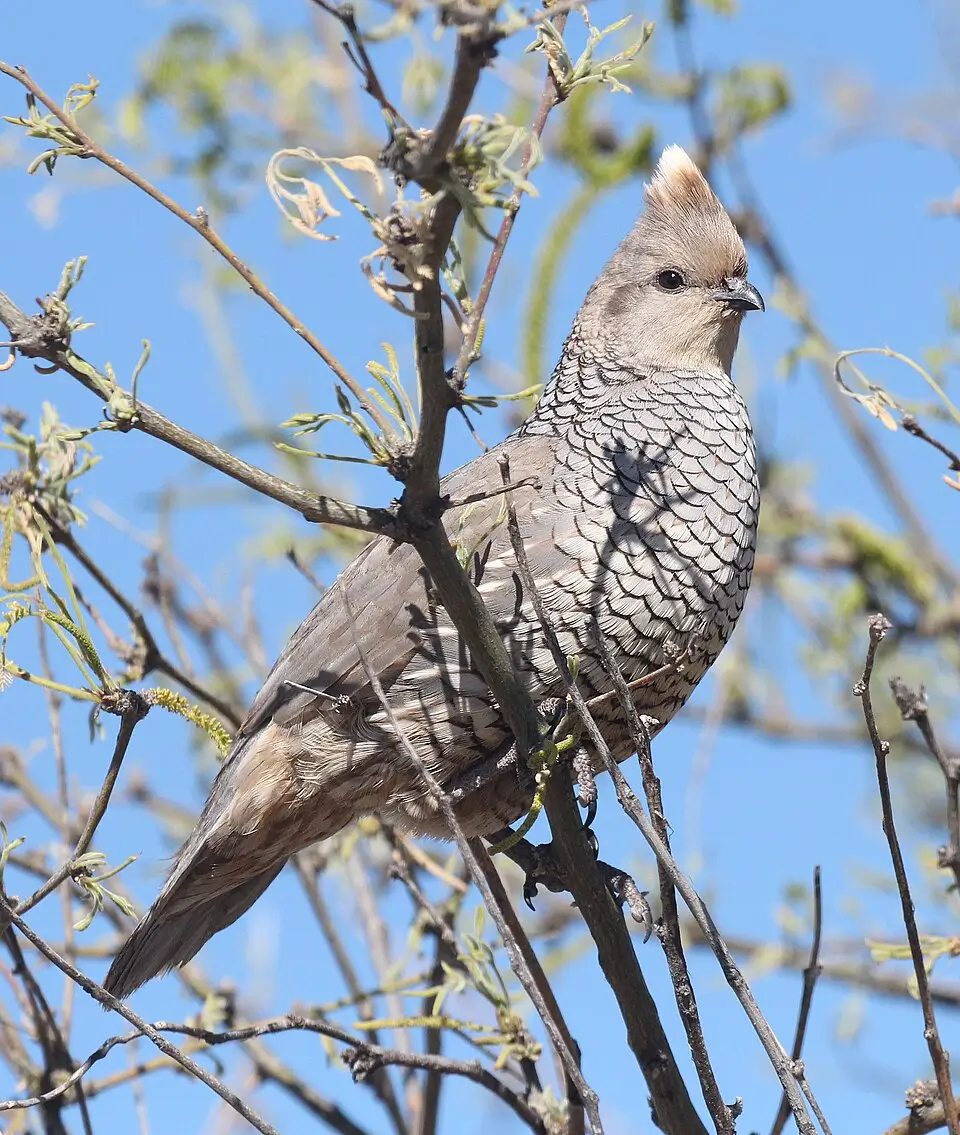
The most immediately recognizable feature of the scaled quail is the pattern of its plumage. Each feather on the bird's breast and belly is edged in dark brown or black, creating a striking scaled or fish-scale appearance — hence the name "scaled quail." This intricate patterning is present in both males and females, making the species one of the more subtly beautiful birds in North American wildlife. The back and wings carry buffy-brown tones that provide excellent camouflage against the dry, rocky soils of the bird's native habitat.
The white crest, often described as looking like a tuft of cotton or a small pompom, is the feature that gave rise to the bird's popular nickname "cottontop." This crest is present in both sexes, though males tend to show slightly bolder coloration overall. The face and throat are a pale grayish-buff, blending smoothly into the scaled pattern of the breast.
Scaled quail are highly social birds. Outside of the breeding season, they typically congregate in coveys — groups that can range from a handful of birds up to dozens in areas of good habitat. These coveys offer safety in numbers, with multiple birds maintaining vigilance for aerial and ground predators such as hawks, coyotes, and rattlesnakes. When alarmed, scaled quail have a well-documented tendency to run rather than fly, often covering surprisingly long distances on foot before finally flushing. This behavioral trait is something any upland bird hunter who has worked a pointing dog on cottontops knows all too well.
Breeding typically takes place in the spring and early summer months. Nesting occurs on the ground, with clutches generally containing a large number of eggs — a reproductive strategy common to quail species that face high predation pressure. Both parents share incubation duties and brood care, which is somewhat unusual among North American quail and reflects the pair bond that scaled quail form during the breeding season. Chicks are precocial, meaning they are mobile and capable of feeding themselves shortly after hatching, though they remain with the adults as a family group through the summer before joining larger coveys in the fall.
The diet of scaled quail is highly varied and reflects the opportunistic nature of a bird living in semi-arid environments where food sources shift with the seasons. Seeds make up a large portion of the diet, particularly the seeds of grasses, forbs, and desert shrubs. During warmer months, insects and other invertebrates become an important food source, especially for growing chicks that require high levels of protein. Green vegetation and berries round out the dietary picture, and the birds are known to adjust their foraging strategy based on what is available in their local environment.
One physiological adaptation that makes scaled quail particularly well-suited to arid landscapes is their ability to derive much of their moisture needs from the food they consume, reducing their dependence on standing water compared to some other bird species. This allows them to thrive in country where water sources may be scarce or seasonal.
Habitat & Range
The scaled quail's range is centered on the Chihuahuan Desert and surrounding semi-arid grasslands of the American Southwest and northern Mexico. In the United States, the species is found across much of New Mexico, southeastern Arizona, the Oklahoma panhandle, southern Colorado, and — critically for American hunters — a broad swath of western and southwestern Texas.
Texas represents one of the most important strongholds for the scaled quail in the United States. The Trans-Pecos region, the Rolling Plains, and the Permian Basin all provide expansive habitat for the species. Texas's position along the international border with the Mexican states of Chihuahua, Coahuila, Nuevo León, and Tamaulipas means that scaled quail populations in the state exist as part of a broader cross-border population that is connected to the species' Mexican range, which extends well into the interior of that country.
The preferred habitat of scaled quail consists of open, arid to semi-arid country with a mix of short to mid-height grasses, scattered shrubs, yucca, sotol, and cactus. Unlike the bobwhite quail, which favors brushy woodland edges and heavier cover, the scaled quail is a bird of open spaces. It prefers landscapes where it can see approaching predators from a distance and has room to run. Rocky hillsides, canyon edges, desert grasslands, and dry arroyos are all classic scaled quail country.
Cover quality plays an important role in habitat suitability. The birds need enough shrub and grass cover to provide shade during the heat of the day and to offer concealment from predators, but the habitat must remain open enough for the birds to move freely. Overgrazing that strips vegetative cover can negatively affect habitat quality, while drought — a recurring feature of the arid Southwest — can cause significant short-term population fluctuations by reducing food availability and nesting success.
Hunting Information
The scaled quail is a prized upland gamebird across its range, and hunting for cottontops is a deeply rooted tradition in West Texas and the broader Southwest. For hunters accustomed to the classic bobwhite experience — where a pointing dog pins a tight-holding covey and birds explode into the air on flush — scaled quail hunting can be an eye-opening and sometimes frustrating adjustment. These birds run. They run persistently, they run far, and they tend to string out in a line ahead of the dog rather than holding in a single tight bunch.
Successful scaled quail hunters often favor dogs with a more aggressive, forward style that can push birds into the air before they run out of range. Flushing dogs and dogs that relocate quickly after a point are sometimes preferred over traditional close-working pointers, though many hunters continue to work pointing breeds with great success by learning to read their dogs' behavior and cut off the running birds.
In Texas, the scaled quail falls under the jurisdiction of Texas Parks and Wildlife Department (TPWD). Hunters pursuing scaled quail in Texas should consult the current TPWD hunting regulations for the most up-to-date season dates, bag limits, and licensing requirements. As with all hunting in Texas, a valid Texas hunting license is required. TPWD provides comprehensive hunting season information, including the latest season dates for upcoming license years, through their official website and publications.
The physical demands of scaled quail hunting should not be underestimated. Hunters are often working in remote, rugged terrain under the intense heat of the Texas sun. Proper hydration, appropriate footwear for rocky ground, and awareness of desert hazards — including rattlesnakes and extreme temperatures — are essential considerations for anyone heading afield after cottontops.
Shooting scaled quail that finally do flush tends to offer fast, challenging shooting. The birds are quick and often take erratic flight paths, providing excellent wing-shooting sport. A reliable shotgun in 12 or 20 gauge loaded with quality upland loads is the standard choice among experienced hunters.
Conservation
The conservation status and population trends of scaled quail across the Southwest reflect the broader challenges facing ground-nesting gamebirds in an era of changing land use and shifting climate patterns. Drought cycles in the Chihuahuan Desert region can have dramatic short-term effects on scaled quail populations, as dry conditions reduce insect availability for chicks, limit green vegetation, and can negatively impact nesting success.
Habitat management on private ranch lands plays an enormous role in the long-term health of scaled quail populations, particularly in Texas where a large proportion of the landscape is privately owned. Ranchers who maintain appropriate stocking rates for livestock, preserve native grass and shrub diversity, and provide supplemental water sources during drought periods contribute meaningfully to the species' wellbeing.
Conservation organizations, state wildlife agencies, and federal partners continue to work on landscape-level habitat conservation in the Southwest, recognizing that maintaining large, connected blocks of quality semi-arid grassland and shrubland is essential for sustaining healthy quail populations. The scaled quail, while not currently listed as threatened or endangered at the federal level, warrants continued attention and monitoring given the sensitivity of its population to climatic and habitat changes.
Hunters themselves play a meaningful role in scaled quail conservation through license and stamp purchases that fund state wildlife management programs, as well as through direct involvement in habitat improvement projects on working ranch lands across Texas and the Southwest.