Overview
Few sights in the natural world rival the spectacle of thousands of Sandhill cranes rising from a wetland at dawn, their haunting, rattling calls echoing across the open landscape. These magnificent birds — among the oldest living bird species on Earth — are a treasured part of North America's wildlife heritage. Whether you encounter them on a remote Alaskan breeding ground, a Nebraska staging area teeming with hundreds of thousands of birds, or gliding low over the prairies and wetlands of Texas, the Sandhill crane (Grus canadensis) never fails to leave a lasting impression on those fortunate enough to witness them.
Sandhill cranes have captured the human imagination for thousands of years. Fossil records indicate that cranes closely resembling today's Sandhill crane have existed for approximately 2.5 million years, making them one of the oldest known bird species still living. That ancient lineage, combined with their dramatic migrations, impressive size, and complex social behaviors, makes them one of the most fascinating subjects in North American wildlife study. For hunters, wildlife enthusiasts, birders, and conservationists alike, the Sandhill crane represents both a profound connection to the wild and a genuine conservation success story.
Biological Traits
The Sandhill crane (Grus canadensis) belongs to the family Gruidae — the true cranes — a family of large, long-lived birds found across most of the world. The Sandhill crane is the most numerous crane species on Earth, and it is divided into several recognized subspecies that vary in size, migratory behavior, and geographic range.
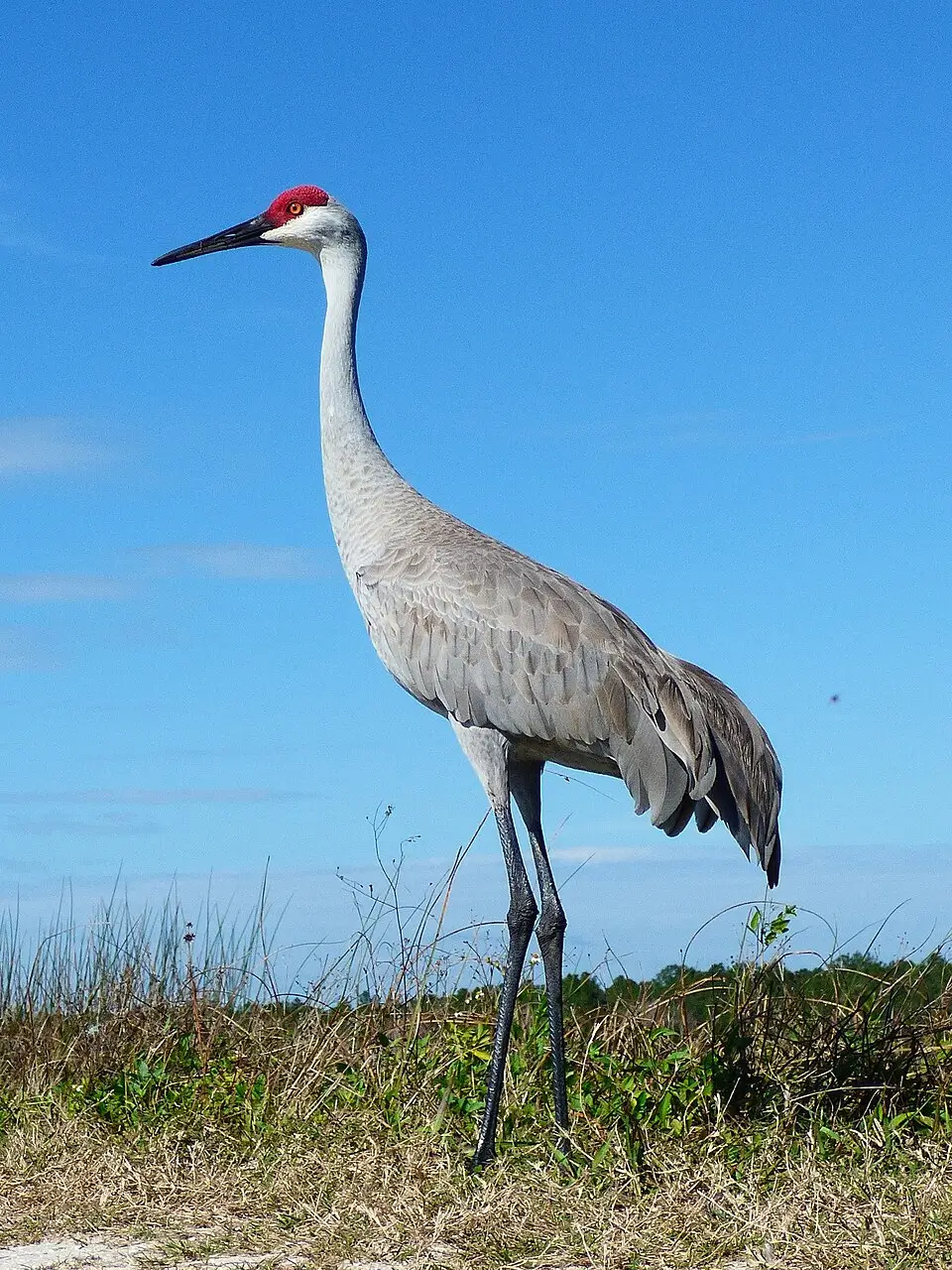
In terms of physical appearance, Sandhill cranes are striking birds. Adults are predominantly gray in overall plumage, though in the wild their feathers often appear rusty or brownish due to a behavior known as "preening with iron-rich mud," which stains the feathers during the breeding season. Their most distinctive feature is the bare, bright red patch of skin on the forehead and crown, which intensifies in color during displays and courtship. Their long necks, long legs, and broad wingspans give them an unmistakable silhouette both in flight and on the ground.
The six recognized subspecies of Sandhill crane range considerably in size. The larger subspecies — such as the Greater Sandhill crane (Grus canadensis tabida) — can stand nearly four feet tall and weigh up to 14 pounds, with wingspans reaching approximately six to seven feet. Smaller subspecies, such as the Lesser Sandhill crane (Grus canadensis canadensis), are somewhat more compact but still represent impressively large birds by any measure.
Sandhill cranes are omnivores with a remarkably adaptable diet. They feed on a wide variety of plant and animal matter, including grains, berries, tubers, insects, small rodents, frogs, snakes, and other small vertebrates. This dietary flexibility has helped them thrive across a wide range of habitats and has also contributed to their ability to adapt to agricultural landscapes, where waste grain in harvested fields provides a critical source of energy during migration.
One of the most captivating aspects of Sandhill crane behavior is their elaborate courtship display, which involves bowing, leaping, wing-spreading, and loud, resonant calling. These dances are not limited to the breeding season — cranes of all ages engage in dancing behavior as a form of social bonding throughout the year. Sandhill cranes form long-term pair bonds and typically raise one to two chicks per breeding season, with young birds, called "colts," remaining with their parents through their first winter migration.
Sandhill cranes are also remarkably long-lived birds. In the wild, individuals commonly reach 20 years of age or more, and captive birds have lived even longer. This longevity, combined with relatively low annual reproductive output, makes stable population management an important consideration for wildlife managers.
Habitat & Range
The Sandhill crane is one of the most geographically widespread bird species in North America. Its range extends from the high Arctic tundra of Alaska and Canada to the grasslands and marshes of the southern United States and northern Mexico. Migratory subspecies breed in the far north and winter in the southern portions of the continent, while several non-migratory resident populations exist in Florida, Mississippi, and Cuba.
During migration, Sandhill cranes gather in extraordinary concentrations at key staging areas, most notably along the Platte River in Nebraska, where hundreds of thousands of birds stop each spring to rest and feed before continuing their journey north. These staging events are considered one of the great wildlife spectacles of North America and draw visitors from around the world.
In Texas, Sandhill cranes are a familiar winter presence across much of the state. Texas's diverse landscape — encompassing Gulf Coast wetlands, the vast agricultural plains of the Panhandle, the rolling prairies of Central Texas, and the brushlands of South Texas — provides excellent wintering habitat for large numbers of cranes. The birds arrive in autumn, taking advantage of harvested grain fields, playa lakes, and open grasslands. The Playa Lakes region of the Texas Panhandle is particularly important wintering habitat, where cranes congregate in the thousands alongside other migratory waterfowl and shorebirds.
Texas's geographic position along the Central Flyway — one of North America's four major migratory bird corridors — makes it a critical link in the annual journey of Sandhill cranes and countless other migratory species. The state's mild winters, abundant food resources, and extensive wetland and agricultural habitats make it an ideal destination for wintering cranes.
Hunting Information
Sandhill crane hunting has grown significantly in popularity across the United States over recent decades, driven in part by the species' remarkable population recovery and the exceptional quality of the hunting experience they provide. Sandhill cranes are widely regarded among hunters as one of the most challenging and rewarding migratory bird species to pursue. Their wariness, keen eyesight, and tendency to approach decoys with deliberate caution demand a high level of skill, patience, and preparation from hunters.
In Texas, Sandhill crane hunting is managed and overseen by the Texas Parks and Wildlife Department (TPWD), which sets regulations for migratory bird hunting in coordination with federal wildlife agencies. Hunters pursuing Sandhill cranes in Texas are encouraged to consult the most current TPWD hunting regulations, as season dates, bag limits, and licensing requirements are subject to change from year to year based on population surveys and management objectives. The TPWD's official website is the authoritative source for current season dates and licensing information.
Sandhill crane hunting in Texas typically takes place during the winter months, when large populations of migratory cranes are present across the state. The Texas Panhandle is particularly well-known as a destination for crane hunters, where birds feed in agricultural fields and roost on playa lakes. Hunting generally involves setting large decoy spreads in harvested grain fields, with hunters concealed in blinds or layout blinds to fool the birds' sharp eyes.
Hunting Sandhill cranes requires a valid hunting license as well as the appropriate federal and state migratory bird stamps and permits. Hunters are also required to complete harvest reporting as directed by relevant wildlife agencies. Prospective hunters should always verify current requirements directly with TPWD before heading into the field.
The culinary appeal of Sandhill cranes has contributed to their popularity among hunters. Often called the "ribeye of the sky," crane breast meat is renowned for its rich, dark, flavorful character — a quality that sets it apart from most other game birds and contributes significantly to the overall appeal of the hunting experience.
Conservation
The conservation story of the Sandhill crane is one of the most encouraging in North American wildlife history. During the late 19th and early 20th centuries, Sandhill crane populations declined dramatically due to unregulated hunting and extensive habitat loss as wetlands were drained for agriculture. By the early 20th century, some subspecies were in serious danger of disappearing entirely.
The passage of the Migratory Bird Treaty Act of 1918 provided critical federal protection for Sandhill cranes and countless other migratory bird species, halting unregulated market hunting and establishing a framework for sustainable, science-based management. Over subsequent decades, Sandhill crane populations rebounded impressively, and today the species' overall population is considered healthy and robust, with millions of birds spanning the continent.
Several subspecies, however, continue to face conservation challenges. The non-migratory Florida Sandhill crane and the Mississippi Sandhill crane — both geographically restricted resident populations — remain of conservation concern due to habitat loss and limited population sizes. The Mississippi Sandhill crane, in particular, is considered endangered, and significant recovery efforts have been undertaken on its behalf.
In Texas, habitat conservation plays a vital role in supporting Sandhill crane populations. Efforts to preserve and restore wetlands, playa lakes, and native grasslands benefit not only cranes but the full suite of migratory birds that depend on these habitats each year. The cooperation of private landowners, wildlife agencies, conservation organizations, and hunters has been instrumental in maintaining the habitat quality that Texas's wintering crane populations depend upon.
The regulated hunting of Sandhill cranes, managed through science-based season structures and bag limits, contributes to conservation through license and stamp revenues that fund wildlife management and habitat programs. This model — the North American Model of Wildlife Conservation — has proven highly effective in sustaining healthy, huntable populations of migratory birds across the continent.
The Sandhill crane stands as a testament to what thoughtful, science-driven wildlife management can achieve. From the brink of regional extirpation to millions of birds gracing North American skies, these ancient birds remind us of nature's resilience and the enduring value of conservation stewardship.