Overview
Few animals in North America capture the imagination quite like the raccoon. With its distinctive masked face, bushy ringed tail, and remarkably dexterous front paws, the raccoon (Procyon lotor) is one of the most recognizable and adaptable mammals on the continent. Whether you encounter one rummaging through a campsite in the Texas Hill Country, peering down from a cottonwood tree along a river bottom, or navigating the back alleys of a major city, the raccoon's intelligence and resourcefulness are impossible to ignore.
Known colloquially as the "masked bandit" of the animal kingdom, the raccoon has fascinated naturalists, hunters, and wildlife enthusiasts for centuries. Indigenous peoples across North America held the raccoon in high regard, incorporating the animal into legends, using its fur for warmth, and respecting its cunning nature. European settlers quickly came to appreciate — and sometimes dread — the raccoon's seemingly boundless curiosity and problem-solving ability. Today, raccoons remain a cornerstone species in countless ecosystems and a beloved quarry for hunters who pursue them in the time-honored tradition of coon hunting, a sporting pursuit with deep cultural roots across the American South and beyond.
This article takes a comprehensive look at Procyon lotor — its biology, natural history, habitat preferences, relationship with hunters in Texas, and its standing from a conservation perspective. Whether you are a seasoned hunter, a wildlife biologist, or simply a nature enthusiast, the raccoon's story is one worth exploring in depth.
Biological Traits
The raccoon belongs to the family Procyonidae, a group of medium-sized omnivores that also includes the coati, the ringtail, and the cacomistle. Within this family, Procyon lotor stands as the most widespread and well-studied member. The genus name Procyon derives from the Greek for "before the dog," a reference to its classification relative to canids, while lotor is Latin for "washer," a nod to the raccoon's famous habit of manipulating and seemingly "washing" its food near water sources — a behavior more accurately described as a sensory enhancement technique, as wetting their paws increases tactile sensitivity.
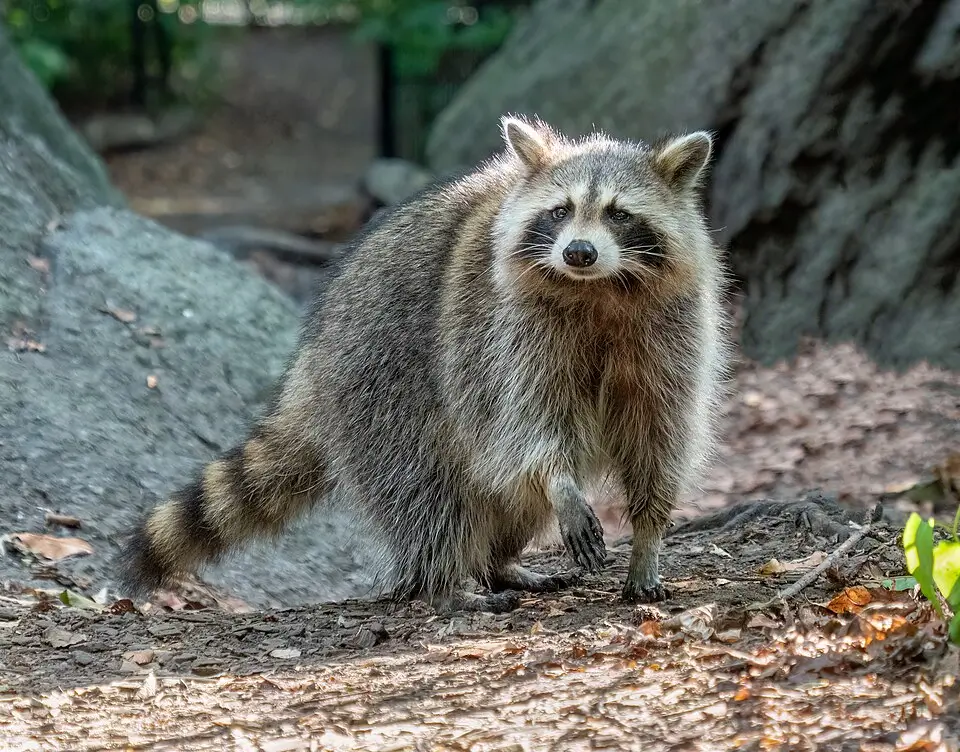
One of the raccoon's most striking features is the bold black facial mask framed by white fur, which gives the animal its immediately recognizable appearance. Scientists have speculated that this mask serves multiple functions, including reducing glare and potentially enhancing the animal's ability to make out fine details in low-light conditions — a valuable asset for a primarily nocturnal forager. The body is compact and robust, typically covered in dense grayish-brown fur that provides excellent insulation during colder months. The tail is thick and features alternating rings of dark and light fur, making it one of the most distinctive tails in the North American mammal world.
Raccoons are true omnivores with an impressively broad diet. They consume fruits, nuts, berries, insects, crayfish, frogs, fish, bird eggs, small mammals, and virtually anything else they can get their nimble paws on. This dietary flexibility is one of the primary reasons raccoons have thrived so successfully across such a wide range of environments, from wilderness areas to suburban neighborhoods. Their front paws deserve special mention: equipped with five highly dexterous fingers, raccoons can open latches, unscrew lids, and manipulate objects with a level of precision rarely seen outside of primates. Their sense of touch is extraordinarily refined, with a large portion of their brain devoted to processing tactile information.
Raccoons are largely solitary and nocturnal, though they may be active during daylight hours when food is scarce or during the breeding season. Mating typically occurs in late winter, and females give birth to litters of two to five kits after a gestation period of approximately 63 days. Young raccoons are born blind and helpless but develop quickly, beginning to venture out of the den by summer and becoming largely independent by fall. Raccoons do not truly hibernate but may enter periods of extended torpor during particularly cold stretches of winter, drawing on fat reserves built up during autumn feeding frenzies.
The raccoon's intelligence is well-documented and continues to surprise researchers. Studies have demonstrated that raccoons can remember the solutions to tasks for up to three years and can adapt their problem-solving strategies based on experience — cognitive abilities that rival those of some primates. This intelligence, combined with their physical dexterity, makes raccoons extraordinarily effective foragers and formidable survivors in virtually any environment.
Habitat & Range
The raccoon is one of the most geographically widespread mammals in North America, ranging from the southern reaches of Canada through virtually the entire continental United States and well into Central America. The species has also been introduced — sometimes deliberately, sometimes inadvertently — into parts of Europe and Asia, where it has established thriving feral populations.
In Texas, raccoons are found in virtually every corner of the state. Texas's remarkable ecological diversity — encompassing East Texas pine forests, Central Texas river bottoms, Gulf Coast marshes, rolling Hill Country terrain, South Texas brush country, and even parts of the arid Trans-Pecos region — provides a mosaic of habitats that raccoons exploit with characteristic versatility. They show a particular affinity for riparian corridors: areas along rivers, creeks, ponds, and wetlands where food sources are abundant and water is readily accessible. The dense bottomland hardwood forests along the Sabine, Neches, Trinity, Brazos, and Colorado rivers are especially productive raccoon habitats.
Raccoons are cavity nesters, preferring hollow trees, rock crevices, abandoned burrows, and even human structures as den sites. Mature forests with large hardwood trees are therefore ideal habitat, offering both shelter and mast crops — acorns, pecans, and other nuts — that form an important part of the raccoon's autumn diet. Texas's vast pecan groves, both wild and cultivated, are particularly attractive to raccoons in the fall months.
While raccoons are most abundant in forested and riparian environments, their adaptability means they also thrive in agricultural areas, where they readily raid cornfields, melon patches, and poultry operations. Suburban and urban environments across Texas — from Houston and San Antonio to Austin and Dallas — support dense raccoon populations that have learned to exploit garbage cans, pet food, and ornamental water features as reliable resource bases.
Hunting Information
Raccoon hunting in Texas carries a rich cultural heritage, particularly in the eastern and central regions of the state where coon hunting with hounds has been a beloved tradition for generations. Hunters typically pursue raccoons at night with trained treeing hounds — breeds such as the Black and Tan Coonhound, the Treeing Walker Coonhound, the Bluetick Coonhound, and the Redbone Coonhound — that use their exceptional noses to track raccoons and then "tree" them, baying loudly at the base of the tree until the hunter arrives.
This style of hunting is as much about the experience and the dogs as it is about the harvest. Coon hunters often describe the sound of hounds working a track through a dark river bottom as one of the most stirring sounds in all of outdoor sport. The social dimension of coon hunting — gathering with friends and family, training and caring for dogs, sharing stories around a fire — has made it a cornerstone of rural culture across the South, including throughout much of Texas.
Raccoon fur has historically been valued for garments, hats, and decorative purposes, and raccoon meat — often slow-cooked or smoked — is considered a traditional dish in many parts of rural America and has experienced something of a culinary renaissance among advocates of wild game cuisine.
For the most current and accurate hunting regulations, season dates, license requirements, and any applicable rules for raccoon hunting in Texas, hunters should always consult the Texas Parks and Wildlife Department (TPWD) directly. The TPWD provides up-to-date regulatory information through its official website and published hunting guides, ensuring that hunters have access to the latest rules governing seasons, bag limits, and licensing requirements. Regulations can and do change between seasons, so checking current TPWD guidance before heading afield is always the right approach.
Conservation
From a conservation standpoint, the raccoon is one of North America's genuine success stories. Procyon lotor is currently listed as a species of Least Concern by the International Union for Conservation of Nature (IUCN), reflecting the species' wide distribution, large and stable population, and remarkable adaptability. Unlike many wildlife species that have struggled in the face of habitat loss and human encroachment, raccoons have generally thrived alongside human development, exploiting new food sources and shelter opportunities that urbanization and agriculture provide.
Regulated hunting has long played a role in managing raccoon populations, particularly in agricultural areas where raccoons can cause significant crop and property damage. Responsible harvest, conducted within the framework of state wildlife management guidelines such as those established by the TPWD, helps maintain healthy population balance while providing meaningful recreational and cultural opportunities for hunters.
Raccoons can serve as important indicator species for ecosystem health, particularly in riparian and wetland environments. Their presence in healthy numbers often signals a productive, food-rich habitat. They also play ecological roles as seed dispersers and as prey for larger predators such as coyotes, bobcats, and great horned owls.
Wildlife managers and hunters alike share a common interest in maintaining healthy, sustainable raccoon populations for generations to come. Through thoughtful stewardship, ethical hunting practices, and continued support for wildlife management agencies like the TPWD, the masked bandit of North America will continue to thrive across the Texas landscape and beyond for many years to come.