Overview
Few animals have shaped the North American landscape quite like the beaver. Long before European settlers arrived on this continent, the North American beaver (Castor canadensis) was quietly engineering waterways, building wetlands, and transforming ecosystems from the Arctic tundra of Canada to the subtropical streams of the American South. Today, this remarkable rodent remains one of the most ecologically influential mammals on the continent — a creature whose industrious habits have earned it a reputation as one of nature's most capable and tireless builders.
The North American beaver holds a special place in both natural history and cultural heritage. It is the largest rodent native to North America and stands as the national animal of Canada, where its image has graced currency, coats of arms, and countless expressions of national pride. In the United States, beaver populations were central to the fur trade that helped shape the exploration and early settlement of the continent. Trappers, explorers, and Indigenous peoples all recognized the beaver not just as a valuable commodity, but as a keystone species whose presence was inseparable from healthy, thriving waterways.
Understanding this animal — its biology, its habits, and its relationship to the land — gives hunters, wildlife enthusiasts, and conservationists alike a deeper appreciation for why the beaver remains such an important part of the North American wild.
Biological Traits
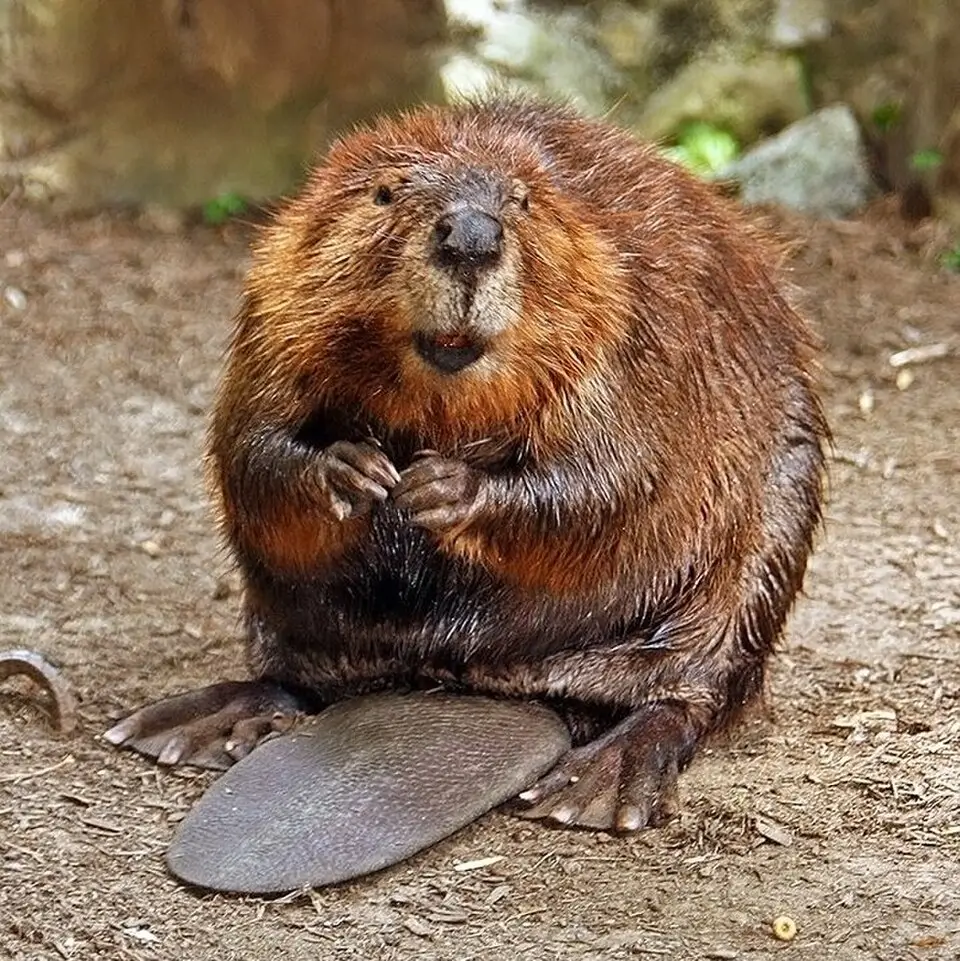
The North American beaver (Castor canadensis) belongs to the family Castoridae and the order Rodentia, making it a true rodent, though one that dwarfs most of its relatives in size. Adult beavers are impressively large animals, often weighing between 35 and 65 pounds, with some individuals exceeding 70 pounds in particularly productive habitats. Their stout, muscular bodies can measure up to four feet in length, including their iconic flat, paddle-shaped tail.
That tail is perhaps the beaver's most recognizable feature. Covered in leathery, scaly skin rather than fur, it serves multiple purposes: it acts as a rudder while swimming, stores fat reserves for winter energy, and produces a loud, startling slap on the water's surface when a beaver senses danger — a warning signal to other members of the colony. The tail also helps the beaver maintain balance when standing upright to gnaw on trees.
Beavers are semi-aquatic mammals, and their bodies are elegantly adapted to life in and around the water. Their dense, waterproof fur consists of two layers: a coarse outer layer of guard hairs and a soft, thick underfur that insulates the animal from cold water. This fur was the driving force behind centuries of intensive trapping across North America, as it was prized for making felt hats and other garments. Beavers also produce castoreum, a yellowish secretion from specialized scent glands, which they use to mark territory and communicate with other beavers.
Their hind feet are fully webbed for powerful swimming, while their front paws are dexterous and unwebbed, allowing them to manipulate sticks, mud, and stones with surprising precision when constructing their famous dams and lodges. Beavers can remain submerged for up to 15 minutes at a time, aided by closable nostrils and ears, a transparent nictitating membrane that protects their eyes underwater, and large lungs capable of holding significant oxygen reserves.
The beaver's most visible biological tool is its teeth. Their large, prominent incisors are coated with hard, orange-tinted enamel — the color comes from iron compounds embedded in the enamel — and they grow continuously throughout the animal's life. These incisors can fell trees of considerable diameter, and beavers must gnaw constantly to keep them worn to a manageable length. Their preferred food consists of bark, cambium (the soft tissue beneath bark), leaves, and aquatic plants, with species like willow, aspen, cottonwood, and birch being particular favorites.
Beavers are monogamous animals that typically mate for life. A breeding pair will establish a territory and raise successive generations of kits together, often with older offspring — called yearlings — helping to care for new litters. Litters typically consist of two to four kits, born fully furred and with their eyes open in the late spring. Young beavers remain with their parents for approximately two years before dispersing to establish territories of their own.
Habitat & Range
The North American beaver is one of the most widely distributed mammals on the continent. Its range historically extended across nearly all of North America, from the northern reaches of Canada and Alaska down through the continental United States and into northern Mexico. This enormous range reflects the beaver's remarkable adaptability — it can thrive in a wide variety of freshwater habitats, provided there is sufficient water, woody vegetation, and suitable sites for dam construction.
Beavers are most commonly associated with forested streams, river systems, ponds, and marshy wetlands. They prefer slower-moving water where dam construction is practical, though they are also found in lakes and reservoirs where they build bank dens rather than traditional freestanding lodges. In arid or semi-arid regions, they tend to concentrate along riparian corridors — the green, vegetated strips that follow rivers and streams through otherwise dry landscapes.
In Texas, beavers inhabit river drainages and creek systems throughout much of the state. The Lone Star State's diverse geography — ranging from the piney woods of East Texas to the mesquite grasslands of the west — supports beaver populations in suitable riparian zones, particularly along major river systems and their tributaries. Texas borders the Rio Grande to the south and southwest, one of North America's most iconic river systems, and beaver activity has been documented along various waterways throughout the state.
One of the most fascinating aspects of the beaver's habitat use is its capacity to create habitat for other species. Beaver dams slow the flow of streams, raising water tables and flooding surrounding land to create ponds and wetlands. These engineered wetlands become biodiversity hotspots, supporting fish, waterfowl, amphibians, songbirds, mammals, and countless invertebrates. Scientists and ecologists frequently describe the beaver as a keystone species — one whose disproportionately large influence on its ecosystem far exceeds what its mere presence might suggest.
Hunting Information
The North American beaver has a long and storied history as a game animal. For centuries, beaver fur was among the most sought-after commodities in North American trade, and beaver trapping formed the backbone of the continent's early commercial wildlife harvest. Today, beavers are managed as furbearers in most states and Canadian provinces, and regulated harvest — through both trapping and hunting — continues in many parts of their range.
In Texas, beaver management falls under the jurisdiction of the Texas Parks and Wildlife Department (TPWD). As with all furbearers in the state, hunters and trappers interested in pursuing beavers should consult the most current TPWD regulations, as license requirements, season dates, and legal methods of take are subject to change and vary by region. The TPWD website provides up-to-date hunting season dates and licensing information, and it is always advisable to review official state guidance before heading afield.
Texas is home to a wide range of hunting and trapping opportunities, and the state's outdoor culture runs deep. Whether pursuing beaver along a wooded East Texas creek or working a river bottom in the Hill Country, hunters and trappers will find that beaver behavior — their territoriality, their use of scent mounds, and their predictable travel routes along waterways — makes them a challenging and rewarding target. Traditional trapping methods remain popular, and beaver can also be taken during legal hunting seasons by methods permitted under state regulations.
Hunters planning any activity in Texas should stay informed through official TPWD channels, where harvest reporting requirements and regulatory updates are regularly posted.
Conservation
The story of beaver conservation in North America is, in many ways, a conservation success story. At the height of the fur trade, beaver populations were dramatically reduced across much of their historic range. By the early 20th century, beavers had been extirpated or severely depleted in vast portions of the continent. However, through a combination of regulated harvest, legal protections, and active reintroduction programs, beaver populations have rebounded remarkably over the past century.
Today, beaver populations across North America are considered stable and, in many areas, thriving. Wildlife managers actively study and monitor beaver populations to balance healthy numbers with the needs of landowners, farmers, and adjacent communities — since beaver activity, while ecologically beneficial, can sometimes conflict with human land use through flooding of roads, agricultural fields, and timber land.
Increasingly, ecologists and land managers are recognizing the value of beavers as tools for ecological restoration. Beaver reintroduction projects have been undertaken in degraded watersheds to help restore wetlands, raise water tables, reduce erosion, and improve habitat for native fish and wildlife. In an era of increasing concern about drought, water scarcity, and biodiversity loss, the beaver's ability to store and slow water has gained fresh appreciation.
For hunters and trappers, the regulated harvest of beavers is part of a broader wildlife management framework that helps ensure populations remain in balance with their habitat. The revenue generated through hunting licenses and associated excise taxes contributes to conservation funding that supports not just beaver management, but the full breadth of wildlife and habitat work carried out by state agencies like TPWD.