Overview
Few creatures embody the spirit of wetland ecosystems quite like the muskrat (Ondatra zibethicus). This semi-aquatic rodent is one of North America's most recognizable and ecologically significant mammals, spending the vast majority of its life in or near the water. From the marshy deltas of the Gulf Coast to the glacial ponds of the northern plains, muskrats have carved out a niche as tireless engineers of the wetland world. They build, they swim, they forage, and they thrive — and in doing so, they support entire communities of wildlife that depend on the habitats muskrats help shape.
Though often overlooked in favor of more glamorous game species, the muskrat has a rich history in North American culture, commerce, and conservation. For centuries, the muskrat pelt trade formed a cornerstone of the fur industry, and the species remains an important quarry for trappers and hunters across the continent today. In Texas and throughout the broader American landscape, understanding the muskrat means understanding the health of our freshwater ecosystems.
Biological Traits
The muskrat (Ondatra zibethicus) is the sole member of the genus Ondatra and belongs to the family Cricetidae, placing it in the company of voles, lemmings, and New World mice and rats. Despite its common name and rat-like appearance, it is not closely related to the true rats of the genus Rattus. The muskrat is actually more closely allied with voles, and its nearest living relative is the round-tailed muskrat (Neofiber alleni) of Florida and Georgia.
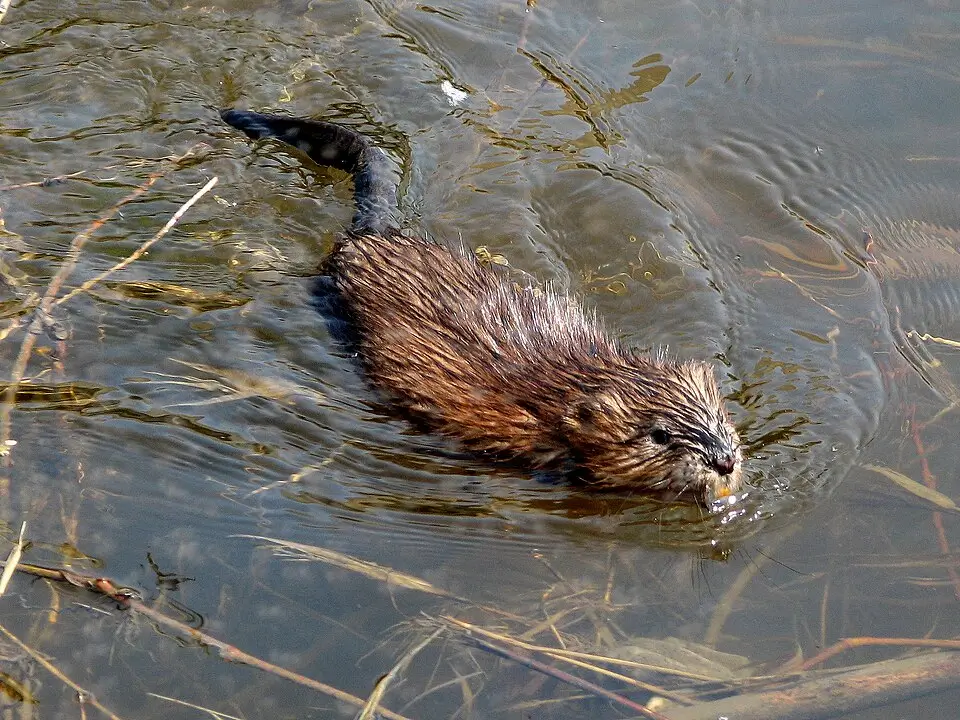
One of the most immediately distinguishing features of the muskrat is its long, laterally flattened tail, which functions as a rudder when the animal swims. Unlike the beaver — another well-known North American rodent engineer — the muskrat's tail is scaly and sinuous rather than broad and paddle-shaped. This tail, combined with large, partially webbed hind feet, makes the muskrat a remarkably agile swimmer capable of navigating complex underwater environments with ease.
Adult muskrats are medium-sized rodents. Their bodies are covered with two layers of fur: a dense, waterproof undercoat and longer, coarser guard hairs on the outside. This layered pelage is what made muskrat fur so desirable to the fur trade — it is exceptionally good at trapping air and repelling water, keeping the animal warm even in freezing conditions. The fur color typically ranges from dark brown on the back to a lighter, grayish-brown on the belly, though regional variation exists.
The "musk" in the muskrat's name refers to the musky-scented secretions produced by paired perineal glands located near the base of the tail. These secretions are used for communication and territorial marking, playing an important social role in the lives of these animals. Musk deposits are often found on prominent objects along the water's edge and serve as chemical messages to other muskrats in the area.
Muskrats are herbivores at heart, though they are known to supplement their plant-based diet with aquatic invertebrates, small fish, frogs, and crayfish when plant material is scarce. Their preferred foods include the stems, roots, and leaves of aquatic and emergent plants such as cattails, bulrushes, water lilies, and sedges. This dietary preference directly connects muskrat activity to the structure and composition of wetland plant communities.
Reproduction in muskrats is prolific. Females can produce multiple litters per year, with litter sizes typically ranging from four to eight young. The gestation period is relatively short, and young muskrats grow quickly, reaching sexual maturity within their first year. This high reproductive rate makes the muskrat population resilient and capable of rebounding quickly from natural mortality or harvest pressure.
Habitat & Range
The muskrat has one of the broadest distributions of any semi-aquatic mammal in North America. It is found across a vast range stretching from Alaska and Canada southward through the contiguous United States and into the northern reaches of Mexico. It has also been introduced — sometimes controversially — to parts of Europe, Asia, and South America, where it has established stable populations.
Within this expansive range, muskrats are creatures of freshwater and brackish wetlands. They favor marshes, swamps, lakes, ponds, slow-moving rivers, streams, drainage ditches, and tidal estuaries. The critical requirement is the presence of sufficient water depth to allow underwater movement and access to burrow entrances or lodge openings, which must remain submerged even in winter to prevent predators from easily entering.
Muskrats are among the primary architects of wetland habitat. They construct impressive dome-shaped lodges from cattails, rushes, sedges, and mud in open water areas, or alternatively excavate extensive burrow systems in the banks of rivers and ponds. These structures provide shelter, warmth, and protection from predators. The activity of building and maintaining lodges also continuously cycles nutrients and disturbs vegetation in ways that benefit a wide range of other wetland species — from nesting ducks to foraging herons.
In Texas, muskrats are present primarily in the eastern and coastal portions of the state, where suitable wetland habitat exists along the Gulf Coast marshes, river bottomlands, and reservoir systems. The diverse geography of Texas — ranging from the swampy bayous near Louisiana to the semi-arid interior — means that muskrat distribution within the state is closely tied to water availability and the presence of emergent aquatic vegetation. The vast wetland complexes along the upper and lower Texas coast, including areas around Galveston Bay, Sabine Lake, and the marshes near the Louisiana border, provide some of the best muskrat habitat in the state.
Hunting and Trapping Information
The muskrat has long been one of the most important furbearing species in North America. Historically, muskrat pelts were among the most commonly traded furs in the continent's bustling fur markets, and trapping muskrats provided significant income for rural families throughout the 18th, 19th, and early 20th centuries. Today, while the commercial fur market has changed considerably, muskrat trapping and hunting remain popular pursuits for outdoor enthusiasts who appreciate both the challenge and the connection to a long-standing tradition.
Muskrat trapping typically involves the use of body-gripping traps, foothold traps, or cage-style live traps set near lodges, runs, and feeding platforms along the water's edge. Successful trappers learn to read the landscape — identifying active lodges, well-worn travel routes in the vegetation, and feeding stations where cut plant material accumulates. Because muskrats are active throughout the year — even in cold weather — trapping seasons in many states extend through the winter months when fur quality is at its peak.
In Texas, the muskrat is classified as a furbearing animal under the jurisdiction of Texas Parks and Wildlife Department (TPWD). As with all furbearing species in the state, anyone wishing to trap or hunt muskrats in Texas should consult the most current regulations published by TPWD, as license requirements and season dates are subject to change. Based on the current context available, specific season dates and license requirements for muskrat in Texas were not detailed in the provided regulatory data, and prospective hunters and trappers are strongly encouraged to visit the official TPWD website or contact a local game warden for the most accurate and up-to-date information.
What is clear is that Texas takes wildlife management seriously, with mandatory harvest reporting requirements in place for several species, and a strong network of Texas Game Wardens who work to enforce regulations and educate the public about responsible outdoor recreation. Anyone planning to pursue muskrats — whether by trap or other legal means — should ensure they are fully compliant with current state regulations before heading afield.
For those new to muskrat trapping, it is worth noting that the activity combines fieldcraft, patience, and an intimate knowledge of wetland environments. Many experienced trappers consider the muskrat an ideal starting point for beginners — the animals are abundant in suitable habitat, their sign is easy to identify, and the equipment required is relatively simple and affordable.
Conservation
From a conservation standpoint, the muskrat is currently listed as a species of least concern by major wildlife monitoring organizations, reflecting its wide distribution, large population size, and high reproductive capacity. However, this does not mean the muskrat is immune to population pressures. Like all wetland-dependent species, muskrat populations are sensitive to changes in water quality, habitat degradation, and the loss of wetland areas to drainage and development.
Wetland conservation is, in many ways, muskrat conservation. Efforts to protect and restore marshes, swamps, and riparian corridors across North America benefit not only muskrats but the dozens of species — from migratory waterfowl to rare amphibians — that share these habitats. In Texas, coastal wetland conservation is particularly important, as the Gulf Coast marshes serve as critical habitat for both resident wildlife and species migrating along the Central Flyway.
Regulated trapping also plays a role in muskrat conservation. By providing economic incentive to protect wetland habitats and by helping to manage population levels in areas where muskrats can cause bank erosion or infrastructure damage, the trapping community has long been an ally of wetland conservation efforts. This relationship between sustainable harvest and habitat stewardship is one of the foundational principles of North American wildlife management.
Climate change and shifting precipitation patterns represent emerging challenges for muskrat populations, particularly in areas where drought conditions are intensifying or where sea-level rise threatens coastal marshes. Monitoring these trends and adapting management strategies accordingly will be essential to ensuring that the muskrat remains a thriving part of North American wetland ecosystems for generations to come.
Conclusion
The muskrat may not command the same popular attention as white-tailed deer or wild turkeys, but it is no less deserving of admiration and respect. As a species, it is a testament to the power of adaptability — capable of thriving in habitats from the subarctic to the subtropics, building remarkable structures from natural materials, and sustaining populations even under significant harvest pressure. In Texas and across the continent, the muskrat continues to play a vital ecological role, shaping the wetlands we treasure and providing outdoor enthusiasts with a connection to one of North America's oldest and most storied wildlife traditions.
Whether you are a seasoned trapper, a wildlife enthusiast, or simply someone with a fondness for the natural world, the muskrat deserves a closer look. These small but mighty rodents are living proof that the most important creatures in an ecosystem are not always the largest or the most visible — sometimes they are the ones quietly building their lodges at the edge of a marsh as the sun goes down.