Overview
Few birds capture the imagination of waterfowl hunters and wildlife enthusiasts quite like the Mallard (Anas platyrhynchos). Widely regarded as the most recognizable duck in the Northern Hemisphere, the Mallard has earned its place as a cultural and ecological cornerstone of wetland ecosystems across the globe. From the prairie potholes of the Great Plains to the coastal marshes of the Gulf of Mexico, this hardy, adaptable species thrives in an extraordinary range of environments. In Texas, where vast wetlands, river systems, and coastal habitats converge along some of North America's most productive migration corridors, the Mallard occupies a place of special significance — both as a prized game bird and as a vital component of the region's rich natural heritage.
Whether you're a seasoned waterfowl hunter wading through a flooded timber flat before dawn, a birdwatcher scanning a city park pond, or simply someone who has tossed bread to ducks as a child, chances are excellent that you've encountered a Mallard. Understanding this remarkable bird — its biology, behavior, habitat preferences, and role in hunting traditions — deepens our appreciation for one of nature's most successful avian species.
Biological Traits
The Mallard (Anas platyrhynchos) belongs to the family Anatidae, which encompasses all ducks, geese, and swans. Within that family, it is classified in the genus Anas, a large group commonly referred to as dabbling ducks — birds that feed primarily at the water's surface or by tipping forward to reach submerged vegetation, rather than diving completely beneath the water like their diving duck counterparts.
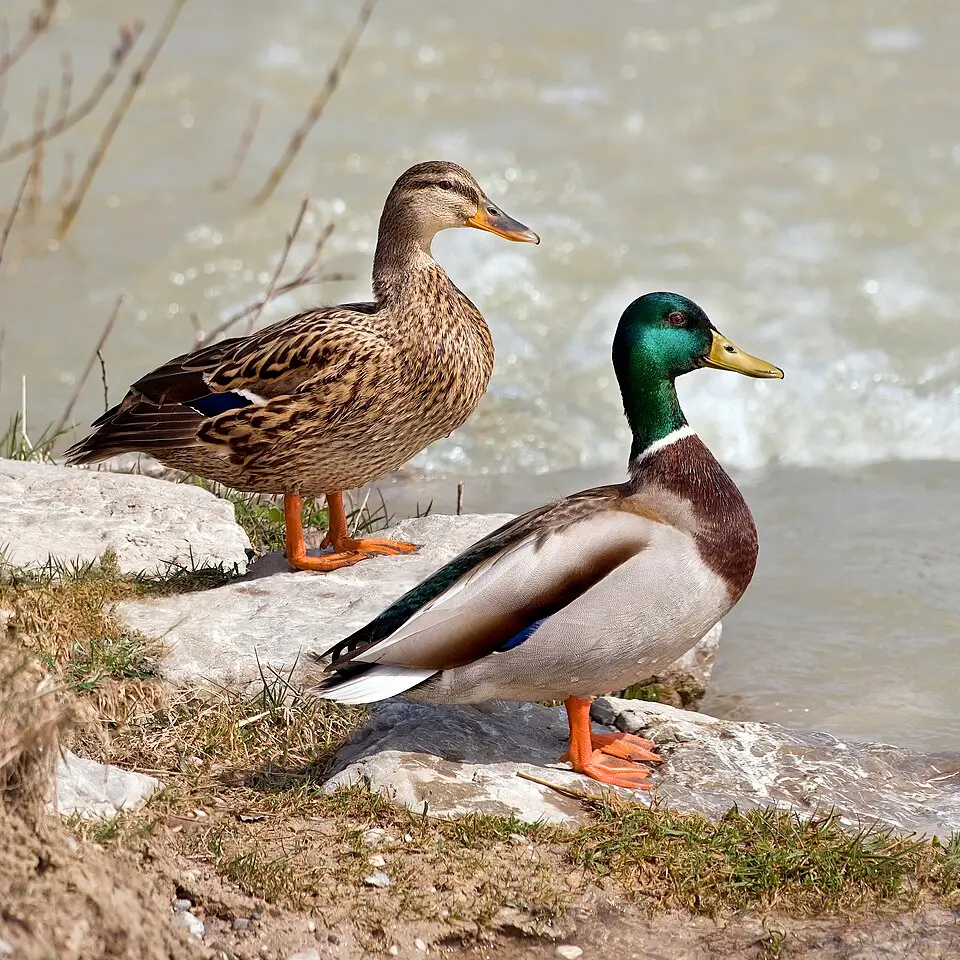
One of the Mallard's most celebrated features is its striking sexual dimorphism — the dramatic visual difference between males and females. The drake, or male, sports one of the most recognizable plumage patterns in the bird world: a gleaming, iridescent green head, a white neck ring, a rich chestnut-brown breast, and a predominantly gray body. His bill is a distinctive yellow-green, and his tail features the well-known upward-curling tail feathers that are a hallmark of the species. The female, or hen, by contrast, is mottled brown throughout, providing excellent camouflage while she incubates eggs on the nest. Both sexes display a brilliant blue-purple speculum — a patch of iridescent feathers on the wing — bordered by white, which flashes brilliantly in flight.
Mallards are medium-to-large dabbling ducks. Adults typically measure between 20 and 26 inches in length, with a wingspan ranging from approximately 32 to 39 inches. Their body weight generally falls between two and three-and-a-half pounds, though individuals can vary considerably depending on the season and food availability.
One of the Mallard's most biologically fascinating characteristics is its role as an ancestral species. The Mallard is the wild ancestor of nearly all domestic duck breeds worldwide, with the notable exception of the Muscovy duck. Its genetic plasticity and tendency to hybridize freely with closely related species — including the American Black Duck and the Mexican Duck — have made it a subject of considerable interest among ornithologists and wildlife geneticists.
Mallards are highly vocal birds. The classic "quack" most people associate with ducks is, in fact, the call of the female Mallard. The hen uses this call to communicate with her ducklings and to maintain contact with other birds. Drakes, by contrast, produce a softer, raspier sound, along with a variety of whistles and grunts used during courtship displays.
Breeding biology in Mallards follows well-established patterns. Pair bonds typically form during the winter months, with courtship displays that involve elaborate head-bobbing, wing-flapping, and vocalizations. Nesting begins in spring, with hens selecting nest sites on the ground — often well concealed in tall grasses, cattails, or shrubby vegetation near water. A typical clutch contains between 8 and 13 eggs, which the hen incubates alone for approximately 27 to 28 days. Once hatched, the precocial ducklings are capable of swimming and feeding within hours of birth, though the hen remains vigilant in their defense for several weeks until they achieve flight capability at around 50 to 60 days of age.
Habitat & Range
The Mallard is one of the most geographically widespread waterfowl species on Earth. Its native range spans the temperate and subarctic regions of the Northern Hemisphere, encompassing North America, Europe, Asia, and portions of North Africa. In North America, breeding populations are concentrated across the Prairie Pothole Region — a vast expanse of glacially-formed wetlands stretching across the northern Great Plains of the United States and Canada — as well as boreal forest wetlands, river systems, and coastal marshes.
During migration and winter, Mallards spread across an enormous portion of the continent. The Central Flyway and the Mississippi Flyway together channel millions of ducks southward each autumn, with Texas sitting squarely along both of these critical migratory corridors. The state's diverse geography — encompassing the Gulf Coast marshes, the Rio Grande Valley, the Panhandle playas, the Pineywoods of East Texas, and the numerous reservoirs and river bottoms scattered across the interior — provides an exceptional mosaic of wintering habitat.
Texas, as one of the most geographically and ecologically diverse states in the nation, offers Mallards an enormous variety of habitat types. Coastal marshes and rice fields along the Upper Texas Coast regularly host impressive concentrations of wintering Mallards, while flooded timber, stock tanks, and river bottomlands throughout the state's interior attract birds throughout the season. The state borders Louisiana to the east, Arkansas to the northeast, Oklahoma to the north, New Mexico to the west, and shares an international border with Mexico to the south and southwest — a geographic position that places it at the heart of North American waterfowl migration.
Mallards are notably adaptable in their habitat use. While they prefer shallow freshwater environments rich in aquatic vegetation, invertebrates, and agricultural grain, they readily exploit urban ponds, golf course water features, and suburban retention basins. This adaptability has allowed Mallard populations to remain robust even as natural wetland acreage has declined in many parts of their range.
Hunting Information
The Mallard is, by virtually every measure, the most important waterfowl species in North American hunting culture. Generations of hunters have pursued Mallards with decoys, calls, and carefully crafted blinds, and the tradition of Mallard hunting has deeply shaped the culture of waterfowl conservation in this country. The sport has given rise to organizations, conservation funding mechanisms, and wetland preservation efforts that have benefited dozens of species far beyond the Mallard itself.
In Texas, duck hunting is a proud and deeply ingrained tradition. The Texas Parks and Wildlife Department (TPWD) oversees all waterfowl hunting regulations within the state, operating within the framework established by the U.S. Fish and Wildlife Service and the Migratory Bird Treaty Act. Because Mallards are migratory birds, their hunting seasons and bag limits are governed by federal frameworks that are updated annually, with specific season dates established each year.
Hunters seeking to pursue Mallards and other waterfowl in Texas should consult the most current TPWD hunting season dates, as regulations — including season lengths, bag limits, and licensing requirements — are subject to change from year to year. The TPWD publishes annual hunting season dates and associated regulations, and hunters are encouraged to review the official 2026–2027 Hunting Season Dates as posted by TPWD to ensure full compliance with current rules.
Texas offers exceptional Mallard hunting across a variety of settings. Flooded rice fields along the Texas Gulf Coast are among the most productive waterfowl hunting environments in the nation, drawing birds in remarkable numbers during peak migration. East Texas river bottoms and oxbow lakes, flooded agricultural fields in the Blackland Prairie, and the playa lakes of the Texas Panhandle all serve as productive Mallard hunting destinations, each with its own character and tradition.
Successful Mallard hunting typically involves a combination of realistic decoy spreads, proficient calling, and thorough scouting to locate birds. The characteristic feeding chuckle and hail call of the hen Mallard are among the most widely mimicked sounds in all of waterfowl hunting, and skilled callers can attract birds from impressive distances under the right conditions.
Hunters are reminded that all applicable state and federal licenses and permits are required to legally hunt migratory waterfowl in Texas. Specific requirements should be confirmed through TPWD's official channels prior to the season.
Conservation
The Mallard's conservation status at the global level is currently listed as Least Concern by the International Union for Conservation of Nature (IUCN), reflecting the species' enormous global population and wide geographic distribution. Mallard populations across North America have shown resilience over the long term, aided significantly by the efforts of waterfowl conservation organizations and the funding generated through the Federal Duck Stamp program — a cornerstone of wetland conservation in the United States.
Habitat conservation remains the most critical factor in sustaining healthy Mallard populations. The preservation and restoration of wetlands — including prairie potholes, coastal marshes, river floodplains, and playa lakes — directly supports not only Mallards but the entire suite of wildlife that depends on these ecosystems. In Texas, ongoing efforts to protect coastal marsh habitat and manage water resources sustainably are essential to maintaining the quality of wintering habitat that draws Mallards and other waterfowl to the state each year.
Hunters have historically been among the most committed supporters of waterfowl conservation, contributing directly through license and permit fees, Duck Stamp purchases, and voluntary contributions to organizations dedicated to wetland preservation. This partnership between hunters, wildlife managers, and conservation organizations represents one of the great success stories of American wildlife stewardship.