Overview
Few animals in North America have captured the public imagination quite like the groundhog. Known alternately as the woodchuck, whistle-pig, or land beaver, this stout, industrious rodent has embedded itself into cultural consciousness through the beloved tradition of Groundhog Day, yet its biological story is every bit as fascinating as its folkloric reputation. The groundhog (Marmota monax) is a member of the squirrel family — a true marmot that leads a life defined by digging, foraging, and an extraordinary ability to hibernate through the harshest months of the year. Whether you encounter one along the edge of a hayfield in the Appalachians or spot one cautiously peeking out of a burrow in a Texas pasture, the groundhog is a genuinely remarkable creature worthy of deeper study and appreciation.
For hunters, wildlife watchers, and naturalists alike, the groundhog occupies a special place in the outdoor experience. It offers challenging varmint hunting that demands precision marksmanship, it plays a measurable ecological role, and it serves as a living example of how a single species can thrive across an enormous geographic range by adapting to shifting environments. This article takes a comprehensive look at the groundhog's biology, habitat, range, ecological significance, and its place in the hunting world — including what hunters in states like Texas should know before heading afield.
Biological Traits
The groundhog belongs to the order Rodentia and the family Sciuridae, making it a true sciurid rodent — a relative of tree squirrels, prairie dogs, and other marmots. Its scientific name, Marmota monax, places it firmly within the genus Marmota, which contains the largest members of the squirrel family on Earth. The species name monax is derived from a Algonquian word meaning "the digger," a fitting tribute to the animal's most celebrated skill.
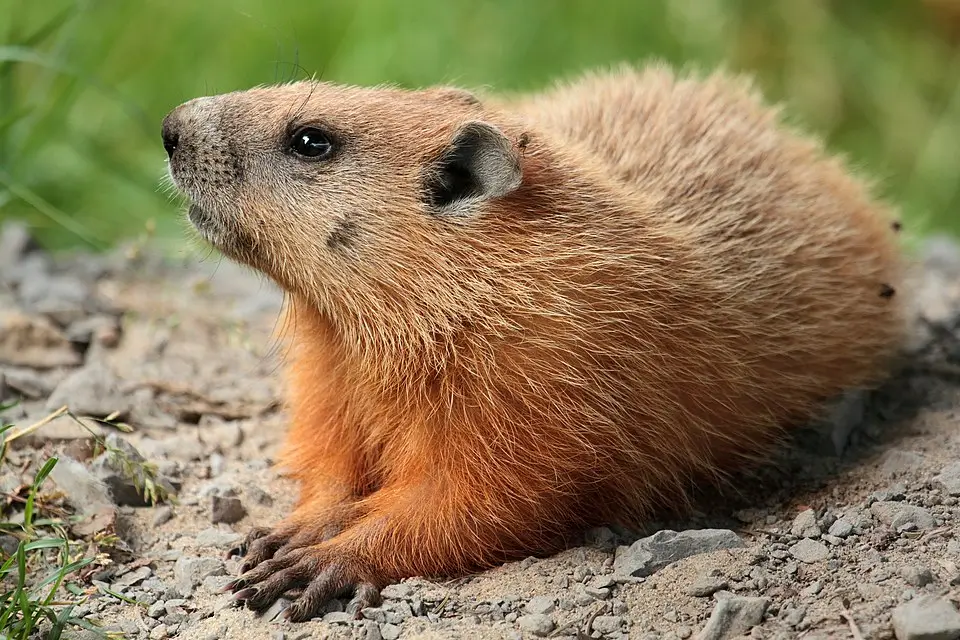
Groundhogs are powerfully built animals. Adults are stocky and low-slung, with strong, curved claws perfectly designed for moving enormous quantities of soil. They have small, rounded ears, a broad head, and a medium-length bushy tail. Their fur is coarse and typically grizzled brown or gray-brown, providing excellent camouflage in brushy and grassy environments. Their incisors, like those of all rodents, grow continuously throughout their lives and are kept sharp and functional through constant gnawing.
One of the most biologically remarkable characteristics of the groundhog is its capacity for true hibernation. Unlike many animals that simply enter periods of torpor or reduced activity during cold months, groundhogs undergo a profound physiological transformation. Body temperature drops dramatically — approaching ambient environmental temperatures — and heart rate slows to just a few beats per minute. The animal survives entirely on fat reserves accumulated through intensive late-summer and early-autumn feeding. This hibernation period can last several months, after which the groundhog emerges, typically in late winter or very early spring, to begin feeding and breeding.
Groundhogs are largely herbivorous, feeding on a wide variety of grasses, clovers, wildflowers, fruits, and agricultural crops. This broad palate makes them extremely adaptable foragers that can thrive in a variety of ecosystems. They are also known to occasionally consume insects, grubs, and bird eggs, adding a small degree of omnivory to their dietary profile.
Socially, groundhogs are generally solitary animals outside of the brief breeding season, which occurs shortly after emergence from hibernation in late winter or early spring. Females give birth to litters that typically number between two and six young. The young are born blind, hairless, and helpless, but develop rapidly and are often independent by mid-summer. Groundhogs typically live between three and six years in the wild, though individuals in captivity have been documented living considerably longer.
Communication is another interesting aspect of groundhog behavior. Their common nickname, "whistle-pig," comes from the sharp, piercing whistle they emit when alarmed — a warning call designed to alert nearby animals to the presence of a predator. They also produce softer chattering sounds and tooth grinding as forms of communication.
Habitat & Range
The groundhog is a species of remarkable geographic breadth. Its range extends across much of the eastern and central United States and a large portion of Canada, from the Atlantic coast westward through the Great Plains and northward into Alaska. This expansive distribution speaks to the animal's ecological flexibility and its ability to colonize a wide variety of environments.
Groundhogs are most commonly associated with the edges between forests and open areas — woodland margins, brushy fence lines, meadow edges, and agricultural fields. These transitional zones, known as ecotones, provide groundhogs with both the dense vegetative cover they prefer for burrowing and concealment and the open foraging areas where grasses and herbs grow abundantly. Over time, groundhogs have adapted remarkably well to human-altered landscapes, and they are frequently found in suburban areas, along roadsides, near farm fields, and in park lands.
The burrow is central to the groundhog's existence. These underground tunnel systems can be extensive, sometimes reaching ten feet or more in depth and up to forty or fifty feet in length. A typical burrow system includes a main entrance, often marked by a large mound of excavated soil, as well as secondary "plunge holes" that provide escape routes. These burrow systems serve multiple functions: protection from predators, a safe site for raising young, a chamber for hibernation, and a temperature refuge during hot summer months. Importantly, abandoned groundhog burrows provide critical habitat for a host of other wildlife species, including rabbits, foxes, skunks, opossums, and various reptiles.
In Texas, groundhogs are not as commonly encountered as they are in the eastern United States, given that Texas represents or approaches the southern and western edges of the species' natural range. Texas's vast and varied geography — encompassing piney woods in the east, rolling prairies and farmlands in the north and central regions, coastal plains, and arid western deserts — supports a wide diversity of wildlife, though the groundhog is primarily associated with the more temperate, vegetated portions of the state. Hunters and naturalists in Texas who encounter groundhogs are most likely to do so in the northeastern and north-central parts of the state, where habitat conditions are most similar to the core of the species' range.
Hunting Information
The groundhog has a long and respected tradition in American varmint hunting. For generations, hunters have pursued groundhogs as both a standalone activity and as a form of off-season practice designed to sharpen marksmanship skills. Groundhog hunting is demanding. These animals have exceptional eyesight and a keen sense of smell. They are highly alert and will disappear into their burrows at the first sign of danger. Successfully harvesting a groundhog at long range requires patient stalking, careful concealment, steady shooting fundamentals, and an intimate understanding of the animal's behavior and habits.
From a marksmanship standpoint, groundhog hunting has historically served as the premier proving ground for flat-shooting centerfire varmint rifles. Calibers such as the .22-250 Remington, .223 Remington, and .243 Winchester are popular choices among dedicated groundhog hunters who engage targets at extended ranges across open farm country and pastureland.
Hunters in Texas should be aware that hunting regulations and licensing requirements are administered by the Texas Parks and Wildlife Department (TPWD). The TPWD provides comprehensive, up-to-date information on hunting seasons, licensing requirements, and applicable regulations for all species in the state. Given that groundhog populations in Texas may differ from those in states where the species is more abundant, prospective hunters are strongly encouraged to consult TPWD's official resources for the most current and specific information before hunting. Always ensure that landowner permission has been obtained before hunting on private land, which comprises the vast majority of huntable acreage in Texas.
It is worth noting that beyond the sporting dimension, groundhog hunting provides a genuine service on agricultural lands. Burrow systems, while ecologically valuable in natural settings, can present hazards to livestock and farm equipment in working agricultural environments. Many farmers welcome responsible hunters who help manage groundhog populations on their land, making the species an excellent candidate for hunters looking to build positive relationships with private landowners.
Conservation
The groundhog enjoys a stable conservation status across the majority of its range. It is classified as a species of Least Concern by wildlife authorities, reflecting healthy, widespread populations that are not currently threatened by significant habitat loss or population decline. In many areas, the species has actually benefited from human landscape modification, as the clearing of forests for agriculture and suburban development has created the kind of open, edge-habitat environments that groundhogs prefer.
The groundhog's ecological role is more significant than its reputation as a common backyard nuisance might suggest. As noted above, groundhog burrows provide critical shelter for dozens of other species, effectively making the groundhog what ecologists call a "keystone" contributor to local habitat structure. Their foraging activity also contributes to seed dispersal and vegetation management in meadow and edge environments.
For hunters and wildlife enthusiasts, the groundhog represents a species that balances abundance with genuine sporting challenge — an animal whose intelligence, alertness, and burrowing instincts ensure that encounters in the field remain rewarding experiences regardless of outcome. The groundhog's cultural footprint, from its role in Groundhog Day traditions to its place in the long heritage of American varmint hunting, ensures that this humble burrower will remain a fixture in the North American outdoor experience for generations to come.