Overview
Among the many remarkable wild creatures that roam the landscapes of North America, few are as simultaneously familiar and misunderstood as the gray fox (Urocyon cinereoargenteus). Sleek, secretive, and surprisingly agile, this medium-sized canid has carved out a successful niche across a vast geographic range, thriving in environments that stretch from southern Canada all the way through Central America. Unlike its more celebrated cousin, the red fox, the gray fox tends to avoid the spotlight, preferring the dense cover of woodland edges, brushy hillsides, and riparian corridors where its cryptic coloration and cautious temperament help it remain largely invisible to human observers.
What truly sets the gray fox apart from nearly every other member of the dog family is a skill that seems almost contradictory for a canid: it can climb trees. This extraordinary ability — made possible by strong, hooked claws and rotating forearms — allows the gray fox to escape predators, access food sources, and even den in elevated locations that would be entirely unreachable for most of its relatives. This unique adaptation is just one of many reasons why wildlife biologists, hunters, and outdoor enthusiasts hold the gray fox in such high regard.
In Texas, one of the most ecologically diverse states in the entire country, the gray fox is a well-established and widely distributed resident. Its presence across the state's varied landscapes — from the dense Piney Woods of East Texas to the brushy South Texas Plains — makes it a fascinating subject for both wildlife watchers and sportsmen alike.
Biological Traits
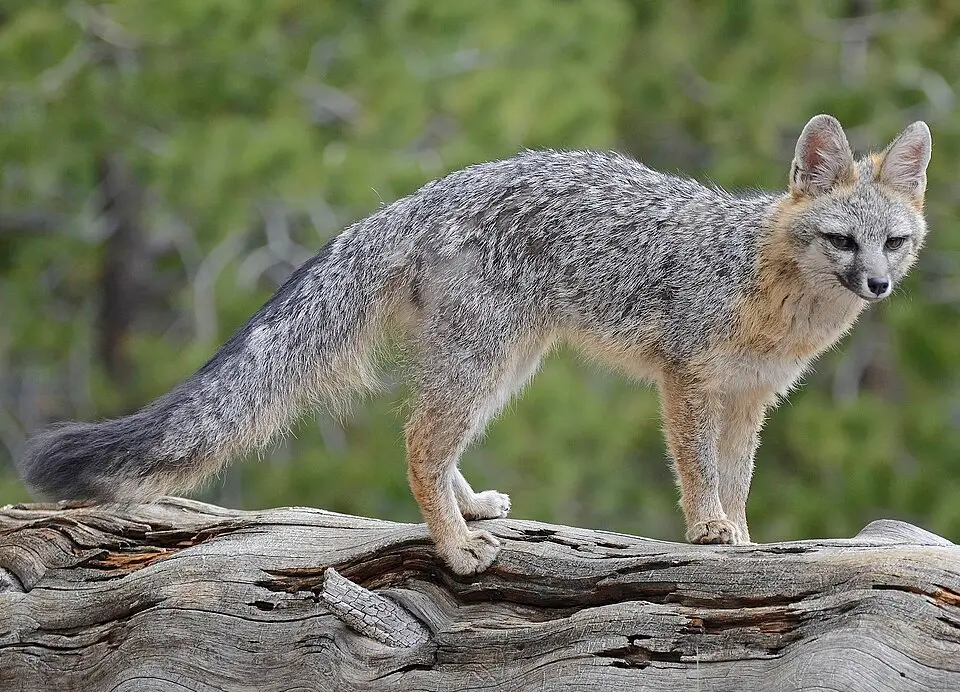
The gray fox belongs to the genus Urocyon, which is considered one of the most ancient lineages within the family Canidae. The scientific name cinereoargenteus translates roughly to "ashen silver," a fitting description of the animal's distinctive coat. The gray fox is often distinguished by a grizzled, salt-and-pepper gray coat along its back and sides, paired with warm rufous or reddish-brown tones along the neck, sides of the chest, and legs. The belly is typically pale or white, while a bold black stripe runs along the top of the tail, ending in a black tip — a key field mark that helps differentiate the gray fox from the red fox, which has a white-tipped tail.
The face of the gray fox is equally distinctive, featuring a dark muzzle, a rusty-orange band running beneath each eye, and alert, amber-colored eyes that reflect light brilliantly in the dark — an adaptation well-suited to its largely crepuscular and nocturnal lifestyle. The ears are prominent and upright, contributing to the animal's sharp sense of hearing.
In terms of body size, gray foxes are medium-sized carnivores, generally smaller and more compact than coyotes but similar in overall build to the red fox. Their bodies are low-slung and muscular, which, combined with their semi-retractable, curved claws, makes them well-adapted for scrambling through dense brush and ascending tree trunks with surprising speed. This tree-climbing ability is virtually unique among North American canids and has been documented extensively by field researchers.
Gray foxes are omnivores with a broadly opportunistic diet. Depending on the season and local availability, their meals may include small mammals such as cottontail rabbits and mice, birds and their eggs, insects, carrion, and a wide variety of plant matter including berries, fruit, acorns, and corn. This dietary flexibility is a key factor in the species' ecological resilience and wide distribution.
Breeding typically takes place in late winter, with litters of two to seven pups born in early spring. The family unit remains together through the summer as the young foxes learn essential survival skills, before dispersing in the fall. Gray foxes are generally solitary outside of the breeding season and maintain overlapping home ranges that they mark with scent.
The gray fox is primarily nocturnal, though it is not uncommon to observe individuals moving during the hours around dawn and dusk. They communicate through a range of vocalizations, including barks, yips, and a distinctive raspy scream that can startle those who encounter it for the first time in the field.
Habitat & Range
The gray fox enjoys one of the broadest geographic distributions of any North American canid. Its range extends from southern Canada through the continental United States, Mexico, Central America, and into the northern portions of South America. Within the United States, the species is found across most of the contiguous states, with the notable exception of portions of the northern Great Plains and the Rocky Mountain region, where the red fox tends to dominate.
The species demonstrates a strong preference for mixed woodland and brushland habitats, particularly areas that feature a dense understory, rocky outcroppings, and a mosaic of forest patches interspersed with open areas. Unlike the red fox, which tends to favor open farmland and suburban margins, the gray fox is more closely tied to wooded cover and is rarely found far from brush or trees.
In Texas, the gray fox finds an exceptionally hospitable environment. The state's remarkable ecological diversity — encompassing the lush Piney Woods, the Post Oak Savanna, the Edwards Plateau, the Rolling Plains, and the Tamaulipan thornscrub of South Texas — provides a wide array of suitable habitats. The dense mesquite and cedar brush of central and south Texas are particularly favored, offering both excellent cover and abundant prey. The gray fox is also commonly encountered along wooded creek bottoms and river drainages, where the combination of water, food, and thick vegetation creates ideal conditions.
Texas borders Mexico along the Rio Grande, a natural corridor that has historically facilitated the movement of wildlife across the region, and the gray fox is no exception. The species moves fluidly across this landscape, and its populations in Texas are part of a much larger, interconnected population that spans both sides of the border.
Hunting Information
The gray fox has a long tradition as a quarry species among hunters in the United States, valued both for its pelt and as a challenging target for predator hunters and trappers. Hunting gray fox requires patience, skill, and a thorough understanding of the animal's behavior — qualities that make pursuing this species a rewarding experience for sportsmen at all skill levels.
Gray fox hunting is commonly conducted using electronic or mouth-blown calls that mimic the distress cries of prey animals such as rabbits or mice. Because gray foxes rely heavily on their hearing and their cautious, secretive nature, calling setups in dense brush or along woodland edges tend to be most productive. Night hunting with lights is a popular and effective method in many states, taking advantage of the fox's largely nocturnal activity patterns.
Trapping is another traditional and widely practiced method of pursuing gray fox, with foothold traps and cage traps both used effectively. Trappers typically focus their sets along travel corridors, near den sites, and at natural pinch points in the landscape such as fence crossings and creek banks.
In Texas, the gray fox is managed under the jurisdiction of the Texas Parks and Wildlife Department (TPWD). Hunters and trappers interested in pursuing gray fox in the state should consult the most current TPWD regulations and season information directly through the TPWD website at tpwd.texas.gov. Regulations, license requirements, and season structures can change from year to year, and it is always the responsibility of the individual hunter or trapper to ensure full compliance with all applicable state and local laws before taking to the field.
Texas is home to a robust and enthusiastic community of predator hunters and trappers, and the gray fox is a respected and sought-after species within that community. The state's vast acreage of private and public land, combined with healthy fox populations across much of the landscape, provides outstanding opportunities for those interested in pursuing this species.
Conservation
The gray fox is currently listed as a species of Least Concern by wildlife conservation authorities, reflecting the fact that its populations remain healthy and widespread across its native range. The species' adaptability — its broad diet, tolerance for a range of habitat types, and reproductive capacity — has allowed it to persist even as landscapes across North America have been dramatically altered by agriculture, urbanization, and development.
That said, gray fox populations can be locally affected by several factors, including habitat loss and fragmentation, disease (particularly mange and canine distemper), vehicle collisions, and competition with coyotes, which have expanded their range significantly over the past century and may displace gray foxes in some areas. In general, however, the gray fox demonstrates a resilience that has served it well across thousands of years of coexistence with changing environments and human activity.
Conservation efforts that benefit the gray fox include the preservation and restoration of woodland and brushland habitats, responsible management of predator populations, and the maintenance of wildlife corridors that allow animals to move freely across fragmented landscapes. In Texas, the TPWD plays a central role in monitoring wildlife populations and establishing science-based regulations that support healthy, sustainable wildlife communities across the state.
Hunters and trappers also play an important role in the conservation equation. Through license fees, excise taxes on equipment, and active participation in wildlife monitoring programs, sportsmen contribute meaningfully to the funding and data collection that supports gray fox conservation and management. This partnership between the sporting community and wildlife agencies has been a cornerstone of American wildlife conservation for well over a century.
The gray fox, with its ancient lineage, remarkable adaptations, and enduring presence across the North American landscape, stands as a testament to the resilience of wild nature. Whether encountered on a quiet morning walk through the Texas Hill Country, caught in the beam of a spotlight during a predator hunting outing, or observed scaling a live oak tree in the fading light of evening, this extraordinary canid never fails to inspire a sense of wonder in those fortunate enough to witness it.