Overview
Few animals capture the imagination of wildlife enthusiasts and hunters quite like the elk. Known scientifically as Cervus canadensis, the elk is one of the largest members of the deer family, Cervidae, and stands as one of the most iconic large mammals in North America. With its imposing antlers, powerful build, and haunting bugle call echoing across mountain meadows and forested valleys, the elk has earned a revered place in both natural history and hunting tradition alike.
From the high alpine meadows of the Rocky Mountains to the river bottoms of the Southwest, elk have adapted to a wide variety of landscapes and climates. Their presence signals healthy, functioning ecosystems, and their management represents one of the great conservation success stories of the 20th and 21st centuries. For hunters, elk represent the ultimate pursuit — a challenging, physically demanding, and deeply rewarding adventure that draws thousands of participants to the field each year. For wildlife watchers and naturalists, they offer a spectacular window into the natural world.
This article explores the biology, habitat, hunting traditions, and conservation status of the elk, with a particular look at what hunters and wildlife enthusiasts in Texas should know about this extraordinary animal.
Biological Traits
The elk, Cervus canadensis, belongs to the order Artiodactyla and the family Cervidae, making it a close relative of white-tailed deer, mule deer, moose, and caribou. It is sometimes referred to as "wapiti," a Shawnee word meaning "white rump," which remains a common alternative name used in scientific and conservation circles around the world.
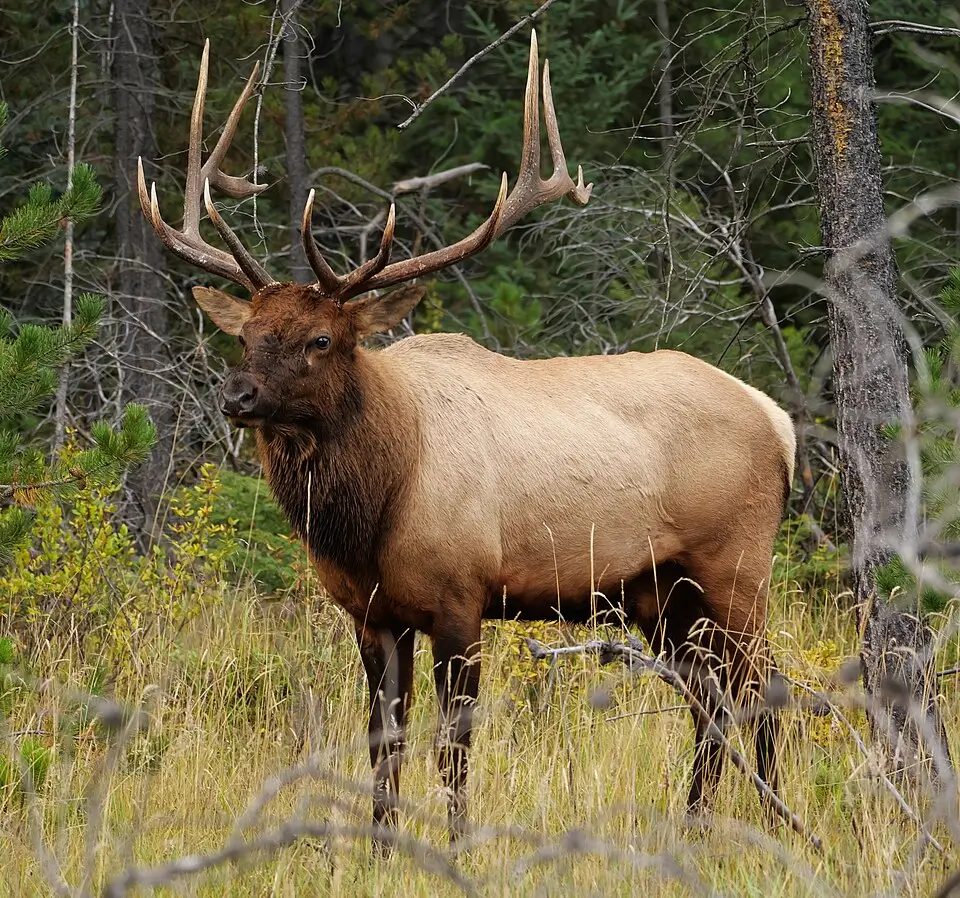
Elk are among the largest terrestrial mammals in North America. Bull elk — the males — are considerably larger than cows, the females. Bulls can weigh anywhere from several hundred to well over a thousand pounds, depending on age, genetics, and habitat quality. Their most distinguishing feature is their antlers, which are grown and shed annually. These impressive structures, composed of bone, can grow at remarkable rates during the summer months and may span several feet in width on a mature bull. The antlers are used primarily during the rut — the autumn breeding season — when bulls spar with rival males and bugle loudly to attract cows and establish dominance.
Cows are significantly smaller and do not grow antlers. They are the primary caregivers for calves, which are typically born in late spring or early summer. Calves are born spotted, a trait that helps camouflage them in dappled forest light during their most vulnerable early weeks of life. The spots fade as they mature through their first summer.
Elk are highly social animals. Cows and calves typically form large herds, often numbering in the dozens or even hundreds during certain times of year. Bulls tend to be more solitary outside of the rut, though younger bulls may form loosely associated bachelor groups. During the rut, which generally occurs in the fall, the behavior of bulls becomes dramatic and intense. The iconic bugling of bull elk — a multi-toned, rising and falling call — is one of nature's most thrilling sounds and a hallmark of the autumn wilderness experience.
Elk are grazers and browsers, meaning they consume a wide variety of plant material. Grasses, sedges, forbs, and shrubs all make up their diet depending on season and availability. Their grazing habits can shape vegetation communities in significant ways, and their presence is often an indicator of diverse, productive landscapes.
Like many large ungulates, elk have keen senses of smell, hearing, and vision, making them challenging game animals and fascinating subjects of wildlife study.
Habitat & Range
Elk are highly adaptable animals, capable of thriving in a broad range of environments. Historically, elk ranged across much of North America, from the Pacific coast to the Atlantic seaboard, and from Canada deep into Mexico. However, like many large mammals, their range contracted significantly following European settlement, due to habitat loss and unregulated hunting.
Today, elk are most commonly associated with the western United States, where large populations thrive in states such as Colorado, Wyoming, Montana, Idaho, Oregon, Washington, and New Mexico. They are also found in parts of Canada and have been successfully reintroduced in several eastern states where they once roamed.
Elk favor a mosaic of habitats that provide both open areas for grazing and forested areas for cover. High mountain meadows, aspen groves, conifer forests, river valleys, and grassland edges are all classic elk habitat types. Elevation is not a limiting factor — elk are equally at home in lowland river systems as they are in high alpine terrain, migrating seasonally between summer and winter ranges.
In Texas, elk occupy a more limited but historically significant range. The Trans-Pecos region of West Texas — characterized by rugged mountains, canyon country, and high desert grasslands — supports free-ranging elk populations. The Guadalupe Mountains and surrounding areas provide suitable terrain and forage for elk in this part of the state. Texas also has a significant number of elk on private ranches, where the species is managed both for wildlife viewing and hunting purposes.
The diverse Texas landscape, while very different from the high Rockies, provides sufficient resources for elk in appropriate areas. The wide open spaces, sparse human population density, and varied topography of West Texas make it a unique and underappreciated setting for elk country.
Hunting Information
Elk hunting is widely regarded as one of the most challenging and rewarding pursuits in North American hunting culture. The physical demands of elk country — steep terrain, high elevation, and the sheer size and wariness of the animals — make a successful elk hunt a true accomplishment. The tradition of elk hunting has deep roots in Western American culture, connecting generations of hunters to the land and to the wildlife management system that has helped sustain elk populations for over a century.
Elk can be pursued using a variety of methods. Rifle hunting, archery, and muzzleloader hunting are all common approaches, and each offers a unique set of challenges and rewards. Calling elk during the rut is a particularly exciting technique — hunters use cow calls and bull bugles to attract animals within range, creating heart-pounding encounters in the field.
In Texas, elk hunting opportunities exist on both public and private land, though the nature of those opportunities can vary significantly. The Texas Parks and Wildlife Department (TPWD) is the regulatory authority for all hunting activity in the state. As Texas is a state with a large proportion of privately owned land, many elk hunting opportunities are found through ranches and outfitters in the Trans-Pecos and surrounding regions.
Prospective elk hunters in Texas should consult the Texas Parks and Wildlife Department directly for the most current and accurate information regarding seasons, licensing requirements, and regulations. Hunting regulations can change from year to year, and it is the responsibility of every hunter to be fully informed before heading afield. TPWD provides regularly updated season date information and licensing guidance through their official channels. For the 2026–2027 hunting seasons, hunters should reference the TPWD's published season dates and consult official resources for any applicable licensing requirements.
Regardless of where you pursue elk, preparation is essential. Physical conditioning, scouting, understanding elk behavior, and proficiency with your chosen weapon are all critical elements of a successful hunt. Elk hunting is as much a wilderness experience as it is a harvest opportunity, and the memories made in elk country tend to last a lifetime.
Conservation
The story of elk conservation in North America is a remarkable tale of restoration and responsible wildlife management. By the late 1800s and early 1900s, elk populations had declined dramatically across their historic range due to unregulated hunting and widespread habitat conversion. Concerned citizens, hunters, and early wildlife managers recognized the peril and took action.
Through the establishment of regulated hunting seasons, wildlife refuges, and active reintroduction programs, elk populations have rebounded substantially across much of their range. Organizations such as the Rocky Mountain Elk Foundation have played a significant role in habitat conservation, land access, and public education. Today, elk are not considered a threatened species across most of their range, a testament to the power of science-based wildlife management and the conservation model funded largely through hunting licenses and excise taxes on sporting goods.
In Texas, ongoing efforts by TPWD and private landowners continue to support the health and expansion of elk populations in suitable habitat. The unique partnership between private land stewardship and state wildlife management that characterizes Texas conservation provides a model for sustainable wildlife management.
Elk play an important ecological role wherever they are found. As large herbivores, they influence plant communities, create habitat features used by other species, and serve as prey for apex predators where those predators exist. Their presence enriches entire ecosystems, and their conservation benefits far more than just the elk themselves.