Overview
Few animals are as universally recognized across North America as the Eastern gray squirrel (Sciurus carolinensis). Whether darting across a city park, bounding through a hardwood forest, or raiding a backyard bird feeder with acrobatic determination, this nimble and resourceful creature has woven itself into the fabric of daily American life. Yet beneath its familiar, almost domestic appearance lies a genuinely fascinating wild animal — one with remarkable behavioral adaptations, impressive ecological significance, and a storied tradition as one of North America's most popular small game animals.
For hunters, naturalists, and outdoor enthusiasts alike, the Eastern gray squirrel represents something special. It is simultaneously accessible and challenging, common yet ecologically vital, and provides opportunities for people of all ages and experience levels to connect meaningfully with the natural world. In a state as vast and biologically diverse as Texas, the Eastern gray squirrel holds particular appeal — offering hunters and wildlife watchers a year-round reason to venture into the woods.
This guide takes a comprehensive look at the Eastern gray squirrel: its biology and physical characteristics, its preferred habitats and geographic range, its role in the ecosystem, hunting traditions and opportunities in Texas, and the conservation landscape that keeps this species thriving for generations to come.
Biological Traits
The Eastern gray squirrel belongs to the family Sciuridae, the large and diverse group of rodents that includes ground squirrels, chipmunks, marmots, and prairie dogs. Within this family, Sciurus carolinensis is a tree squirrel — perfectly built for a life lived in the canopy.
Physical Appearance
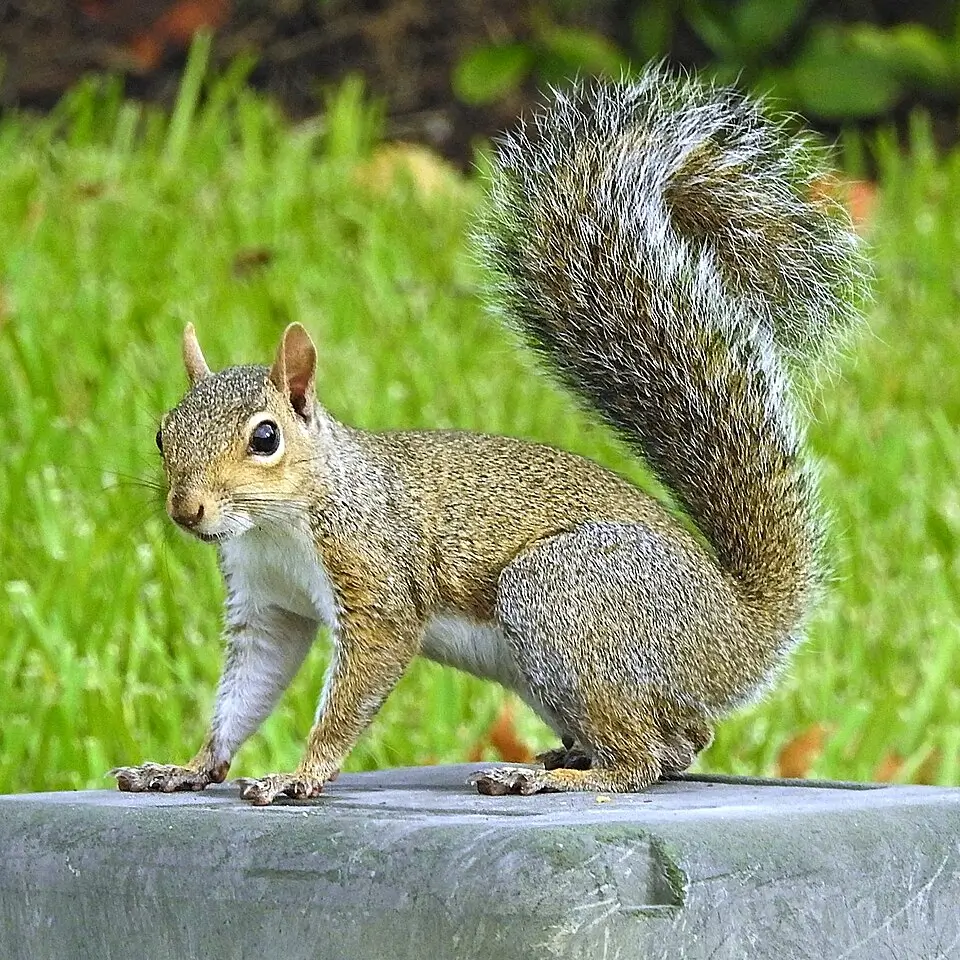
The Eastern gray squirrel is a medium-sized tree squirrel. Its most striking feature is its coat, which is predominantly salt-and-pepper gray across the back and sides, with a white or pale underside. The large, bushy tail — often described as one of the most iconic features of the species — is edged with white-tipped hairs that give it a frosted appearance. This tail serves multiple important functions: it acts as a counterbalance during aerial leaps between branches, as a weather shield during rain and cold, and as a communication tool when the squirrel flicks and waves it as a warning signal to others nearby.
Some individuals exhibit melanistic (black) or albino (white) color variations, particularly in certain urban populations, where genetic diversity and isolation can amplify unusual color traits. These color variants, while less common, are perfectly healthy members of the species.
Senses and Intelligence
The Eastern gray squirrel possesses highly developed senses that make it both a successful forager and a difficult quarry for hunters. Its large, dark eyes are positioned to provide a wide field of vision, helping it detect predators approaching from nearly any direction. Its hearing is acute, allowing it to pick up the snap of a twig or the rustling of leaves well before a threat comes into view. Its sense of smell is perhaps its most remarkable asset — the Eastern gray squirrel is capable of locating buried food caches beneath several inches of snow, using olfactory memory to find stores it may have hidden weeks or months earlier.
Squirrels are widely regarded as highly intelligent animals for their size. They practice what researchers call "deceptive caching" — pretending to bury a food item while actually hiding it elsewhere — apparently to confuse would-be thieves observing them. This behavior speaks to a level of cognitive flexibility that is impressive for a small rodent.
Diet and Foraging
The Eastern gray squirrel is primarily granivorous and frugivorous — it feeds heavily on nuts, seeds, and fruits. Acorns from oak trees are a cornerstone of its diet, along with hickory nuts, walnuts, beech nuts, and the seeds of various other trees. It also consumes fungi, berries, bird eggs, insects, and occasionally bark or plant buds when more preferred foods are scarce.
One of the species' most ecologically important behaviors is scatter hoarding. Rather than storing all its food in one central location, the Eastern gray squirrel buries individual nuts and seeds in dozens or even hundreds of small caches spread across its home range. This behavior, combined with the occasional forgotten cache, makes the Eastern gray squirrel an important agent of forest regeneration — effectively planting tree seeds across the landscape.
Reproduction and Life Cycle
Eastern gray squirrels typically breed twice per year, with peak breeding periods occurring in late winter (January through February) and again in midsummer (June through July). After a gestation period of roughly 44 days, females give birth to litters of two to four young. Newborns are entirely helpless — hairless, blind, and fully dependent on their mother for warmth and nutrition.
Young squirrels develop rapidly. By about five weeks of age, they begin to show fur and open their eyes. By eight to ten weeks, they begin venturing out of the nest and learning to forage. Juveniles typically become independent at around three months of age, though they may remain in close proximity to their mother's home range as they establish their own territories.
In the wild, Eastern gray squirrels typically live three to five years, though individuals in low-predation environments can survive considerably longer. Predators include red-tailed hawks, great horned owls, foxes, bobcats, and domestic cats and dogs in suburban areas.
Habitat & Range
The Eastern gray squirrel is native to the eastern and midwestern United States and southern Canada. Its natural range spans from the Atlantic Coast westward through the Great Plains states and southward into the Gulf Coast region, including Texas. The species thrives primarily in mature deciduous and mixed forests — environments rich in mast-producing trees like oaks, hickories, and pecans that can provide the caloric bounty squirrels need to survive winter.
In Texas, the Eastern gray squirrel is most commonly associated with the eastern and central portions of the state, where hardwood forests, river bottoms, and wooded creek drainages provide suitable habitat. The rolling hills of the Texas Hill Country, the dense bottomland forests of East Texas, and the wooded riparian corridors that snake through central and north-central Texas are all productive squirrel country.
Adaptability is one of the Eastern gray squirrel's defining traits. While it thrives in mature forest, it also does well in suburban parks, tree-lined neighborhoods, and fragmented woodland patches — anywhere that a sufficient density of nut-producing trees exists. This adaptability has allowed the species to maintain robust populations even as land use patterns shift across its range.
Hunting Information
Squirrel hunting holds a deep and respected tradition in American hunting culture, and the Eastern gray squirrel is at the center of that tradition. For many hunters — particularly in the South and Midwest — squirrel season marks their first experience in the woods with a firearm or bow. It is an ideal entry point for new hunters: licenses are generally accessible, equipment needs are modest, and the experience of sitting quietly in the woods, learning to read squirrel behavior and movement, builds fundamental woodsmanship skills that transfer to virtually every other form of hunting.
In Texas, squirrel hunting falls under the regulatory oversight of Texas Parks and Wildlife Department (TPWD). Hunters pursuing squirrels in the Lone Star State should consult the current TPWD Hunting Season Dates and regulations for up-to-date season information, as dates and specific rules can change from year to year. As with all hunting in Texas, compliance with current licensing requirements is essential. TPWD provides season information, licensing options, and regulatory updates through its official website, and hunters are encouraged to check those resources before heading into the field.
East Texas, with its abundant hardwood forests of post oak, water oak, and other mast-bearing species, is widely regarded as prime squirrel hunting territory within the state. River bottoms and creek drainages throughout central Texas also offer productive hunting. The peak of activity typically corresponds with the fall mast drop, when squirrels are highly visible and active as they move through the canopy and across the forest floor gathering and caching food.
Methods and Tactics
Eastern gray squirrels can be hunted with a variety of methods. Still hunting — moving slowly and quietly through the woods, pausing frequently to scan the canopy and listen for the sound of cutting squirrels — is a time-tested approach. Alternatively, hunters may choose to sit and wait near productive mast trees, allowing squirrel activity to develop naturally around them.
Small-caliber rimfire rifles, particularly the iconic .22 LR, are the most common choice for squirrel hunters. Shotguns are also popular, particularly in dense cover where shots may come quickly. Some hunters pursue squirrels with archery equipment, adding an extra layer of challenge to the experience.
Conservation
The Eastern gray squirrel is currently classified as a species of Least Concern by conservation authorities, reflecting its broad range, high adaptability, and robust population across most of its native habitat. Its ability to thrive in both wild forests and human-modified environments has insulated it from many of the pressures that threaten more specialized wildlife species.
That said, long-term forest health is intrinsically tied to squirrel population health. Habitat loss, particularly the clearing of mature hardwood forests, can reduce the food resources squirrels depend on. Responsible land stewardship — maintaining diverse, mature forest stands and protecting riparian corridors — supports not only squirrel populations but the broader web of wildlife that depends on those habitats.
In Texas, TPWD plays a central role in monitoring and managing small game species, including squirrels, as part of a comprehensive approach to wildlife conservation. Hunters, through license purchases and participation in harvest reporting programs, contribute directly to the funding and data collection that supports these conservation efforts.