Overview
Few birds capture the imagination of hunters and wildlife enthusiasts quite like the Common pheasant (Phasianus colchicus). With its spectacular plumage, explosive flush from cover, and deeply rooted place in the traditions of sport hunting across the globe, this remarkable bird stands as one of the most recognized and celebrated game birds on the planet. Whether you encounter a rooster bursting skyward from a hedgerow in the English countryside, a Kansas wheat field, or a Texas upland habitat, the sight and sound of a pheasant in flight is genuinely unforgettable.
The Common pheasant has one of the most remarkable distribution stories in the animal kingdom. Originally native to Asia, this bird has been deliberately introduced across vast regions of the world — from Europe and North America to parts of Australia and New Zealand — where it has adapted with impressive resilience. Its scientific name, Phasianus colchicus, traces back to the ancient world, derived from the Phasis River in the region of Colchis (modern-day Georgia), where Greek traders and travelers first encountered the bird and brought it westward. Today, the species belongs to the order Galliformes and the family Phasianidae, placing it alongside other celebrated game birds such as turkeys, quail, and grouse.
For hunters, wildlife watchers, and conservationists alike, the Common pheasant represents a fascinating intersection of natural history, ecological adaptation, and sporting tradition. This article takes a comprehensive look at the biology, habitat, hunting traditions, and conservation considerations surrounding this iconic bird.
Biological Traits
The Common pheasant is one of the most visually striking birds found in any upland habitat. The species displays strong sexual dimorphism, meaning males and females differ dramatically in appearance — a trait common among many members of the Phasianidae family.
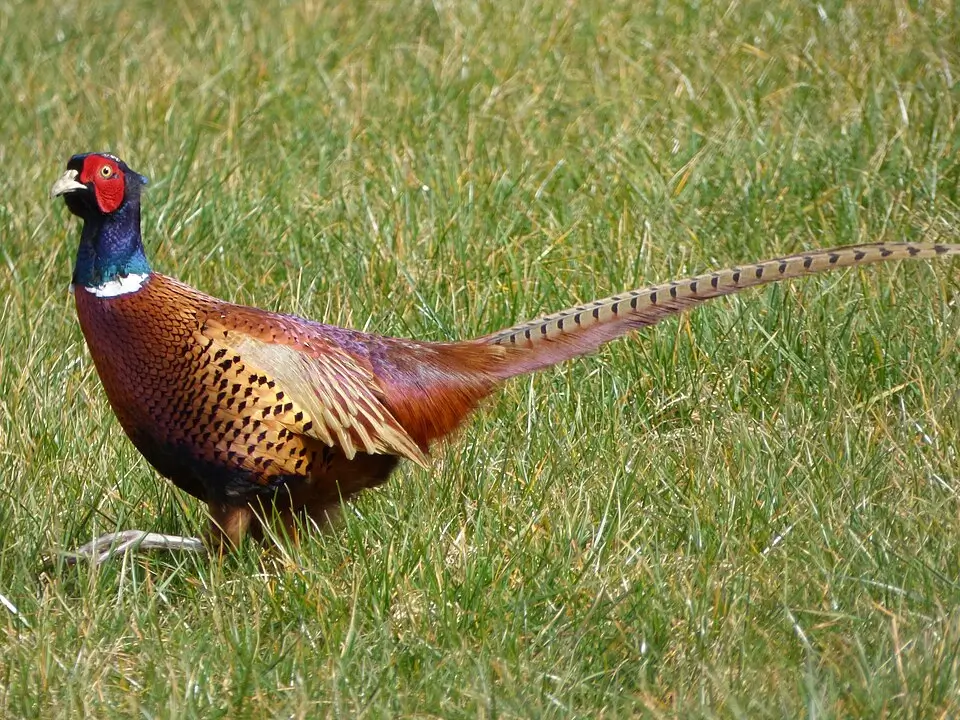
Male pheasants, known as roosters or cocks, are renowned for their breathtaking coloration. A typical rooster sports a rich copper and golden-brown body covered in intricate black and chestnut markings. The head is an iridescent dark green, often with a vivid red facial wattle and, in many subspecies, a bright white neck ring — the latter being especially prominent in birds descended from the Chinese ring-necked pheasant (Phasianus colchicus torquatus), which is the subspecies most widely introduced in North America. Long, barred tail feathers can account for a significant portion of the bird's total body length, giving the rooster an especially elegant and elongated silhouette in flight.
Female pheasants, known as hens, are considerably more understated in appearance — a fact of life that serves them well during nesting season. Hens are mottled in shades of brown, buff, and black, providing exceptional camouflage against leaf litter and dry grasses. This cryptic coloration allows them to sit tight on their nests with remarkable invisibility.
The Common pheasant is a relatively large bird, with roosters typically weighing more than hens. Both sexes walk and run with considerable agility, often preferring to escape on foot through dense vegetation before resorting to flight. When flushed, however, the pheasant is capable of a sudden and powerful burst of speed, beating its broad wings rapidly to gain altitude before gliding. This explosive flight response is part of what makes pheasant hunting such an exciting and challenging pursuit.
Like other gallinaceous birds, pheasants are omnivores. Their diet shifts with the seasons and varies according to habitat, but it generally includes seeds, grains, berries, insects, worms, and other small invertebrates. During the warmer months, protein-rich insects form an important part of the diet, particularly for growing chicks. In fall and winter, seeds and agricultural grains become central food sources.
Breeding behavior in the Common pheasant is polygynous, meaning a single rooster may mate with multiple hens during the spring breeding season. Roosters establish territories and advertise their presence through a loud, distinctive crow and vigorous wing-drumming displays. Hens build shallow ground nests, typically concealed in tall grasses or brushy cover, where they incubate clutches that can range from roughly six to fifteen or more eggs. The hen alone incubates the eggs and raises the chicks, which are precocial — meaning they are mobile and capable of feeding themselves very shortly after hatching.
Pheasants are not strongly migratory birds. They are largely resident within their established territories, though they may shift locations seasonally in response to changes in food availability and weather conditions.
Habitat & Range
The Common pheasant is native to a wide swath of Asia, ranging from the Caucasus region and parts of Central Asia eastward through China, Korea, and into the Russian Far East. Over centuries of human activity — through deliberate releases for sport hunting as well as incidental escapes from captivity — the bird has been successfully established across much of Europe, North America, and several other regions worldwide.
In its native and introduced range alike, the Common pheasant thrives in a mosaic of open and semi-open habitats. It favors agricultural landscapes interspersed with hedgerows, brushy margins, woodlot edges, wetland borders, and grassland cover. This adaptability to human-altered environments is a key reason why pheasant populations have been sustained and even thrived in areas where other ground-nesting birds have struggled.
The bird tends to avoid densely forested areas and extremely open terrain without adequate cover. It relies on a combination of open ground for foraging and dense vegetation for escape cover, nesting, and roosting. Wetland edges with cattail marshes or tall reed beds are particularly favored habitat components in many North American regions.
In the United States, pheasant populations are most robust across the agricultural heartland of the Great Plains and Midwest, particularly in states like South Dakota, Kansas, Nebraska, Iowa, and Minnesota, where vast grain fields paired with native and planted grassland cover create ideal conditions. The species has also been introduced and managed in many other states, including parts of the Pacific Northwest and intermountain West.
In Texas, the Common pheasant occupies the High Plains region of the Panhandle, where the flat terrain, grain agriculture, and grassland cover provide suitable conditions. The pheasant's presence in Texas is more localized compared to its stronghold states further north, but the species has a recognized place in the state's upland game bird community.
Hunting Information
Pheasant hunting is one of the most storied and beloved traditions in North American hunting culture. The pursuit of roosters with a well-trained pointing or flushing dog across frosty fall fields is a ritual that draws hundreds of thousands of hunters to the uplands every year. The sport demands shooting skill, patience, good footwork, and often the companionship of a capable bird dog — making it as much about the experience as the harvest.
In Texas, pheasant hunting is concentrated in the Panhandle region, where the birds are present in agricultural and grassland habitats. The Texas Parks and Wildlife Department (TPWD) oversees hunting regulations and season management for the state. Hunters interested in pursuing pheasants in Texas should consult the current TPWD guidelines for the most up-to-date information on season dates, bag limits, licensing requirements, and legal shooting hours. As noted in the TPWD's current hunting resources, specific season dates for the 2026–2027 hunting season are available through their official channels.
Pheasant hunting in many regions is conducted on both public and private lands, and Texas hunters will find that access to quality private land with good habitat and dog work is often central to a successful hunt. Hunting preserves, which release pheasants for sport shooting in controlled settings, also offer excellent opportunities for new hunters to experience the sport and develop their skills.
The primary firearm used in pheasant hunting is a 12-gauge or 20-gauge shotgun, though other gauges are used. Shot selection, choke selection, and shooting technique all play important roles in successful and ethical harvest.
Conservation
The Common pheasant enjoys a stable global status, and as a managed game bird, it benefits from significant conservation investment by wildlife agencies, hunting organizations, and private landowners. Organizations dedicated to upland bird habitat — such as Pheasants Forever in North America — have channeled enormous resources into habitat restoration and enhancement projects that benefit not only pheasants but countless other species of wildlife that rely on grassland, wetland, and agricultural edge habitats.
In Texas, the Texas Parks and Wildlife Department plays an active role in managing and monitoring upland game bird populations, including pheasants in the Panhandle. Habitat conservation, regulated hunting seasons, and ongoing population research are all components of responsible management.
The relationship between hunting and conservation is well established. License fees, excise taxes on firearms and ammunition through the Federal Aid in Wildlife Restoration Act (Pittman-Robertson Act), and the efforts of conservation-focused hunting organizations collectively fund a significant portion of wildlife management and habitat work across the country.