Overview
Few deer species command attention quite like the chital, known scientifically as Axis axis. With its striking spotted coat, elegant build, and sociable nature, the chital stands as one of the most visually distinctive members of the deer family Cervidae. Native to the Indian subcontinent, this remarkable animal has captured the imagination of wildlife enthusiasts, naturalists, and hunters across the globe. Over the past century, chital populations have been successfully introduced to several continents, and nowhere in North America have they found a more welcoming home than in the sprawling landscapes of Texas, where free-ranging and ranch populations have flourished to impressive numbers.
The chital goes by many names — axis deer, spotted deer, and chital deer among the most common. Regardless of what you call it, this species represents a fascinating intersection of Old World wildlife heritage and New World hunting tradition. Whether you are a seasoned hunter pursuing trophy-class bucks, a wildlife photographer seeking that perfect shot, or simply a nature lover curious about one of nature's most beautiful ungulates, the chital has something extraordinary to offer.
Biological Traits
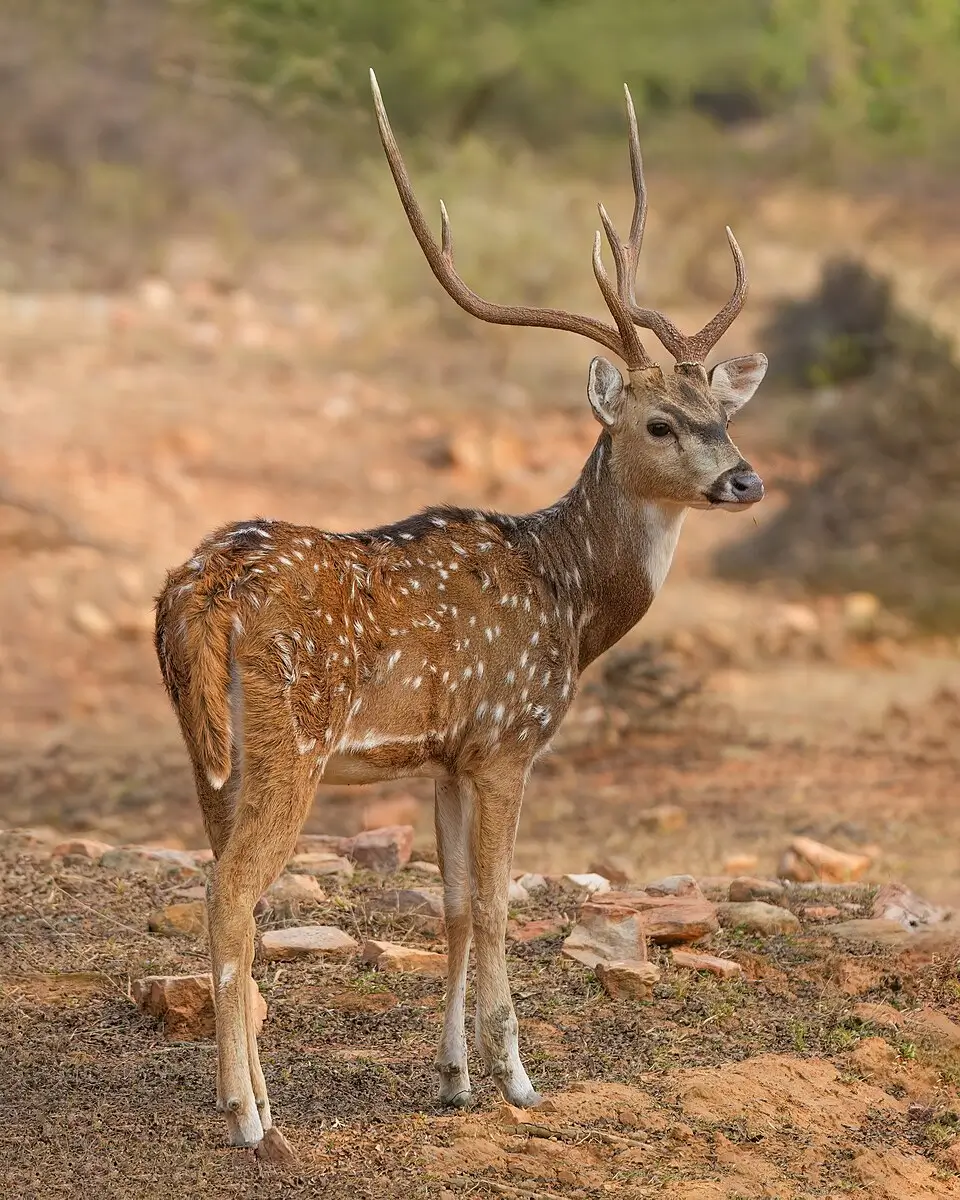
The chital is a medium-sized deer that exhibits several physical characteristics that set it apart from other members of the family Cervidae. Perhaps the most immediately recognizable feature is its coat: a rich, warm rufous-brown or tawny background overlaid with distinctive white spots arranged in irregular rows along the flanks and back. Unlike many other spotted deer species, the chital retains this spotted pattern throughout its entire life — it does not shed the spots with age as some other cervids do in adulthood. This persistent spotting makes the chital uniquely identifiable at virtually any age.
Males, known as stags or bucks, are considerably larger than females, known as does or hinds. Stags carry elegant, lyre-shaped antlers that typically feature three tines: a brow tine, a bez tine, and a main beam that sweeps upward and back before curving forward. These antlers can grow to impressive lengths, and trophy-class animals are highly sought after in hunting circles. One of the biologically fascinating aspects of chital antler growth is that, unlike many temperate deer species, chital bucks do not follow a strictly seasonal antler cycle synchronized across the entire population. Individual males shed and regrow antlers at varying times throughout the year, meaning that within any given herd, you may observe bucks in velvet, bucks with hard antlers, and bucks that have recently shed — all at the same time.
Chital are highly social animals, typically found in mixed herds composed of does, fawns, and younger males, while older, dominant stags tend to be more solitary or form smaller bachelor groups outside of the breeding season. Vocalizations play an important role in communication, and the loud, bark-like alarm call of the chital is a well-known sound in its native range, often alerting other species to the presence of predators.
Breeding behavior in chital is also notably different from many temperate deer. Because individual animals cycle through reproductive condition at different times, breeding — known as the rut — can occur year-round across a population, though peaks may develop under certain environmental conditions. Does typically give birth to a single fawn after a gestation period of approximately seven months, and fawns are born with the same spotted pattern that adults retain.
The chital's diet is broadly herbivorous, consisting primarily of grasses, forbs, and browse. They are highly adaptable grazers and browsers, capable of exploiting a wide range of vegetation types, which has contributed significantly to their success as an introduced species in Texas and other regions outside their native range.
Habitat & Range
In their native range, chital are found across a broad swath of the Indian subcontinent, including India, Nepal, Sri Lanka, and Bangladesh. They thrive in a variety of environments but show a strong preference for areas that combine open grasslands or meadows with access to forest cover and reliable water sources. In India, they are commonly associated with the edges of sal and teak forests, as well as riparian corridors and parkland-style habitats where grasses and forbs are abundant.
Chital are not adapted to extreme cold and generally perform best in subtropical and tropical climates. This climatic preference has made certain parts of the world — particularly areas with mild winters and abundant forage — ideal candidates for introduced populations.
In the United States, Texas has emerged as the primary stronghold for chital outside their native range. The state's vast acreage of private ranch land, warm climate, and diverse vegetation communities have proven exceptionally hospitable. The Texas Hill Country, with its rocky terrain, cedar and oak woodlands, and network of spring-fed streams, provides conditions that chital find highly suitable. Free-ranging populations exist in several Texas counties, and the species has also been widely introduced onto high-fenced game ranches across the state. Texas is believed to host the largest population of chital outside of Asia, a testament to the adaptability of the species and the productivity of Texas landscapes.
Beyond Texas, smaller introduced populations exist in Hawaii, Australia, Croatia, and Argentina, among other locations. Each of these populations reflects the chital's remarkable capacity to establish itself in new environments when conditions are favorable.
Hunting Information
The chital is widely regarded as one of the premier exotic game animals available to hunters in Texas. Its combination of striking beauty, challenging senses, and the quality of its venison make it a top choice for hunters seeking an exotic hunting experience without leaving North America.
In Texas, chital hunting is primarily conducted on private ranch land, both on high-fenced properties and on open-range ranches where free-roaming populations have established themselves. Because chital are classified as exotic, non-native wildlife in Texas, they are not subject to the same regulatory framework that governs native white-tailed deer hunting. Hunters interested in pursuing chital in Texas should consult the Texas Parks and Wildlife Department (TPWD) for the most current information regarding licensing, seasons, and any applicable regulations, as requirements can vary depending on the specific circumstances of the hunt and the property involved.
The TPWD oversees hunting regulations across the state and provides up-to-date guidance on season dates and licensing requirements through their official channels. As noted in TPWD's current hunting resources, harvest reporting is mandatory for certain species and situations in Texas, and hunters are encouraged to stay informed about all applicable rules before heading afield.
From a hunting technique standpoint, chital present a genuine challenge. Their eyesight is sharp, their hearing is acute, and their social structure means that multiple sets of eyes and ears are almost always scanning the environment. Still-hunting, spot-and-stalk, and hunting from blinds near water sources or feeding areas are all productive approaches. Patience and scent control are valuable assets when pursuing chital, as with most deer species.
The venison produced by chital is widely praised for its mild flavor, fine texture, and relatively low fat content. Many hunters and culinary enthusiasts rank chital venison among the finest wild game meats available, which adds yet another dimension to the appeal of pursuing this species.
Conservation
On a global scale, the chital is currently classified by the International Union for Conservation of Nature (IUCN) as a species of Least Concern, reflecting the overall stability and abundance of populations within its native range. In India in particular, chital populations benefit from a network of protected areas, national parks, and wildlife reserves where the species occurs in substantial numbers.
In Texas and other areas where chital exist as an introduced exotic species, conservation considerations take on a different character. Introduced ungulate populations require careful management to ensure that their presence does not negatively impact native vegetation communities or compete excessively with native wildlife species. Responsible ranch management, thoughtful harvest strategies, and ongoing population monitoring all contribute to maintaining healthy, sustainable chital populations in Texas.
The popularity of chital as a hunting species in Texas actually plays a meaningful role in conservation outcomes, as the economic value generated by exotic game hunting provides landowners with strong incentives to maintain and manage wild spaces rather than converting them to other land uses. This model of conservation-through-utilization has proven effective in supporting biodiversity across many Texas landscapes.
Conclusion
The chital is a deer of remarkable beauty, biological interest, and sporting value. From its native forests of the Indian subcontinent to the sun-warmed ranch lands of Texas, this spotted deer has demonstrated an extraordinary capacity to thrive and captivate. Whether encountered in the wild or pursued as a game animal, the chital represents one of the natural world's most compelling success stories — an animal whose elegance and adaptability have earned it admirers on every continent it calls home.