Overview
Few animals embody the spirit of American wildlife quite like the wild turkey. Bold, intelligent, and breathtakingly beautiful in its own rugged way, Meleagris gallopavo has captivated hunters, naturalists, and casual observers for centuries. Long before European settlers arrived on North American shores, wild turkeys were a cornerstone of Indigenous cultures, providing food, tools, and ceremonial significance. Today, the wild turkey stands as one of the greatest conservation success stories in North American wildlife management — a species that was once pushed to the brink of extinction and has since rebounded magnificently to populate forests, grasslands, and river bottoms across the continent.
For hunters, the wild turkey represents a uniquely challenging and deeply rewarding pursuit. It demands patience, sharp woodsmanship, and an understanding of animal behavior that few other pursuits require. For wildlife enthusiasts, it offers a window into the natural rhythms of North America's diverse ecosystems. Whether you're a seasoned turkey hunter preparing for a spring season or simply a curious nature lover, understanding the biology, habitat, and cultural significance of the wild turkey enriches every encounter with this remarkable bird.
South Dakota, a state celebrated for its extraordinary hunting heritage and sweeping landscapes — from rolling grasslands to dense river bottom forests — provides a fitting backdrop for exploring the world of the wild turkey. The state's diverse terrain, including the Black Hills, the Missouri River corridor, and the expansive Great Plains, supports healthy wild turkey populations and offers hunters a variety of outdoor experiences unique to the Northern Great Plains.
Biological Traits
The wild turkey, Meleagris gallopavo, is the largest native game bird in North America and one of only two domesticated birds originating on the continent, the other being the Muscovy duck. It belongs to the family Phasianidae, placing it in the same broad taxonomic family as pheasants, grouse, and peacocks.
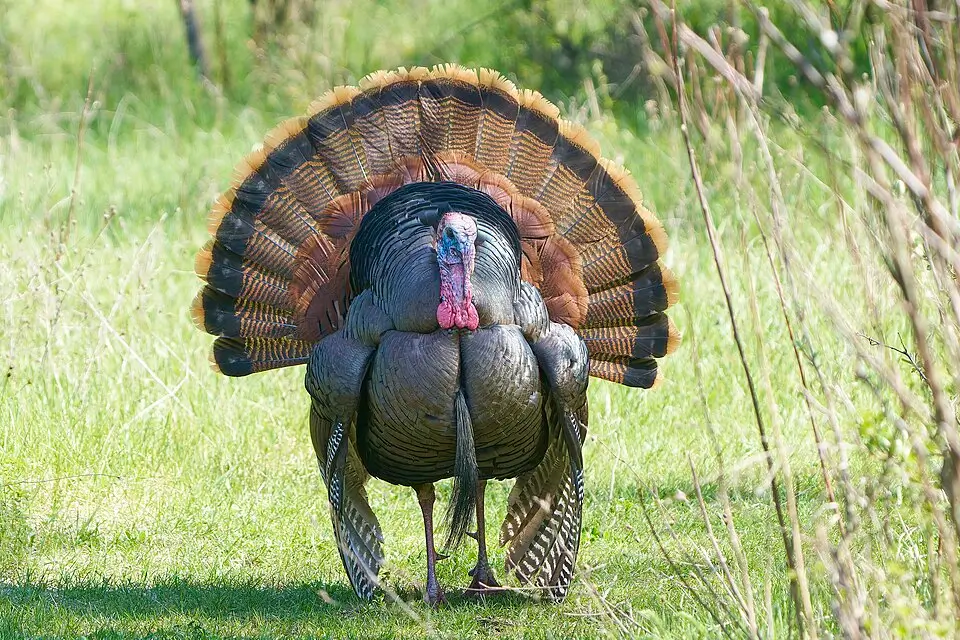
Adult male wild turkeys, known as toms or gobblers, are among the most visually striking birds in North America. They are large, heavily built birds with iridescent bronze-green plumage that shimmers magnificently in sunlight. Their bare heads and necks can display a vivid range of colors — red, blue, and white — particularly during the breeding season when excitement and hormonal changes cause these colors to intensify. One of the tom's most iconic features is the beard, a cluster of modified, hair-like feathers projecting from the chest that can grow quite long in mature birds. Toms also possess sharp, curved spurs on their legs, which are used during combat with rival males.
Female wild turkeys, called hens, are considerably smaller and less colorful than toms, displaying a more subdued brown and buff-toned plumage that provides excellent camouflage in woodland and grassland settings. This cryptic coloration is essential for nesting hens, who must remain concealed while incubating their clutches.
Young turkeys are called poults, and juvenile males are referred to as jakes. Jakes can be distinguished from fully mature toms by their shorter beards and less developed spurs, though they share the general body structure of adult males.
The wild turkey is a highly social bird for much of the year. Flocks tend to be segregated by sex and age outside of the breeding season, with hens and poults forming family groups, while toms often travel in bachelor flocks. Come spring, the social dynamic transforms dramatically as breeding season — known among hunters as the rut — brings toms into open competition for the attention of hens.
The gobble is arguably the most thrilling sound in the North American woods. This loud, resonant vocalization, produced by toms primarily in the spring, can carry for over a mile in favorable conditions. Toms also produce a wide variety of other calls including clucks, purrs, yelps, and the distinctive drumming and spitting sounds made during strutting displays. Hens are equally vocal, communicating with their poults and with potential mates through a rich vocabulary of calls — knowledge that experienced turkey hunters invest significant time learning to replicate.
Wild turkeys are omnivorous, feeding on a wide variety of foods depending on the season and what's available. Their diet commonly includes acorns, seeds, berries, insects, small reptiles, and agricultural grains. Their powerful feet are well suited to scratching through leaf litter in search of food, and their keen eyesight — often cited as among the sharpest of any North American game bird — makes them highly alert to danger.
There are six recognized subspecies of Meleagris gallopavo in North America, each occupying distinct geographic ranges. The Eastern wild turkey (M. g. silvestris) is the most numerous and widely distributed. The Merriam's wild turkey (M. g. merriami) is the subspecies most commonly associated with the Rocky Mountain West and the Great Plains states, including South Dakota, where it thrives in Ponderosa pine forests and river bottom habitats.
Habitat & Range
The wild turkey is a highly adaptable species capable of thriving in a wide variety of habitats, provided certain basic needs are met: accessible food sources, adequate roosting trees, and reliable water. Historically, wild turkeys were found throughout much of North America, from Mexico northward through the eastern forests and into portions of the Great Plains.
Today, following successful reintroduction programs across the country, wild turkeys can be found in every state in the continental United States and in parts of Canada and Mexico. Their range expansion over the last several decades is a direct result of coordinated conservation and wildlife management efforts.
In South Dakota, wild turkeys occupy a range of landscapes that speaks to the species' remarkable adaptability. The Black Hills region in the western part of the state provides classic Merriam's turkey habitat — open Ponderosa pine forests interspersed with meadows, creek drainages, and rocky terrain. The Missouri River breaks and river bottom forests throughout central and eastern South Dakota offer a mix of cottonwood, oak, and shrubby undergrowth that turkeys find highly attractive for both foraging and roosting. Even the agricultural landscapes of eastern South Dakota, with their grain fields and shelterbelts, can support turkey populations where adequate woodland cover is present nearby.
Turkeys are tree-roosting birds, spending their nights elevated in large trees to avoid ground-based predators. Access to mature trees for roosting is a critical habitat requirement, and riparian corridors along rivers and streams often provide this need within otherwise open landscapes.
Hunting Information
Wild turkey hunting is a deeply rooted tradition in American outdoor culture, and South Dakota provides hunters with access to excellent wild turkey populations across a diverse range of public and private lands. The state's reputation for world-class hunting — most famously for ring-necked pheasants, with an average annual harvest of 1.2 million roosters over the past decade — extends naturally to its wild turkey opportunities. South Dakota Game, Fish, and Parks (GFP) manages turkey hunting as part of a broader portfolio of exceptional wildlife experiences set against the state's forests, river bottoms, grasslands, wetlands, and the vast Missouri River reservoir system.
For those pursuing Merriam's wild turkeys specifically, South Dakota offers some of the finest opportunities in the country. Spring turkey hunting, which coincides with the breeding season, is widely considered the most exciting and traditional form of the pursuit. Hunters use turkey calls — mouth diaphragms, box calls, slate calls, and others — to imitate hen vocalizations in an attempt to draw responding toms into range. The visual and auditory drama of a fully strutting gobbler approaching a call is an experience that hunters consistently rank among the most thrilling in all of North American hunting.
Fall turkey hunting is also available in many areas and offers a different style of pursuit, often involving scouting feeding areas and travel corridors rather than the call-and-response dynamic of spring.
Hunters interested in pursuing wild turkeys in South Dakota should always consult the South Dakota Game, Fish, and Parks website for current season dates, licensing requirements, unit boundaries, and any applicable regulations, as these details are updated regularly to reflect current population data and management objectives.
Conservation
The story of the wild turkey's recovery is one of the most inspiring chapters in North American wildlife conservation. By the early twentieth century, unregulated market hunting and widespread habitat destruction had reduced wild turkey populations to dangerously low levels, with estimates suggesting that fewer than 30,000 birds remained across the entire continent.
The establishment of science-based wildlife management practices, the creation of regulated hunting seasons, and the extraordinary work of organizations like the National Wild Turkey Federation (NWTF) — founded in 1973 — helped reverse this decline. Through trap-and-transfer programs, habitat restoration initiatives, and partnerships with state wildlife agencies, wild turkey populations rebounded dramatically. Today, estimates place the North American wild turkey population at approximately 6 to 7 million birds.
Hunters have been essential partners in this conservation success. License fees, excise taxes on firearms and ammunition through the Federal Aid in Wildlife Restoration Act (Pittman-Robertson Act), and direct contributions to conservation organizations have funded the research, habitat work, and management programs that made recovery possible. This hunter-conservationist model remains one of the most effective wildlife funding mechanisms in the world.
In South Dakota, the South Dakota Game, Fish, and Parks agency continues to monitor turkey populations and adjust hunting opportunities accordingly, ensuring that the species remains healthy and abundant for future generations of hunters and wildlife enthusiasts alike. The diverse landscapes of South Dakota — from the Black Hills to the Missouri River corridor — continue to provide the habitat mosaic that Merriam's turkeys require to thrive.