Overview
Few animals embody the rugged, untamed spirit of North America's grasslands and open country quite like the American badger (Taxidea taxus). Compact, powerful, and possessed of a fierce determination that belies its modest size, the American badger is one of the continent's most fascinating and ecologically significant mammals. From the sprawling prairies of the Great Plains to the semi-arid scrublands of the American Southwest, this remarkable mustelid has carved out a niche as one of nature's most accomplished diggers and hunters.
In South Dakota — a state defined by vast, open landscapes, diverse wildlife, and a deep-rooted hunting tradition — the American badger is a familiar, if not always commonly seen, resident. The state's sweeping grasslands, river bottoms, and mixed-terrain habitats provide ideal conditions for badgers to thrive. Understanding this animal means appreciating not just its biological uniqueness, but also its role in the broader ecosystem and its place in the outdoor heritage of states like South Dakota.
Whether you are a wildlife enthusiast hoping to spot one in the field, a hunter curious about what opportunities exist, or simply someone who wants to learn more about one of North America's most distinctive predators, this guide offers a thorough look at the American badger.
Biological Traits
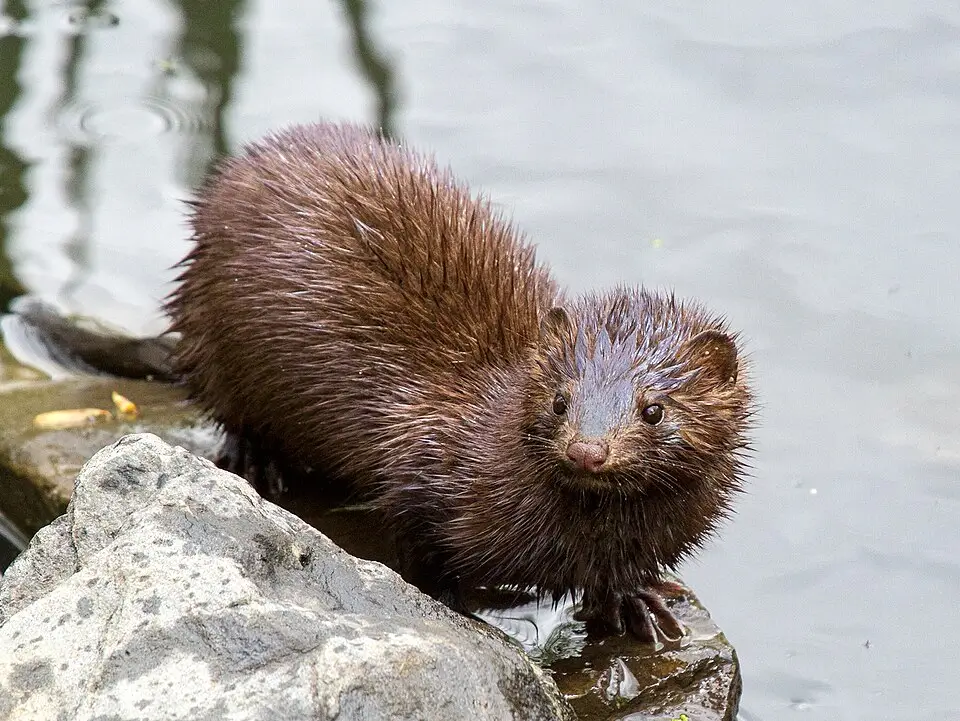
The American badger (Taxidea taxus) belongs to the family Mustelidae, which also includes weasels, otters, wolverines, and minks. It is the only member of its genus, Taxidea, making it a uniquely North American representative of this diverse and widely distributed family of carnivores.
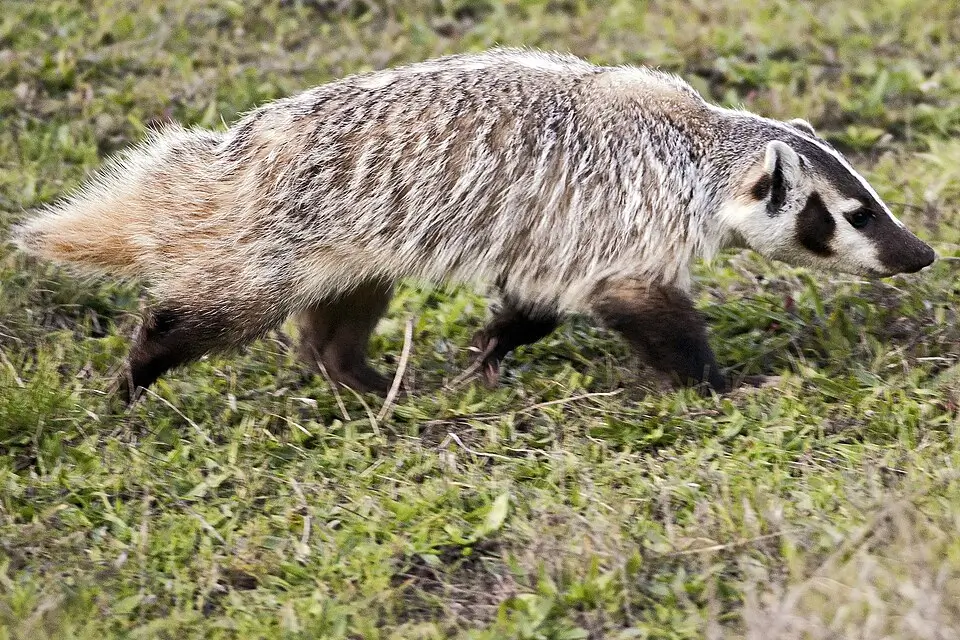
The American badger is immediately recognizable by its distinctive physical characteristics. It has a broad, flattened body — a shape that is perfectly adapted for life underground and for forcing its way through tight burrow systems. Its short, powerful limbs are tipped with long, robust claws, particularly on the forefeet, which are among the most powerful digging tools found in any North American mammal. These claws allow the badger to excavate prey from burrows at remarkable speed, an ability that few other predators can match.
The badger's coat is coarse and grizzled, typically ranging from a brownish-gray to a buff or yellowish-gray across the back and sides. The underparts tend to be a pale buff or cream color. The most iconic marking is the distinctive white or pale stripe that runs from the nose, over the top of the head, and partway down the back. The face is further decorated with bold black or dark brown patches on the cheeks, known as "badges" — from which the animal takes its common name.
Adult American badgers are relatively compact animals. Males are generally larger than females, which is common among mustelids. Badgers are solidly built and low to the ground, giving them a uniquely purposeful gait when they move across open terrain.
As carnivores, American badgers are highly opportunistic predators. Their diet consists primarily of burrowing rodents such as ground squirrels, prairie dogs, pocket gophers, voles, and mice. However, they are not strictly limited to mammals and will also consume birds, bird eggs, lizards, snakes, insects, and even carrion when the opportunity arises. The badger's hunting strategy is straightforward and highly effective: it uses its extraordinary sense of smell to detect prey underground, then excavates rapidly, pursuing quarry through their own tunnel systems.
One of the most celebrated and well-documented behavioral phenomena associated with the American badger is its occasional cooperative hunting relationship with the coyote (Canis latrans). These two species have been observed hunting together, with the coyote waiting above ground to catch prey that escapes from the badger's digging, while the badger benefits from the coyote's speed at the surface. This mutually beneficial arrangement is a compelling example of interspecies cooperation in the wild.
Badgers are largely solitary animals and are mostly nocturnal or crepuscular, though they can be active during daylight hours, particularly in cooler weather or less-disturbed environments. They do not truly hibernate but may enter periods of torpor during the harshest winter months, retreating to their burrows and reducing activity significantly.
Breeding typically occurs in late summer or autumn. Due to a phenomenon known as delayed implantation — common among mustelids — the fertilized eggs do not implant in the uterus immediately, and actual development of the embryos is delayed until late winter. Young badgers, called kits or cubs, are born in early spring, usually in litters of one to five. They are born blind and helpless but develop quickly, beginning to accompany their mother on foraging trips by summer before dispersing to establish their own territories.
Habitat and Range
The American badger is widely distributed across North America, ranging from the southwestern Canadian provinces through much of the central and western United States and into northern Mexico. Its range is closely tied to open, relatively dry habitats where burrowing prey species are abundant and soils are suitable for digging.
Prime badger habitat includes prairies, grasslands, meadows, open shrublands, pastures, farmland edges, and semi-arid desert scrub. The badger prefers areas with loose, sandy, or loamy soils that are easy to excavate. It tends to avoid densely forested areas and wetlands, though it may occasionally be found along the margins of such habitats.
South Dakota, sitting squarely in the heart of the Great Plains, offers some of the most quintessential American badger habitat in the country. The state's diverse landscapes — from the mixed-grass prairies east of the Missouri River to the open rangelands and grasslands of the western plains, the rugged terrain of the Black Hills foothills, and the broad river valleys and grassland corridors throughout — provide abundant suitable habitat. The presence of large prairie dog towns and thriving populations of ground squirrels across much of South Dakota ensures a ready food supply, making the state an excellent environment for badgers.
Badger burrows, which can be recognized by their distinctive elliptical or flattened oval opening shape, are a common sight across South Dakota's plains and grasslands. These burrows serve multiple purposes: they are used for shelter, raising young, and as bases for hunting operations. Old badger burrows are also critically important to many other species, providing ready-made dens and shelter for rabbits, foxes, raptors, burrowing owls, and a variety of reptiles and small mammals.
Hunting Information
South Dakota is a state with a proud and storied hunting heritage. As noted by the South Dakota Game, Fish and Parks department, the state is renowned worldwide for its exceptional hunting opportunities across a variety of game species and diverse landscapes, including forests, river bottoms, grasslands, and wetlands. While pheasant hunting is perhaps the most celebrated pursuit in South Dakota — with average annual harvests in the range of 1.2 million roosters over the past decade — the state's wildlife offerings extend well beyond upland birds.
The American badger is a non-game or furbearer species in many states across its range, and regulations governing its harvest can vary significantly by state and can change from season to season. For anyone interested in hunting or trapping American badgers in South Dakota specifically, it is strongly recommended to consult the South Dakota Game, Fish and Parks (SDGFP) directly for the most current and accurate regulations, season dates, and licensing requirements. At the time of this writing, specific season dates and license requirements for badger in South Dakota were not available from official published sources, and hunters should always verify current rules before pursuing any species.
From a hunting and trapping perspective, the American badger has historically been pursued for its pelt, which is thick, coarse, and durable. Badger fur has been used in a variety of applications, from paintbrushes and shaving brushes to garment trim. In rural areas where badger populations intersect with livestock operations, some landowners have also managed badger populations due to concerns about livestock injuring themselves in badger holes — though the ecological benefits of badger activity on controlling rodent populations are widely recognized.
For hunters and trappers operating in South Dakota's vast grasslands and prairies, badgers are most commonly encountered incidentally while pursuing other species such as coyotes or prairie dogs, or while running trap lines for furbearers. Understanding badger sign — fresh digging, characteristic burrow openings, tracks, and scat — is useful for anyone spending time in their habitat.
Conservation
The American badger is currently listed as a species of Least Concern on the IUCN Red List, reflecting the fact that its overall population remains relatively stable across much of its North American range. However, like many grassland-dependent species, the badger faces ongoing pressures from habitat loss and fragmentation, particularly in areas where native prairie has been converted to intensive agriculture or urban development.
In some portions of its range — particularly in Canada and in isolated populations in the Pacific Northwest — the American badger has experienced more significant population declines, and localized conservation concerns exist. In the core of its range, including the Great Plains states like South Dakota, badger populations are generally considered to be in good condition.
Badgers play an important role in grassland ecosystems. Their burrowing activity aerates soil, improves water infiltration, and contributes to overall soil health. Their predation on burrowing rodents helps regulate prey populations, contributing to the balance of prairie ecosystems. The secondary value of their abandoned burrows to other wildlife species adds another dimension to their ecological importance.
Conservation of American badger populations in South Dakota and across the Great Plains is closely tied to the broader conservation of native grassland habitats. Efforts to maintain and restore native prairie — through programs like the Conservation Reserve Program (CRP), cooperative grazing management, and grassland easements — benefit the full suite of grassland wildlife, including the American badger.
Conclusion
The American badger is a compelling symbol of the wild, open landscapes of North America's interior. Tough, resourceful, and ecologically vital, this remarkable animal deserves recognition not just as a quarry species or a furbearer, but as an integral part of the prairie ecosystem. In South Dakota, where wide-open spaces and abundant wildlife are central to the state's identity, the American badger finds some of its finest habitat and stands as a testament to the enduring richness of Great Plains wildlife.