Overview
Few animals embody the spirit of wild, untamed waterways quite like the American mink. Lithe, bold, and supremely adapted to life along streams, rivers, and wetlands, the American mink (Neogale vison) is one of North America's most recognizable semi-aquatic predators. Whether glimpsed darting along a muddy bank or diving effortlessly beneath the surface of a cold stream, this small but formidable carnivore commands attention and respect from wildlife enthusiasts, trappers, and hunters alike.
The American mink has long played an important role in the ecology of North American waterways and in the cultural history of the continent's outdoor traditions. From its lustrous fur that drove centuries of trade to its vital role as a mid-level predator in wetland ecosystems, this species is far more than just a pretty face in the animal kingdom. In states like South Dakota — with its rich diversity of rivers, wetlands, grasslands, and Missouri River reservoir systems — the American mink finds a surprisingly varied and welcoming landscape to call home.
This article takes a deep dive into the biology, habitat preferences, hunting traditions, and conservation status of the American mink, celebrating one of North America's most fascinating and capable wild mammals.
Biological Traits
The American mink is a member of the family Mustelidae, a diverse and successful group of carnivorous mammals that also includes weasels, otters, badgers, and wolverines. Its scientific name, Neogale vison, reflects its relatively recent reclassification; the species was formerly placed in the genus Mustela alongside European mink and various weasel species, but modern taxonomic revisions have moved it into the genus Neogale.
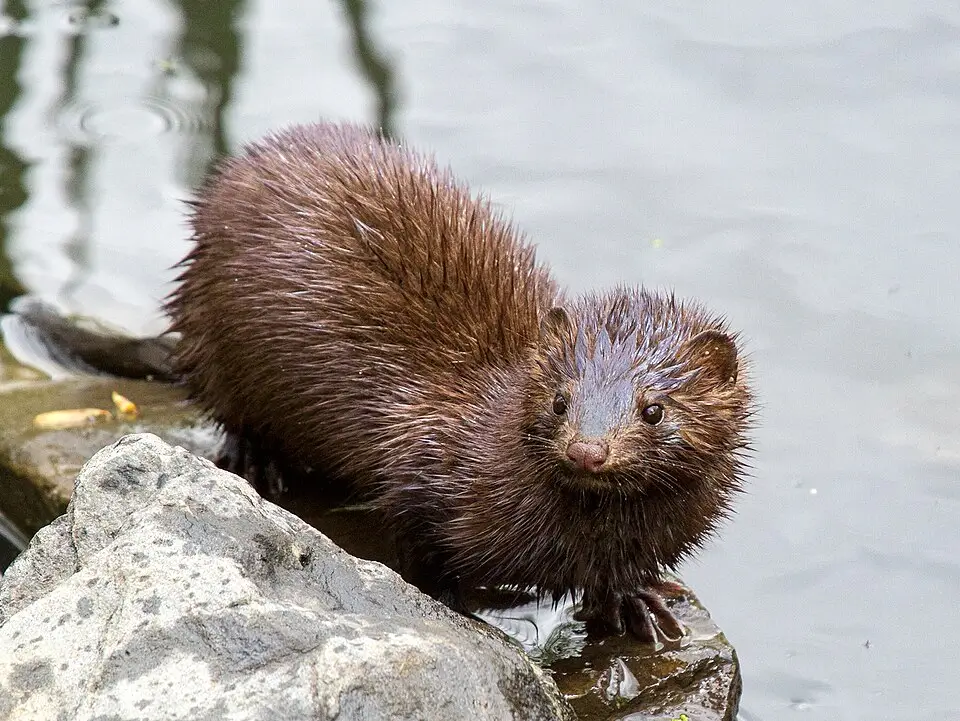
In terms of physical appearance, the American mink is a slender, elongated animal with short legs, a somewhat flattened head, and a thick, bushy tail. Its fur is famously dense and lustrous, typically appearing in shades of rich dark brown — often described as deep chocolate — with a small white patch frequently visible on the chin and occasionally on the chest and belly. The coat consists of a soft, insulating underfur covered by longer, glossy guard hairs, an adaptation that provides both warmth and water resistance essential for an animal that spends a great deal of time in and around water.
Sexual dimorphism is pronounced in this species. Males are significantly larger than females, a common trait among mustelids. Adult males typically measure between 13 and 18 inches in body length, with the tail adding several more inches, and can weigh anywhere from 1.5 to just over 3 pounds. Females are noticeably smaller and lighter. Despite their modest size, American mink are renowned for their ferocity and tenacity as predators, capable of taking prey considerably larger than themselves.
The American mink is a carnivore with a broad and opportunistic diet. Its prey base includes fish, frogs, crayfish, small mammals such as mice and muskrats, birds and their eggs, and various invertebrates. This dietary flexibility is one of the key reasons the species has been so successful across a wide range of environments. Mink are active hunters that use both sight and scent to locate prey, and they are equally capable of hunting on land, in the water, or in the burrows and lodges of other animals.
Mink are generally solitary animals outside of the breeding season. Mating occurs in late winter, typically from February through April, and females give birth to litters of four to six kits after a gestation period that is complicated by delayed implantation — a reproductive strategy shared by many mustelids. Kits are born blind and helpless but develop rapidly, reaching near-adult size within a few months. Young mink typically disperse from their mother's territory by late summer or fall.
These animals are primarily crepuscular and nocturnal, meaning they are most active during the hours around dawn and dusk and through the night. They are excellent swimmers, capable of diving to significant depths and navigating strong currents with ease, thanks in part to partially webbed hind feet. On land, they move with a characteristic bounding gait and are agile enough to climb trees when necessary.
Habitat & Range
The American mink is native to North America and enjoys one of the broadest ranges of any mustelid on the continent. It is found from the Atlantic coast to the Pacific, and from the southern United States well into Canada and Alaska. This wide distribution speaks to the species' remarkable adaptability.
Despite this broad range, the American mink is fundamentally a creature of the waterside. Its preferred habitats are closely associated with aquatic environments: the wooded banks of streams and rivers, the marshy edges of lakes and ponds, freshwater wetlands, and the vegetated shorelines of reservoirs and sloughs. Dense bankside vegetation, fallen logs, and rocky outcroppings all provide the cover and denning opportunities that mink rely upon. They do not typically excavate their own dens but instead make use of natural cavities, the abandoned burrows of other animals, or root tangles along streambanks.
In South Dakota, a state celebrated for its diverse landscapes stretching from the forested Black Hills in the west to the vast grasslands and river bottoms of the Great Plains, the American mink has ample habitat to occupy. The Missouri River and its extensive reservoir system — one of the defining geographic features of South Dakota — provides miles upon miles of productive shoreline and wetland habitat. Smaller tributaries, prairie potholes, and the numerous wetlands managed across the state further expand the available range for this species. South Dakota's varied terrain, which includes forests, river bottoms, grasslands, and wetlands, creates a mosaic of ecosystems that supports not only mink but a wide variety of game and non-game species.
Hunting and Trapping Information
The American mink has been a prized furbearer in North America for centuries, and its pursuit through trapping and hunting remains an important tradition for outdoor enthusiasts across the continent. The mink's dense, luxurious fur has historically made it one of the most commercially valuable furbearers in the world, and while the fur trade has evolved significantly over the decades, regulated harvest continues to this day.
In many states and provinces across the mink's range, licensed trappers and hunters pursue mink as part of a broader furbearer management program. Trapping is by far the most common method of harvest, with foothold traps, body-grip traps, and water sets all used effectively along streams, wetlands, and other aquatic habitats where mink travel. Calling and still-hunting along productive waterways can also yield encounters, though mink's secretive nature and relatively small size make traditional hunting methods less common.
For those interested in pursuing mink in South Dakota, the state offers a rich outdoor heritage and diverse landscapes well-suited to furbearer pursuits. South Dakota Game, Fish, and Parks manages hunting and trapping opportunities across the state, and prospective hunters and trappers are always encouraged to consult the most current regulations directly from the agency, as season dates and licensing requirements may change from year to year. The state's rivers, wetlands, and the extensive Missouri River reservoir system provide excellent habitat for mink and make South Dakota a worthwhile destination for those interested in furbearer trapping.
It is worth noting that South Dakota is perhaps most famous for its world-class pheasant hunting — the state boasts an average annual pheasant harvest of 1.2 million roosters over the past decade — but the state's outdoor offerings extend far beyond upland birds. Mink and other furbearers add another dimension to the state's impressive hunting and trapping tradition, providing year-round opportunity for those willing to explore its diverse waterways and wetlands.
Conservation
The American mink is currently classified as a species of least concern by major wildlife conservation bodies, reflecting its broad range, adaptability, and relatively stable populations across much of North America. The species' ability to thrive in a wide variety of wetland and riparian habitats, combined with its opportunistic diet, has allowed it to persist even as landscapes have changed over time.
That said, like all wildlife, American mink are not without their pressures. Habitat loss and degradation — particularly the draining of wetlands, channelization of streams, and development of riparian corridors — can reduce the availability of suitable habitat. Water quality is also a consideration, as mink are near the top of their local food chains in aquatic systems and can accumulate environmental contaminants through their prey. Historical overharvest of fur-bearing animals was a concern in earlier eras, but modern regulated trapping programs are designed to ensure sustainable population levels are maintained.
Wildlife management agencies across North America, including South Dakota Game, Fish, and Parks, work to monitor furbearer populations and set harvest regulations that balance opportunity for hunters and trappers with the long-term health of wildlife populations. The continuation of regulated harvest, paired with habitat conservation efforts that protect wetlands and riparian areas, ensures that future generations will have the opportunity to encounter this remarkable animal in the wild.
The American mink also plays an important ecological role as a predator in wetland and streamside ecosystems. By regulating populations of prey species such as muskrats, fish, and small mammals, mink contribute to the balance and diversity of the ecosystems they inhabit. Healthy mink populations are, in many ways, an indicator of healthy waterways — a reminder that protecting these vital habitats benefits not just a single species, but entire communities of wildlife.
Conclusion
The American mink is a creature of remarkable capability and enduring appeal. From its waterproof coat and aquatic agility to its bold temperament and wide-ranging diet, it is a species that has carved out a successful niche along North America's waterways for thousands of years. In South Dakota, where diverse landscapes from the Missouri River corridor to prairie wetlands provide abundant habitat, the mink is part of a rich wildlife tapestry that hunters, trappers, and nature lovers are fortunate to experience.
Whether you are a seasoned trapper setting water sets along a frozen creek in January, a wildlife photographer hoping for a fleeting glimpse of chocolate-brown fur at dawn, or simply someone who appreciates the extraordinary diversity of North American wildlife, the American mink deserves a place of respect and admiration in your outdoor world.