Overview
Few animals capture the imagination of hunters, wildlife enthusiasts, and nature lovers quite like the white-tailed deer (Odocoileus virginianus). Graceful, athletic, and remarkably adaptable, the white-tailed deer stands as one of North America's most iconic wildlife species. From the dense hardwood forests of the East to the open river bottoms and grasslands of the Great Plains, this extraordinary animal has carved out a thriving existence across an astounding range of environments. In South Dakota, white-tailed deer represent one of the most sought-after big game species, drawing hunters from across the country to pursue them through the state's diverse and breathtaking landscapes.
Whether you are a seasoned hunter who has spent decades chasing mature bucks, a wildlife photographer hoping to capture that perfect velvet-antlered portrait, or simply someone who delights in spotting these animals along a country road at dusk, the white-tailed deer holds a special place in the American outdoor experience. Understanding the biology, behavior, habitat preferences, and conservation status of this remarkable animal deepens our appreciation for every encounter — whether in the field or from a distance.
Biological Traits
The white-tailed deer (Odocoileus virginianus) belongs to the family Cervidae, the deer family, which also includes elk, moose, caribou, and mule deer. The species name virginianus references Virginia, where early European naturalists first formally documented the animal.
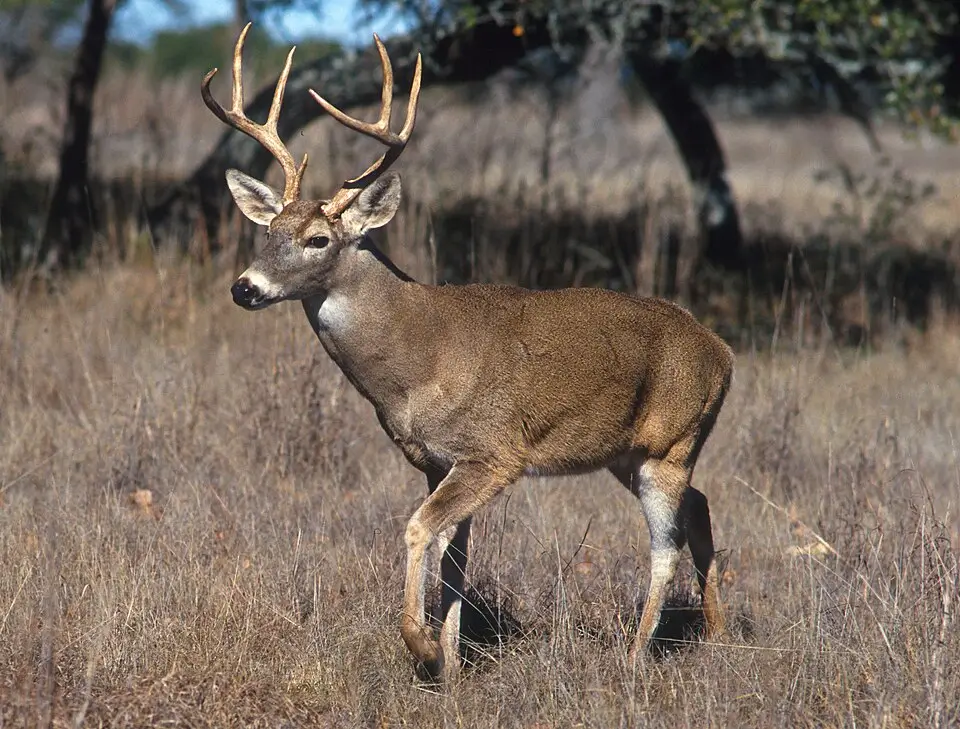
One of the most recognizable features of the white-tailed deer is, of course, its namesake tail. When alarmed or fleeing, the deer raises its tail to reveal a brilliant white underside — a behavior known as "flagging" — which serves as a visual alarm signal to other deer in the vicinity. This flash of white is one of the most thrilling sights in North American wildlife, often accompanied by the explosive snort and bound that signals a deer has detected danger.
Adult white-tailed deer display a coat that changes with the seasons. In summer, their fur is a reddish-brown that transitions to a thicker, grayer coat in winter — an adaptation that provides both insulation against cold temperatures and a degree of camouflage within dormant, leafless woodland environments. Fawns are born with white spots on their reddish coats, a pattern that provides effective camouflage among dappled forest light and helps protect them from predators during their most vulnerable early weeks of life.
Bucks (males) are distinguished by their antlers, which are among the most remarkable structures in the animal kingdom. Unlike horns — which are permanent structures made of keratin — antlers are composed of bone and are shed and regrown annually. Each year, bucks grow new antlers beginning in late spring, covered in a soft, nutrient-rich tissue called velvet that supplies blood and nutrients to support rapid bone growth. By late summer, the velvet dries and is rubbed off, leaving the hardened, polished antlers that bucks carry through the fall breeding season, or rut. After the rut concludes in late fall or early winter, bucks shed their antlers and the cycle begins again. Antler size and configuration are influenced by age, genetics, and nutrition, making trophy-quality antlers a combination of inherited potential and environmental abundance.
Does (females) typically do not grow antlers, though rare exceptions occur. Does give birth in late spring, most commonly to twins, though single fawns and triplets are also possible. Fawns are born with their eyes open and can stand within hours of birth, though they remain hidden in dense vegetation for the first weeks of life while their mother returns periodically to nurse them.
White-tailed deer are herbivores with a highly varied diet. They are classified as concentrate selectors and browsers, preferring forbs, agricultural crops, soft mast such as berries, hard mast such as acorns, and the tender tips of woody browse. Their diet shifts significantly with the seasons, moving from lush green vegetation in spring and summer to hard mast, agricultural residue, and woody browse in fall and winter.
The senses of the white-tailed deer are finely tuned for survival. Their large, prominent eyes are positioned on the sides of their head, providing a wide field of vision that helps detect movement. Their hearing is exceptional, with large ears that can rotate independently to pinpoint sounds from multiple directions. Perhaps most remarkable is their sense of smell, which is estimated to be many times more sensitive than that of a human — a fact that any deer hunter quickly learns to respect.
Habitat & Range
The white-tailed deer is one of the most widely distributed large mammals in the Western Hemisphere. Its range extends from southern Canada through the entirety of the continental United States, continuing through Mexico, Central America, and into parts of South America. Within the United States alone, white-tailed deer can be found in virtually every state, demonstrating a remarkable capacity for adaptation across wildly different environments.
In South Dakota, white-tailed deer thrive across the state's diverse and varied landscapes. The state's geography encompasses forests, river bottoms, grasslands, wetlands, and the corridors along the vast Missouri River reservoirs — all of which provide excellent habitat for white-tailed deer at different times of year. River bottoms, in particular, are classic white-tailed deer habitat, offering dense woody cover for bedding and refuge combined with access to agricultural fields and natural food sources. The forested regions in the western part of the state, including areas in and around the Black Hills, also support healthy populations of white-tailed deer.
White-tailed deer are edge species — animals that thrive where different habitat types meet, such as where forests transition to open fields or where riparian corridors border grasslands. This adaptability to edge environments has allowed them to not only survive but flourish in landscapes heavily modified by agriculture and human development, making them far more abundant in many regions today than they were historically.
Seasonal movements are a defining feature of white-tailed deer behavior. During the fall rut, bucks dramatically expand their home ranges in search of receptive does, making them more visible and more active during daylight hours than at virtually any other time of year. In winter, deer may concentrate in areas offering thermal cover and accessible food, sometimes forming loose groups or "deer yards" in northern regions where snow depth becomes a significant survival factor.
Hunting Information
Hunting white-tailed deer is a deeply rooted tradition across North America, and South Dakota is no exception. The state's diverse landscapes — including forests, river bottoms, grasslands, wetlands, and the scenic Missouri River reservoir system — provide hunters with a rich variety of environments in which to pursue this prized big game animal. South Dakota's Game, Fish, and Parks agency oversees the management of deer hunting within the state, working to ensure healthy and sustainable deer populations for generations of hunters to come.
White-tailed deer hunting in South Dakota takes place across multiple seasons and with a variety of methods, including archery, muzzleloader, and firearm seasons. The fall rut, which typically peaks in November across the northern Great Plains, is widely considered the most exciting and productive time to hunt mature bucks, as increased daytime movement and the abandonment of typical cautious behavior make bucks more visible and susceptible to calling and rattling techniques.
For hunters planning a South Dakota deer hunt, it is important to consult the South Dakota Game, Fish, and Parks (GFP) website directly for the most current and accurate information regarding season dates, license requirements, bag limits, and any relevant regulations. Regulations can vary by unit, weapon type, and season, and staying current with official GFP guidance ensures a legal, ethical, and enjoyable experience.
South Dakota's hunting opportunities extend well beyond white-tailed deer, with the state offering an impressive variety of game animals across its remarkable landscapes. The combination of big game hunting, world-class pheasant hunting, waterfowl, and other upland birds makes South Dakota a premier destination for the dedicated hunter seeking a complete outdoor experience.
Conservation
The conservation story of the white-tailed deer in North America is one of the most remarkable wildlife recovery narratives of the twentieth century. By the late 1800s and early 1900s, unregulated market hunting and widespread habitat destruction had reduced white-tailed deer populations to critically low levels across much of their range. Concerted conservation efforts — including the establishment of regulated hunting seasons, legal protections, restocking programs, and the restoration of habitat — allowed populations to recover dramatically over the following decades.
Today, the white-tailed deer is classified as a species of Least Concern by global conservation standards, with populations numbering in the tens of millions across North America. This recovery stands as a powerful testament to the effectiveness of science-based wildlife management and the North American Model of Wildlife Conservation, a framework under which hunters play a direct role in funding conservation through license fees and excise taxes on sporting goods.
In South Dakota, state wildlife managers continue to monitor deer populations carefully, adjusting seasons, harvest quotas, and management practices as needed to maintain healthy, sustainable herds. The ongoing partnership between conservation agencies, hunters, landowners, and the broader public is essential to ensuring that white-tailed deer remain a vibrant and abundant part of South Dakota's natural heritage for decades to come.