Overview
Few animals in North America are as instantly recognizable as the striped skunk (Mephitis mephitis). With its bold black-and-white coloration and legendary chemical defense, this medium-sized mammal has earned a place in both folklore and ecological importance across the continent. Found from the forests of Canada to the deserts of northern Mexico, the striped skunk is one of the most widespread and adaptable members of the family Mephitidae. In states like South Dakota, where vast open grasslands, river bottoms, and diverse landscapes define the countryside, the striped skunk is a common and fascinating presence in the natural world.
Despite its reputation for producing one of nature's most pungent deterrents, the striped skunk is a creature worthy of genuine admiration. It plays a meaningful role in local ecosystems, consuming large quantities of insects, rodents, and other small animals that might otherwise become agricultural pests. Understanding this animal — its biology, behavior, habitat preferences, and relationship with human activity — offers a richer picture of the American wilderness and the incredible diversity of wildlife that thrives across the Great Plains and beyond.
Biological Traits
The striped skunk (Mephitis mephitis) belongs to the family Mephitidae, a group of mammals commonly referred to as skunks. The scientific name Mephitis is derived from Latin, roughly translating to "bad odor" or "noxious vapor" — a fitting name for an animal whose primary defense mechanism is one of the most effective chemical deterrents in the animal kingdom.
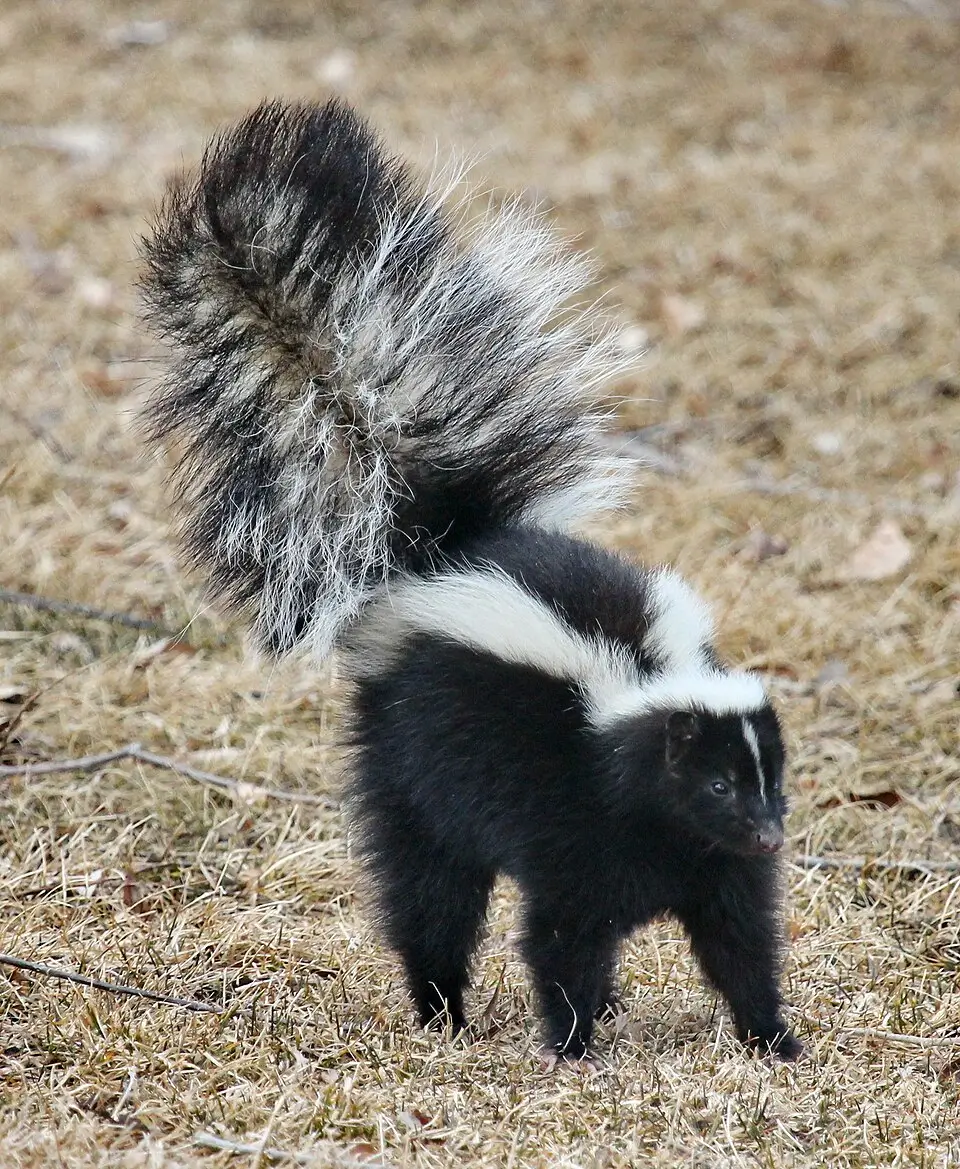
Striped skunks are medium-sized mammals, typically weighing between 2.5 and 14 pounds, though size can vary considerably depending on geographic location, sex, and time of year. They have a compact, muscular build with short legs, a broad head, and a large, bushy tail. Their most distinctive physical feature is their coloration: a bold pattern of black fur marked by two white stripes running from the top of the head down along the back to the tail. This striking contrast is not coincidental — it serves as a vivid warning signal to potential predators, a form of communication known as aposematism.
The chemical defense of the striped skunk is produced by a pair of anal scent glands capable of spraying a sulfur-containing chemical mixture known as thiol (also called mercaptan) with remarkable accuracy at distances of up to 10 feet or more. The spray is intensely pungent, capable of causing temporary irritation to the eyes and skin, and the smell can linger for days. Before spraying, skunks will typically engage in a series of warning behaviors — stamping their front feet, raising their tail, and performing a characteristic handstand posture — giving would-be predators ample opportunity to retreat.
Striped skunks are omnivores with a wide and varied diet that shifts with the seasons. During warmer months, insects make up a large portion of their diet, including beetles, grasshoppers, crickets, and bee and wasp larvae. They are known to dig up underground bee and wasp nests to access the larvae and honeycomb inside. They also consume small mammals, frogs, lizards, snakes, bird eggs, berries, roots, fungi, and carrion. This dietary flexibility is one of the reasons the species has been so successful across such a wide geographic range.
Although skunks do not hibernate in the true sense, they do enter a state of torpor during the coldest winter months. During this period, they remain largely inactive in their dens, living off fat reserves accumulated during the fall. It is not uncommon for several skunks — particularly females and juveniles — to share a communal den during the winter for warmth. Striped skunks are primarily nocturnal, emerging after dusk to forage and returning to their dens before sunrise.
Breeding takes place in late winter, typically between February and March. After a gestation period of approximately 60 to 75 days, females give birth to litters of four to seven young, known as kits. The kits are born blind and helpless but develop rapidly. By about three weeks of age, their eyes begin to open, and they are capable of spraying their defensive chemical even before their eyes are fully functional. By late summer, the young skunks are typically independent and dispersing to establish their own home ranges.
The striped skunk's primary natural predators include great horned owls, which appear to have a limited sensitivity to the skunk's spray, making them one of the few animals that regularly prey upon them. Coyotes, foxes, bobcats, and domestic dogs will also occasionally prey on skunks, though most learn to avoid them after an unpleasant encounter.
One important biological consideration for striped skunks is their role as a significant reservoir host for rabies. The species is one of the primary carriers of the rabies virus in North America, and wildlife managers monitor skunk populations as part of broader public health surveillance programs. This is an important ecological and public health factor that wildlife managers in South Dakota and across the continent take seriously.
Habitat & Range
The striped skunk is one of the most broadly distributed mammals in North America. Its range extends from southern Canada southward through the contiguous United States and into northern Mexico. It thrives in a remarkable variety of habitats including open woodlands, grasslands, agricultural fields, suburban neighborhoods, wetland edges, and riparian areas. This adaptability has allowed the striped skunk to not only survive but flourish even as human development has altered much of its native landscape.
In South Dakota, the striped skunk finds an ideal home across much of the state's diverse terrain. The vast Missouri River reservoirs, rolling grasslands, forested river bottoms, and rich wetland systems that characterize South Dakota's landscape all provide suitable habitat for skunks. South Dakota is a landlocked state situated in the North Central region of the United States and is considered part of the Great Plains — a region of wide-open spaces, agricultural productivity, and rich wildlife diversity. This environment suits the striped skunk well, as it tends to prefer areas where open foraging habitat meets sheltered denning sites such as brushy draws, rock piles, abandoned burrows, and dense vegetation.
Striped skunks typically maintain home ranges of one to four miles, though males may travel considerably farther during the breeding season. They are not strongly territorial and may overlap their ranges with other skunks. Denning sites are opportunistic — skunks readily utilize abandoned fox or woodchuck burrows, hollow logs, rock crevices, brush piles, and even the spaces beneath buildings or porches.
Hunting Information
In South Dakota, wildlife and hunting opportunities are managed by the South Dakota Game, Fish, and Parks (GFP). South Dakota is widely celebrated for its exceptional hunting heritage, most famously for its world-class pheasant hunting — the state's average annual pheasant harvest over the past decade has reached approximately 1.2 million roosters. But the hunting opportunities in South Dakota extend well beyond pheasant, encompassing a diverse range of game species across the state's forests, river bottoms, grasslands, wetlands, and reservoir areas.
Regarding the striped skunk specifically, hunters and trappers interested in pursuing skunks in South Dakota should consult directly with the South Dakota Game, Fish, and Parks for current season dates, license requirements, and regulations, as this information changes on a seasonal basis and was not specified in the available source data at the time of writing. Historically, striped skunks have been taken both incidentally during other hunting and trapping activities and as a targeted furbearer species. Trapping has traditionally been the primary method used to harvest skunks, given their nocturnal habits and denning behavior.
It is worth noting that for any hunter or trapper encountering skunks in the field, caution and awareness are always advisable. The animal's ability to spray should be respected, and all handling of wild skunks should be done with care due to the species' potential for carrying rabies. Hunters and trappers should always follow state guidelines regarding the handling and reporting of potentially rabid wildlife.
Those interested in South Dakota's broader hunting scene will find a state that is deeply committed to wildlife management and outdoor recreation. The diverse landscapes of the Great Plains offer a wealth of experiences for hunters of all types, from big game to waterfowl to furbearers like the striped skunk.
Conservation
The striped skunk is currently classified as a species of Least Concern by conservation authorities, reflecting its widespread distribution, large population numbers, and high adaptability to human-modified environments. Unlike many wildlife species that have struggled as agriculture and urban development have expanded, the striped skunk has demonstrated a remarkable ability to coexist with human activity — often thriving in agricultural landscapes, suburban areas, and disturbed habitats.
Their ecological contributions should not be underestimated. As voracious consumers of insects and rodents, striped skunks provide natural pest control services that benefit farmers and gardeners alike. Their foraging behavior also contributes to soil aeration and helps regulate insect populations that might otherwise damage crops or native vegetation.
Population management of striped skunks is an ongoing consideration for wildlife agencies, particularly in the context of rabies management. In areas where skunk-mediated rabies transmission is a concern, wildlife health officials may implement monitoring programs or oral rabies vaccine baiting campaigns to reduce the spread of the virus in wild populations.
In South Dakota, the management of furbearers including the striped skunk falls under the jurisdiction of the South Dakota Game, Fish, and Parks, an agency with a strong legacy of wildlife stewardship and conservation. The state's commitment to maintaining diverse, healthy wildlife populations ensures that species like the striped skunk will continue to play their important ecological roles across the Great Plains landscape for generations to come.
Responsible hunting and trapping, conducted within the framework of established regulations, also contributes to conservation by providing funding through license fees and excise taxes that support wildlife management programs statewide. In this way, the hunting and trapping community plays a direct role in the long-term health of wildlife populations in South Dakota.