Overview
Few sights in the natural world rival the breathtaking spectacle of a massive snow goose migration in full flight. Tens of thousands of brilliant white birds, their black wingtips flickering against a pale sky, move as a single living cloud across the North American continent. The snow goose (Anser caerulescens) is one of the most recognizable and captivating waterfowl species on the continent, drawing birdwatchers, wildlife enthusiasts, and hunters alike to witness its awe-inspiring seasonal movements.
Known for their striking white plumage, dramatic migrations, and boisterous vocalizations, snow geese have carved out a unique and important niche in the ecosystems they inhabit — from the remote tundra nesting grounds of the Arctic to the sprawling wetlands and agricultural fields of the central United States. Among the many landscapes these birds traverse, the wide-open prairies and wetlands of South Dakota stand out as a particularly significant stopover point along their migratory routes, offering some of the most exciting snow goose hunting opportunities in the country.
This guide will take you through everything you need to know about the snow goose — its biology, behavior, habitat, and what makes it such a prized and challenging quarry for waterfowl hunters.
Biological Traits
The snow goose is a medium-to-large waterfowl species belonging to the family Anatidae, which includes all ducks, geese, and swans. Its scientific name, Anser caerulescens, translates loosely from Latin to mean "blue goose," a nod to one of the species' most fascinating biological features: the existence of two distinct color morphs within a single species.
Two Color Morphs
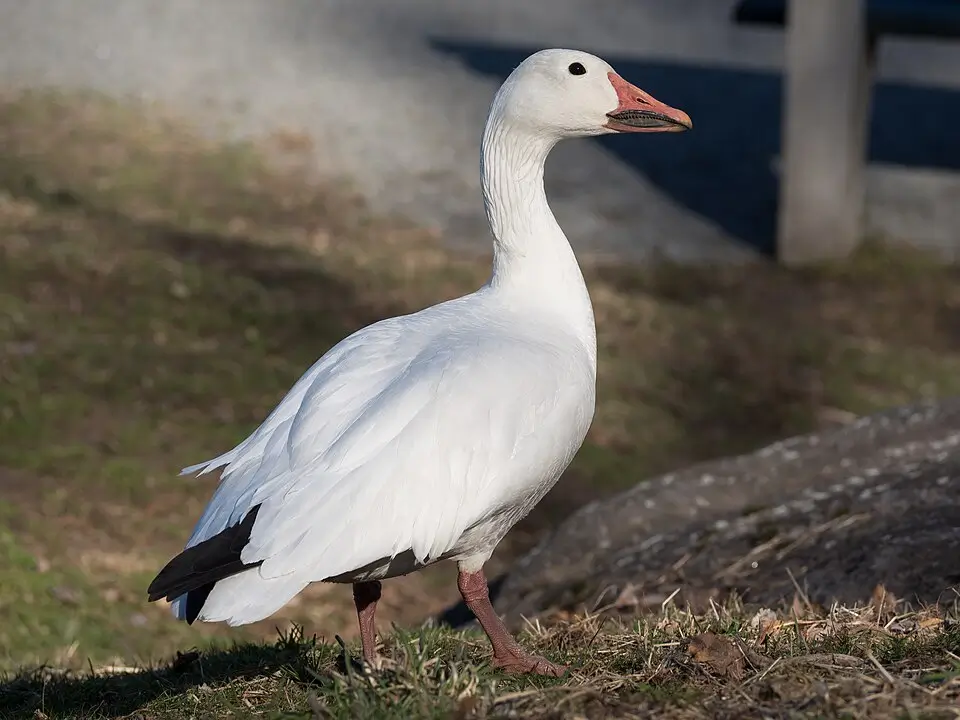
The snow goose comes in two color forms, or morphs, which were once believed to be entirely separate species. The "white morph" is what most people picture when they think of a snow goose — a predominantly white bird with distinctive black primary feathers on the wingtips. These black wingtip feathers are a key field identification marker and result from a high concentration of melanin, which actually strengthens the feathers and reduces wear during long migratory flights.
The "blue morph," formerly known as the "blue goose," displays a dramatically different appearance. Blue morph birds feature a white head and upper neck, but their body plumage ranges from dark gray-brown to a slate-blue coloration. The blue morph is considerably more common in the eastern portion of the species' range and results from a single dominant gene. Birds with at least one copy of this gene display the blue coloration, while only birds with two copies of the recessive gene display the classic white plumage.
Size and Physical Characteristics
Snow geese are robust, well-built birds with stout, pinkish-orange bills that feature a distinctive dark "grinning patch" or "lip" — a darkened area along the edge of the bill that gives the bird a somewhat toothy appearance. Their legs and feet are also pink or reddish-pink. Adult birds typically weigh between four and seven pounds and have wingspans ranging from approximately 53 to 65 inches, making them well-suited for the long, demanding journeys of transcontinental migration.
Vocalization and Behavior
Snow geese are famously loud birds. Their high-pitched, nasal calls — often described as a constant, rolling cacophony — are one of the defining features of a large flock. When thousands of birds gather together, the noise can be heard from miles away and is an unmistakable sound of late winter and early spring across the interior of North America.
These birds are highly social and tend to travel, feed, and rest in large flocks. During migration, they form enormous aggregations that can number in the hundreds of thousands, and this gregarious nature is a central element of their survival strategy, helping individual birds detect predators and locate feeding areas.
Reproduction
Snow geese breed in Arctic and subarctic regions, nesting in large, dense colonies on the tundra. Females typically lay three to five eggs per clutch, and both parents participate in raising the young. Goslings are precocial, meaning they are mobile and relatively independent shortly after hatching. Families stay together through the first migration, with young birds learning the migration route from their parents — a behavior that helps perpetuate traditional staging and wintering areas across generations.
Habitat and Range
The snow goose has one of the most expansive ranges of any North American waterfowl species. Its annual cycle takes it across thousands of miles, from some of the most remote wilderness on Earth to the agricultural heartland of the United States.
Breeding Grounds
Snow geese nest across a broad swath of Arctic and subarctic tundra, stretching from the Canadian provinces of Manitoba, Ontario, and Quebec in the east, all the way through the Northwest Territories, Nunavut, and into Alaska. Coastal tundra lowlands, particularly areas near shallow ponds and marshy depressions, are preferred nesting sites. The birds time their arrival on the breeding grounds to coincide with the spring snowmelt, which exposes the vegetation they need for nesting material and food.
Migration Corridors
The snow goose uses several well-established flyways during its annual migrations, with the Central Flyway and Mississippi Flyway being particularly important. These routes funnel enormous numbers of birds through the heart of North America, passing through states like South Dakota, North Dakota, Nebraska, and Kansas during both the fall southward migration and the spring northward migration. This makes the central United States, and South Dakota in particular, a critical region for snow goose staging and feeding.
Wintering Grounds
During the winter months, snow geese congregate along the Gulf Coast of Texas and Louisiana, as well as in parts of California's Central Valley and other mild-climate agricultural regions. They feed heavily in harvested grain fields, consuming waste corn, rice, and other crops, which has contributed to dramatic population growth in recent decades.
South Dakota's Role
South Dakota, a landlocked state situated squarely in the heart of the Great Plains and the Central Flyway, is ideally positioned to serve as a major migration corridor for snow geese. The state's diverse landscapes — including its extensive wetlands, prairie potholes, Missouri River reservoir system, and agricultural fields — provide exactly the mix of food resources and resting habitat that migrating snow geese require. The Missouri River reservoirs in particular serve as important staging areas where geese rest and roost during their long journeys. South Dakota Game, Fish, and Parks manages a wide variety of hunting opportunities across these diverse landscapes, and migratory waterfowl, including snow geese, are a prized part of the state's hunting heritage.
Hunting Information
Snow goose hunting is a uniquely challenging and thrilling pursuit, and it has developed a devoted following among waterfowl hunters across North America. Several characteristics of the snow goose make it a particularly demanding quarry.
The Challenge of Snow Goose Hunting
Snow geese are widely regarded as among the most wary and difficult-to-decoy waterfowl species in North America. Their extreme wariness is thought to result, in part, from the sheer size of their flocks — with thousands of eyes constantly scanning for danger, snow geese are quick to detect even minor inconsistencies in a hunter's setup. Successfully calling and decoying snow geese requires large spreads of decoys, often numbering in the hundreds or even thousands, and the use of motion decoys, electronic callers, and well-concealed layout blinds has become standard practice among serious snow goose hunters.
Conservation Order Season
In the United States, snow goose hunting is governed not only by standard waterfowl season regulations but also by a special federal Conservation Order, which was established in response to documented overabundance of the species and resulting damage to Arctic and subarctic ecosystems. The Conservation Order typically allows for extended hunting seasons and relaxed equipment restrictions — including the use of electronic calls and the removal of bag limits — specifically to help manage snow goose populations. Hunters interested in pursuing snow geese in South Dakota should consult the South Dakota Game, Fish, and Parks for current season dates, licensing requirements, and regulations, as these details are subject to change from year to year.
Gear and Tactics
Effective snow goose hunting typically involves hunting in agricultural fields near roosting water. Hunters set up before first light, arranging massive spreads of white shell, full-body, or windsock decoys in patterns that mimic resting or feeding flocks. Electronic callers broadcasting recordings of snow goose feeding calls are a key tool during the Conservation Order season. Layout blinds, white coveralls or ghillie-style camouflage, and flags or spinning-wing motion decoys all play a role in closing the deal on pressured birds.
South Dakota as a Destination
South Dakota is renowned for its hunting opportunities, and migratory waterfowl hunting is very much a part of that tradition. The state's Game, Fish, and Parks agency manages hunting across diverse landscapes including river bottoms, grasslands, and wetlands, all of which serve as important habitat for migrating snow geese. Whether you are a seasoned snow goose hunter or someone looking to experience your first Conservation Order hunt, South Dakota's central location in the flyway makes it an excellent destination for pursuing these remarkable birds.
Conservation
The story of the snow goose and conservation is a fascinating and somewhat counterintuitive one. Unlike many wildlife species that face pressures from habitat loss and declining numbers, the snow goose has experienced dramatic population growth over the past several decades, largely as a result of the expansion of agricultural food sources along its migration routes and on its wintering grounds.
This population explosion has raised significant ecological concerns, particularly on the birds' Arctic breeding grounds. Overgrazing by superabundant snow goose colonies has damaged and in some cases destroyed large areas of fragile tundra and coastal marsh vegetation, creating what biologists refer to as "eat-outs" — barren mudflats where dense vegetation once existed. These habitat changes can negatively affect not only snow geese themselves but also many other species that depend on healthy Arctic tundra ecosystems.
Wildlife managers in both the United States and Canada have worked collaboratively to address this challenge, implementing the Conservation Order in the U.S. and similar measures in Canada to increase harvest pressure and help bring population numbers into better balance with the available habitat. Hunters play a direct and meaningful role in these conservation efforts — every snow goose taken during the Conservation Order season contributes to the broader goal of habitat protection in the Arctic.
It is important to note that despite population concerns, snow geese remain a protected migratory bird species under the Migratory Bird Treaty Act, and all hunting must be conducted within the framework of applicable federal and state regulations.
Conclusion
The snow goose is a truly extraordinary bird — beautiful, resilient, and endlessly fascinating in its behavior and ecology. From the sweeping Arctic tundra where it raises its young, to the roaring, chaotic skies above South Dakota's prairies and wetlands during migration, this species occupies a special place in the natural heritage of North America. Whether you encounter them as a wildlife watcher marveling at a massive spring migration or as a hunter working to outwit their legendary wariness, snow geese never fail to leave a lasting impression.