Overview
Few animals capture the imagination quite like the red fox. With its fiery coat, bushy tail, and sharp, intelligent eyes, Vulpes vulpes has earned a place in folklore, literature, and the natural world alike. From ancient fables that cast the fox as a cunning trickster to modern wildlife documentaries showcasing its remarkable survival instincts, the red fox remains one of the most recognized and celebrated wild mammals on the planet. Across the diverse landscapes of South Dakota — from rolling grasslands and river bottoms to forested hills and wetland edges — the red fox is a familiar and fascinating resident, playing an important ecological role and offering a rewarding pursuit for hunters and wildlife observers alike.
Whether you encounter one trotting across a snowy field at dawn or spot a flash of orange disappearing into a hedgerow, the red fox never fails to leave an impression. This article takes a comprehensive look at this extraordinary species: its biology, its habitat, its behavior, and its place in the hunting traditions of South Dakota and beyond.
Biological Traits
The red fox, Vulpes vulpes, is the largest member of the genus Vulpes and one of the most widely distributed carnivores in the world. Its scientific name is elegantly simple — Vulpes means "fox" in Latin, and the repetition emphasizes the animal as the quintessential fox.
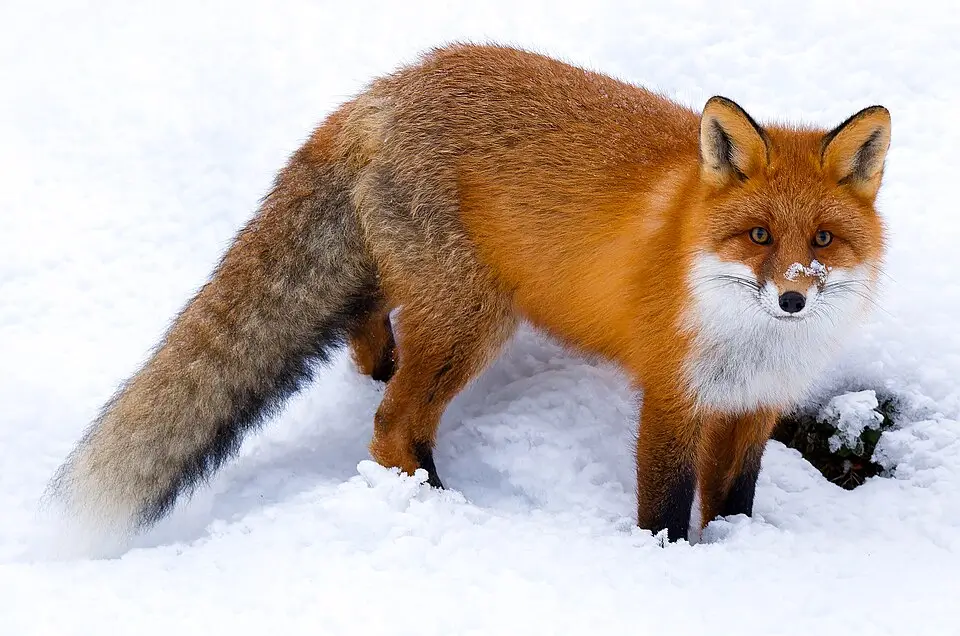
The most iconic feature of the red fox is, of course, its coat. Typically a rich, rusty-red across the back and sides, the fur transitions to white on the chest, belly, and the tip of the tail — a distinctive marking that helps differentiate it from other canids. The legs and the backs of the ears are usually black. However, it is worth noting that red foxes exhibit considerable color variation. Melanistic (black or silver) and cross (a darker stripe along the back and shoulders) color morphs do occur naturally within the same species, making Vulpes vulpes one of the more visually diverse wild mammals.
Adults typically weigh between 6 and 15 pounds, with males (referred to as "dogs" or "tods") generally larger than females (called "vixens"). The body length ranges from roughly 18 to 35 inches, with a tail — or "brush" — that can add another 12 to 22 inches. That magnificent tail serves multiple purposes: it provides balance during high-speed pursuits, functions as a warm wrap during cold nights, and plays a role in communication between individuals.
The red fox is digitigrade, meaning it walks on its toes rather than the full foot, which contributes to its light, almost delicate gait and its ability to move quietly through terrain. Their paws are equipped with semi-retractable claws that provide traction when running and are useful for digging dens.
One of the most distinctive features of the red fox is its vertically elliptical pupils — similar to a cat's — which are adapted for low-light conditions and help the animal hunt effectively at dawn, dusk, and through the night. Combined with highly mobile, large ears capable of rotating independently to detect sound, and an acute sense of smell, the red fox is a supremely equipped predator and forager.
Red foxes are omnivores with a remarkably broad diet. Small mammals such as mice, voles, and rabbits form the core of their diet, but they will also consume birds, eggs, insects, earthworms, berries, fruit, and carrion. This dietary flexibility is one of the key reasons the red fox has thrived across such a wide range of environments and has adapted so readily to landscapes altered by human activity.
Socially, red foxes are primarily solitary outside of the breeding season. They are monogamous for the most part, with mating occurring in late winter — typically January through February in much of North America. Following a gestation period of approximately 52 days, a vixen gives birth to a litter of typically 4 to 6 kits, though litters as large as 13 have been recorded. Kits are born blind and dependent, with a dark brown or gray natal coat that gradually transforms into the characteristic red coloration. Both parents participate in raising the young, which are typically independent by autumn.
Red foxes are known for their vocalizations, which are surprisingly varied and can sometimes be startling to those who hear them for the first time. Their calls range from short barks and yips to eerie, high-pitched screams — particularly common during the mating season.
Habitat & Range
Vulpes vulpes holds the distinction of having one of the broadest natural ranges of any terrestrial mammal. The species is native across much of the Northern Hemisphere, including Europe, Asia, and North America, and has been introduced to Australia, where it has become an established — if controversial — resident.
In North America, the red fox is found from Alaska and northern Canada southward through much of the continental United States. It thrives in a remarkable variety of habitats, including temperate forests, boreal forests, tundra edges, scrubland, farmland, grasslands, and even suburban and urban environments. This extraordinary habitat flexibility speaks to the animal's intelligence and adaptability.
In South Dakota, the red fox finds an ideal home across the state's varied landscapes. The Great Plains grasslands provide abundant prey in the form of rodents and rabbits, while river bottoms and wetland edges offer cover, water, and diverse food sources. The mixed terrain of eastern South Dakota's agricultural zones — with patchworks of cropfields, shelterbelts, and pasture — creates excellent habitat where foxes can hunt, den, and raise their young with relative ease. The state's diverse geography, described by the South Dakota Game, Fish and Parks as including forests, river bottoms, grasslands, wetlands, and the vast Missouri River reservoir system, suits the red fox's generalist lifestyle perfectly.
Red foxes are territorial animals, with home ranges that can vary significantly depending on habitat quality and prey availability. In resource-rich environments, home ranges may be relatively compact, while in open prairie settings, an individual fox may patrol a much larger area. They typically establish dens in well-drained soils, either digging their own burrows or taking over and enlarging the dens of other animals such as badgers or groundhogs.
Hunting Information
The red fox has a long and storied history as a game animal. Fox hunting in various forms has been practiced across Europe and North America for centuries, and today it remains a popular pursuit for hunters who appreciate the challenge and fieldcraft required to outwit such a sharp-witted quarry.
In South Dakota, the red fox can be pursued as part of the state's diverse hunting opportunities. South Dakota Game, Fish and Parks highlights the state's broad hunting offerings across its varied landscapes, noting that the state's diverse geography — spanning forests, river bottoms, grasslands, and wetlands — supports a wide variety of game species. While South Dakota is perhaps most internationally renowned for its pheasant hunting (with an average annual pheasant harvest of approximately 1.2 million roosters over the past decade), the state offers much more for the dedicated hunter, and predator and fur-bearer hunting, including red fox, forms part of that rich tradition.
Hunters pursuing red fox in South Dakota are encouraged to consult the most current regulations published by South Dakota Game, Fish and Parks, as season dates, licensing requirements, and any applicable restrictions may change from year to year. As always, confirming current regulations directly with the state wildlife agency before heading afield is the responsible and legally required approach.
Red fox can be hunted using a variety of methods. Calling — using electronic or mouth-blown predator calls that mimic the distress sounds of prey animals like rabbits — is a highly effective and widely practiced technique. Foxes are curious and responsive animals, and a well-executed calling setup in good habitat can bring a fox in quickly. Stand hunting near known fox travel corridors, field edges, and den areas is another productive approach. Hunters in South Dakota also pursue foxes during trapping seasons, as the red fox's fur has historically been valued in the fur trade.
Whether hunting for fur, as part of a predator management strategy, or simply for the love of the chase, pursuing the red fox in South Dakota's expansive and varied countryside is a rewarding experience that connects hunters to a deep tradition of wildlife stewardship and outdoor heritage.
Conservation
The red fox occupies a position of "Least Concern" on the IUCN Red List of Threatened Species, reflecting the species' remarkable abundance and adaptability across its vast global range. Far from being a species in decline, Vulpes vulpes has in many respects thrived alongside human civilization, colonizing agricultural and suburban landscapes with impressive success.
Within a healthy ecosystem, the red fox plays a meaningful role as a mesopredator. By controlling populations of small rodents, rabbits, and other prey species, foxes help maintain balance within the food web. They also serve as prey for larger predators such as coyotes, eagles, and in some areas, wolves and mountain lions.
Responsible hunting and trapping of red foxes, conducted within the framework of wildlife management regulations established by agencies like South Dakota Game, Fish and Parks, contributes to the sustainable management of fox populations and the broader predator-prey dynamics of the ecosystem. Hunters and trappers have historically served as important contributors to wildlife population data, helping biologists monitor trends and make informed management decisions.
The red fox's success as a species is a testament to the power of adaptability, intelligence, and resilience — qualities that have made it one of the most enduring symbols of wild North America. In South Dakota's big-sky landscapes, the red fox remains a vibrant and vital part of the natural world, as at home on the open plains as it is threading through the cattails of a prairie wetland.