A Complete Guide to Antilocapra americana
Few animals embody the spirit of the American West quite like the pronghorn. Swift, striking, and supremely adapted to open landscapes, this remarkable creature has roamed the grasslands and shrublands of North America for millions of years. Often misidentified as an antelope — and frequently called one in casual conversation — the pronghorn is, in fact, the sole surviving member of the family Antilocapridae, making it one of the most biologically unique large mammals on the continent.
Known scientifically as Antilocapra americana, the pronghorn has no true close relatives among the world's living ungulates. While it superficially resembles the antelopes of Africa and Asia, its evolutionary lineage is entirely its own — a testament to the incredible diversity of North American wildlife. Standing as a symbol of the open plains, the pronghorn has captured the imagination of hunters, naturalists, and wildlife enthusiasts for centuries.
In states like South Dakota, the pronghorn is not just a wildlife icon — it is a living connection to the vast, sweeping landscapes of the Great Plains that define the region. South Dakota, with its diverse terrain of grasslands, river bottoms, and open prairies, provides some of the most compelling habitat for this extraordinary animal in the entire country. For hunters and wildlife watchers alike, an encounter with a pronghorn on the rolling grasslands of western South Dakota is an experience that lingers long in the memory.
This article explores the biology, habitat, hunting traditions, and conservation story of one of North America's most fascinating and uniquely evolved mammals.
Biological Traits
The pronghorn (Antilocapra americana) is a study in superlatives. It is widely recognized as the fastest land animal in the Western Hemisphere and the second-fastest land animal on Earth, capable of reaching sustained speeds of up to 55 miles per hour. Unlike the cheetah, which can only maintain its top speed for short bursts, the pronghorn can sustain high speeds over considerable distances — an adaptation that speaks to millions of years of co-evolution with now-extinct predators that were themselves extraordinarily fast.
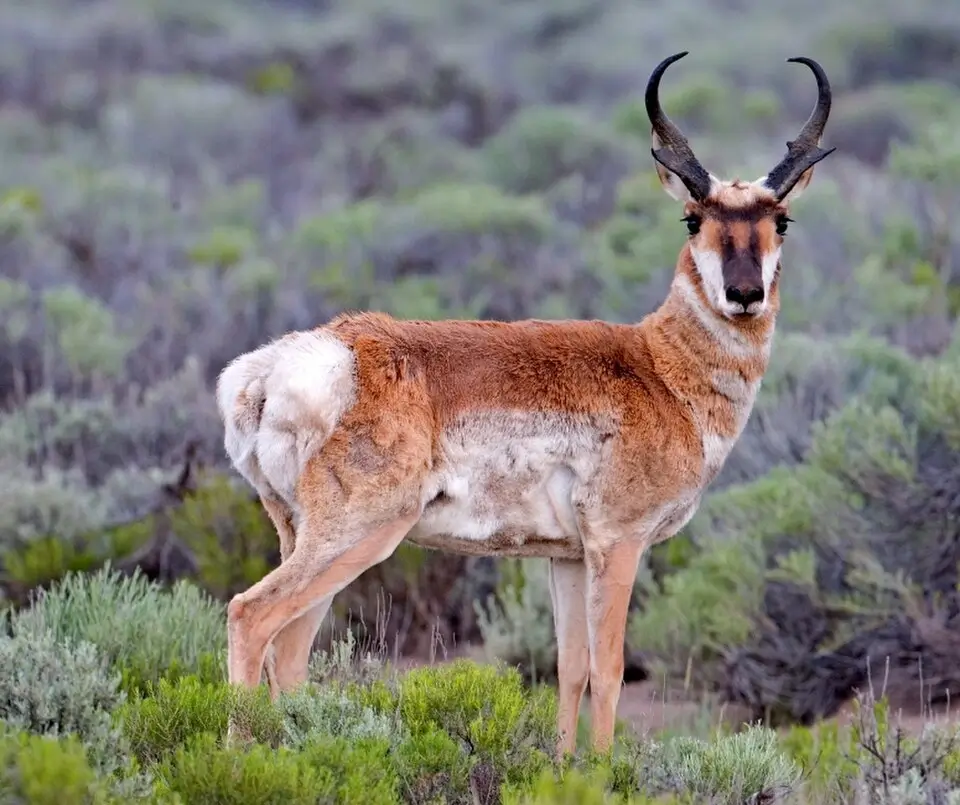
Physically, the pronghorn is a medium-sized ungulate. Adults typically stand between 32 and 41 inches tall at the shoulder and weigh anywhere from 90 to 150 pounds, with males generally being larger than females. Their coloration is a warm tan-brown on the back and sides, with white underparts, white rump patches, and distinctive white markings on the throat and face. These markings are not merely decorative — the large white rump patch can be flared as a warning signal to other pronghorn when danger is detected.
One of the most biologically fascinating features of the pronghorn is its horns. Both males and females possess horns, though those of females are considerably smaller. Unlike the antlers of deer or elk, which are shed and regrown annually, and unlike the permanent horns of cattle or bison, the pronghorn has true horns with a bony core — but sheds the outer sheath of each horn annually. This makes it the only animal in the world with this unique characteristic, giving rise to the genus name Antilocapra, which loosely translates to "antelope-goat."
The horns of the male pronghorn are particularly striking. They curve slightly backward and inward at the tips and feature a forward-projecting prong — the feature that gives the animal its common name. In mature bucks, these horns can exceed the length of the ears.
The pronghorn's eyes are another remarkable adaptation. Set on the sides of its head and exceptionally large relative to its skull, they are designed to detect movement across vast distances. Some biologists have compared the visual acuity of pronghorn to that of an 8-power binocular — allowing the animal to spot potential predators from remarkable distances across the open plains.
Another often-cited but fascinating biological trait is the pronghorn's windpipe and lungs. These organs are oversized relative to the animal's body, allowing for exceptional oxygen intake during high-speed flight. Coupled with large, padded hooves that provide cushioning and traction on rough terrain, the pronghorn is one of the most aerodynamically and mechanically optimized runners in the natural world.
Pronghorn are also known for their acute sense of curiosity. Rather than immediately fleeing from unfamiliar objects, they will often stop and stare — a behavior that hunters have long used to their advantage in the field.
Habitat & Range
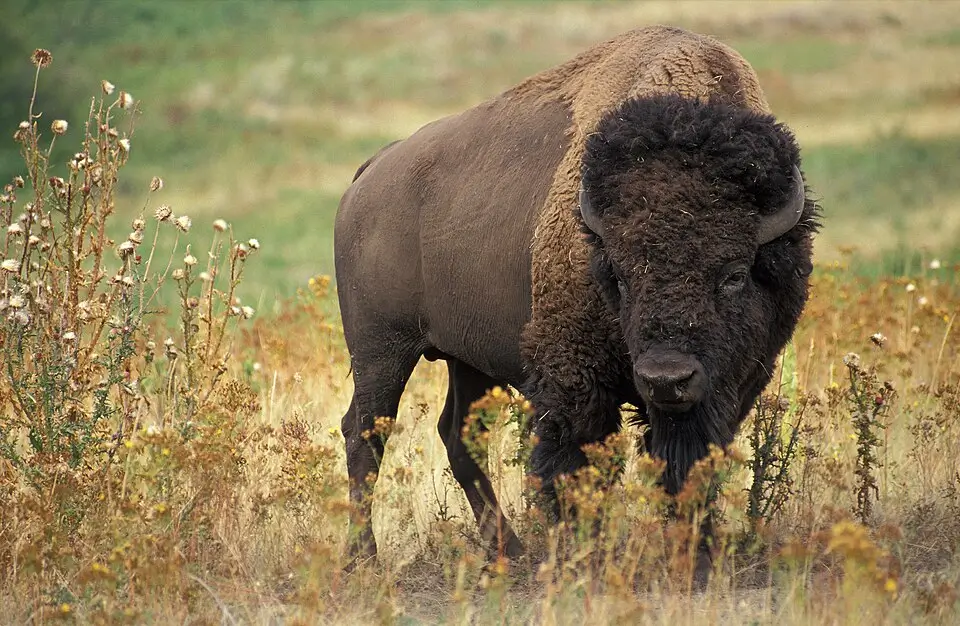
The pronghorn's range is closely tied to the open landscapes of western North America. Historically, pronghorn were found across an enormous swath of the continent, from southern Canada through the central and western United States and into northern Mexico. Before European settlement, their numbers were estimated in the tens of millions, rivaling even the great bison herds of the plains.
Today, pronghorn are still found across much of their original range, though in reduced numbers compared to historical populations. They thrive in open grasslands, shrub-steppe environments, sagebrush flats, and semi-arid plains — landscapes that offer both the wide visibility they need to detect predators and the vegetation they require for food. Pronghorn are browsers and grazers, feeding on grasses, forbs, cacti, and shrubs depending on the season and availability of food.
South Dakota represents an important part of the pronghorn's modern range. The state is part of the Great Plains region — a vast, largely open landscape that stretches across the center of North America. Western South Dakota in particular, with its rolling mixed-grass prairies, badlands terrain, and wide-open horizons, is prime pronghorn country. The diverse landscapes the state offers — including grasslands, river bottoms, and open prairies — make South Dakota a valuable stronghold for this species in the northern Great Plains.
Unlike many ungulates, pronghorn are not well adapted to navigating deep snow or dense forested terrain. Their speed advantage is most effective in open country, and they are known to migrate seasonally to follow food availability and avoid heavy snowpack. These migrations can cover significant distances, and the routes used by pronghorn herds are often ancient, used by generations of animals over centuries.
Fences represent one of the most significant modern challenges to pronghorn movement. Unlike deer and elk, pronghorn rarely jump fences — they prefer to go under or through them. Low-wire fencing modifications that allow pronghorn to pass underneath have become a common and effective wildlife management tool in many western states.
Hunting Information
The pronghorn has long been a prized game animal across the American West, offering hunters a uniquely challenging and rewarding pursuit. Hunting pronghorn requires a blend of long-range shooting skill, fieldcraft, and patience — the animal's extraordinary eyesight makes a close approach extremely difficult in most open-country terrain.
South Dakota is a state renowned for its hunting heritage. While the state is perhaps most famous worldwide for its pheasant hunting — with an average annual harvest of approximately 1.2 million roosters over the past decade — its hunting portfolio extends across a wide variety of game species and landscapes. The state offers hunting across diverse terrain including forests, river bottoms, grasslands, wetlands, and the Missouri River reservoir system. Pronghorn hunting is part of this rich tapestry of hunting opportunity, particularly in the western portions of the state where the animals are most abundant.
Pronghorn hunts are typically conducted across open plains and grasslands, where long-range rifle shots are the norm. Hunters often glass extensively from high points, spotting animals at great distances before planning a stalk. Given the pronghorn's exceptional eyesight, successful stalks require careful use of terrain features and a keen awareness of wind direction.
Hunters interested in pursuing pronghorn in South Dakota are encouraged to consult the South Dakota Game, Fish, and Parks website for the most current and accurate information regarding licenses, tags, season dates, and regulations, as these details are subject to change on an annual basis.
Conservation
The conservation story of the pronghorn is one of American wildlife management's great success stories. From near-extinction in the early 20th century — when unregulated hunting and habitat loss had reduced populations to critically low levels — the pronghorn has rebounded significantly thanks to strong conservation efforts, regulated hunting seasons, and habitat protection initiatives.
Today, pronghorn populations across the western United States are generally healthy and stable, though challenges remain. Habitat fragmentation caused by fencing, roads, and development continues to impact the species, particularly its ability to migrate freely between seasonal ranges. Climate change and the potential alteration of grassland ecosystems present additional long-term concerns.
Hunters and hunting organizations have played a pivotal role in pronghorn conservation, funding wildlife management programs through license fees, tag fees, and voluntary contributions. The North American Model of Wildlife Conservation — which emphasizes science-based management, public ownership of wildlife, and the use of hunting as a management tool — has been central to the pronghorn's recovery and continued health as a species.
In South Dakota, the Game, Fish, and Parks department works actively to manage and monitor pronghorn populations, ensuring that this iconic animal remains a vital part of the state's natural heritage for future generations.
Conclusion
The pronghorn is more than just a fast animal or a popular game species. It is a living relic of a North American Pleistocene ecosystem, a biological marvel, and a symbol of the open West. From its uniquely shed horn sheaths to its unmatched speed and extraordinary eyesight, every aspect of this animal speaks to a deep and ancient adaptation to the open plains it calls home.
For anyone who has ever watched a pronghorn buck ghost across a South Dakota grassland in the golden light of an autumn morning, the experience is unforgettable. The pronghorn, in every sense, is the soul of the American plains.